
Ah, the textile engineer practical exam! I remember the nerve-wracking days leading up to mine. It’s not just about theoretical knowledge; it’s about getting your hands dirty and proving you can apply what you’ve learned in a real-world setting.
The textile industry is constantly evolving, with new materials, sustainable practices, and innovative technologies emerging all the time, making these practical skills more critical than ever.
Whether you’re aiming for a role in cutting-edge research, quality control, or production management, mastering the practical elements is your gateway to a successful career.
I’ve personally seen how a solid grasp of these hands-on techniques can truly set you apart, turning academic concepts into tangible results. From understanding fiber identification to mastering weaving techniques and testing fabric properties, every skill you hone builds confidence and competence.
It can feel overwhelming, can’t it? The sheer volume of information, the precise execution required, and the pressure of a timed exam might seem like a daunting challenge.
But trust me, with the right approach and a few smart strategies, you can transform that anxiety into assurance. I’ve been there, and I’ve helped countless others navigate these waters successfully.
It’s not just about memorizing procedures; it’s about truly understanding the “why” behind each step and anticipating potential issues, much like troubleshooting a machine on a busy factory floor.
This kind of practical intuition, combined with solid preparation, is your secret weapon. So, if you’re ready to unravel the complexities and build a pathway to confidently acing your textile engineering practical exam, let’s explore the most effective preparation methods and insider tips to get you there.
Mastering the Fundamentals: Beyond the Textbooks

I’ve seen it time and again – students pour over textbooks, memorizing formulas and theories, only to freeze when asked to apply them in a practical setting.
The textile engineering practical exam isn’t just about what you know; it’s about what you can *do* with that knowledge. It’s like knowing all the ingredients for a cake but never having actually baked one.
You need to transition from theoretical understanding to hands-on intuition. This means not just recalling the definition of tensile strength, but truly understanding how to operate a tensile tester, interpret its graphs, and troubleshoot common issues that might skew your results.
I remember feeling overwhelmed by the sheer volume of information, but once I shifted my focus to “how does this actually work in a lab or on the factory floor?” everything started to click.
It’s about connecting the dots between the abstract concepts and the tangible processes that define our industry. This foundational shift in perspective will not only help you ace the exam but also lay a solid groundwork for your career.
Think of it as building muscle memory for your mind – the more you visualize and mentally walk through each step, the more natural it becomes when you’re actually doing it.
Revisiting Core Principles with a Practical Lens
When you’re studying, don’t just read about fiber properties; imagine a microscopic view of a cotton fiber versus a polyester fiber. How would their structures influence their strength, absorbency, or dye uptake?
Don’t just learn about weaving patterns; picture a loom in action, how the warp and weft threads interlace to create different textures. Try to draw out flowcharts of entire processes, from raw material to finished fabric.
This active engagement with the material, turning abstract concepts into visual or even tactile mental exercises, is incredibly powerful. It builds a deeper understanding that simple rote memorization just can’t touch.
I’ve personally found that explaining complex ideas out loud to an imaginary audience, or even a willing friend, forces you to simplify and clarify your thoughts, revealing any gaps in your understanding before the actual exam day.
Visualizing Processes: Flowcharts and Diagrams
Creating your own diagrams and flowcharts for various textile processes, from spinning and weaving to dyeing and finishing, can be a game-changer. It helps you see the bigger picture and understand how each stage influences the next.
For example, sketching out the steps of a typical dyeing process, noting the chemicals involved, the temperature curves, and the potential issues at each stage, really embeds the information.
These aren’t just pretty pictures; they’re cognitive tools that help you map out the entire operational sequence. I remember drawing countless diagrams for fiber preparation, yarn manufacturing, and different fabric finishing techniques.
It wasn’t about artistic talent; it was about solidifying the sequence of operations and anticipating where things might go wrong. This kind of active learning dramatically improves recall and comprehension when you’re under pressure.
Hands-On Practice: Getting Dirty with the Machines
There’s a massive difference between reading about a textile testing machine and actually operating it. This is where the rubber meets the road, and honestly, it’s the most crucial part of practical exam preparation.
You absolutely *must* get your hands on the equipment if you can. If your institution offers lab sessions, treat them like gold. If not, look for opportunities to observe or even volunteer in a textile lab or factory.
The tactile experience of loading a sample onto a tensometer, carefully adjusting a spectrometer, or even just feeling the texture of different fabrics after various finishing treatments is irreplaceable.
I vividly recall the first time I tried to calibrate a pH meter in a dye lab; it seemed straightforward in the manual, but in reality, there were nuances and small adjustments that only hands-on experience could teach.
This isn’t just about following instructions; it’s about developing an intuitive understanding of the machinery and the materials you’re working with.
Simulation and Lab Work: Your Best Friends
Making the most of any available lab time is non-negotiable. If you have access to a textile lab, don’t just rush through the required experiments. Take your time, ask questions, and try to understand the ‘why’ behind each step.
What happens if you over-dry a sample before testing? What impact does humidity have on fiber strength measurements? These are the kinds of questions that often come up in a practical exam’s oral component.
If actual lab access is limited, look for online simulations or video demonstrations of key textile processes and tests. While not a perfect substitute, they can help you visualize the steps and equipment.
I’ve also found immense value in disassembling and reassembling simple mechanisms if available, just to understand their components and functions.
Troubleshooting Like a Pro: What to Expect
One of the most intimidating parts of a practical exam is when something inevitably goes wrong. A machine might not start, a sample might tear incorrectly, or a reading might seem completely off.
This is where your problem-solving skills shine. Examiners often throw in deliberate “faults” to see if you can identify and rectify them. So, during your practice, don’t just aim for perfect results.
Actively try to anticipate what could go wrong. What if the sample isn’t cut correctly? What if the machine isn’t properly calibrated?
What if you’re using the wrong standard? Developing this troubleshooting mindset is vital. It’s not about panicking; it’s about systematically diagnosing the issue, much like a seasoned engineer on a production line.
My own experience taught me that keeping a calm head and methodically retracing your steps often leads to the solution.
Understanding Quality Control: Your Eye for Detail
Quality control in textiles isn’t just a department; it’s a mindset that permeates every stage of production. For your practical exam, demonstrating a sharp eye for detail and a solid understanding of standard testing procedures will impress examiners more than anything.
This means knowing not just *how* to perform a test, but *why* specific parameters are important, and what deviations from those parameters could mean for the final product’s performance and marketability.
Imagine you’re a quality assurance manager and every result you generate directly impacts product safety and consumer satisfaction. That’s the level of responsibility and precision expected.
I’ve seen countless batches of fabric rejected because of seemingly minor inconsistencies that, if overlooked, would lead to major customer complaints down the line.
It’s about protecting the brand and ensuring the end-user receives a product that meets their expectations, every single time. This deep understanding will set you apart from someone who just follows instructions blindly.
Standard Test Methods: A Deep Dive
You’ll need to be familiar with a range of standard test methods, often specified by organizations like ASTM, ISO, or AATCC. Don’t just memorize the names; understand the principles behind them.
For instance, what’s the difference between a grab tensile test and a strip tensile test, and when would you use each? How do you prepare samples for a colorfastness to washing test, and what are you looking for in the gray scale ratings?
These standards exist for a reason – to ensure consistency and comparability across the industry. During my own preparation, I found it incredibly helpful to create quick reference cards for each major test, summarizing the procedure, equipment, and interpretation of results.
This allowed me to quickly review key information before entering the lab.
| Test Type | Purpose | Common Equipment | Key Considerations |
|---|---|---|---|
| Tensile Strength | Measures force required to break a fabric or yarn. | Tensile Tester (e.g., universal testing machine) | Sample preparation, jaw separation speed, gauge length. |
| Tearing Strength | Determines resistance to tearing. | Elmendorf Tearing Tester, Pendulum Tearing Tester | Number of plies, initial slit length. |
| Pilling Resistance | Assesses fabric’s tendency to form pills on surface. | Martindale Abrasion and Pilling Tester, ICI Pilling Box | Rubbing motion, duration of test, visual rating. |
| Colorfastness to Washing | Evaluates color change and staining during laundering. | Launder-Ometer | Temperature, detergent type, ballast fabric. |
| Shrinkage | Measures dimensional stability after washing/drying. | Measuring scale, drying oven | Sample marking, precise measurements before and after. |
Identifying Defects: A Critical Skill
Being able to identify common fabric defects, both visually and through tactile inspection, is a skill that takes practice. Is that a slub, a knot, or a foreign fiber?
Is that a barré stripe due to uneven dyeing or inconsistent yarn tension? Understanding the *causes* of these defects is just as important as identifying them, as it speaks to your broader understanding of textile production.
Many practical exams will present you with samples containing various flaws and ask you to describe them, explain their likely origin, and suggest potential remedies.
I used to spend hours just examining fabric swatches, trying to spot every imperfection and then researching what might have caused it. It’s like being a detective, looking for clues to unravel the mystery of the fabric’s journey.
Decoding Fabric Analysis: More Than Just Material
Fabric analysis goes beyond just looking at a piece of cloth; it’s about systematically dissecting its composition, structure, and performance characteristics.
This is where your analytical skills truly come into play. You’ll be asked to determine fiber content, yarn count, fabric construction (weave or knit type), and even thread count.
This isn’t just a sterile exercise; it’s a vital part of product development, quality assurance, and even competitive analysis. Imagine being given an unknown fabric and needing to replicate it or understand its strengths and weaknesses.
That’s the practical challenge you’re preparing for. I remember the thrill of successfully identifying a complex weave pattern or correctly pinpointing the fiber blend using a series of tests.
It feels like solving a puzzle, and when you get it right, it’s incredibly satisfying.
Fiber Identification Techniques: From Burn Tests to Microscopy
One of the most fundamental skills in fabric analysis is identifying the fibers present. You’ll likely encounter a range of techniques, from simple macroscopic observations and burn tests to more sophisticated chemical solubility tests and microscopic examination.
Each method has its strengths and limitations. The burn test, for example, can quickly differentiate between protein, cellulosic, and synthetic fibers by their odor and ash characteristics, but it’s not always precise enough for blends.
Microscopy, on the other hand, allows you to observe the unique morphological features of individual fibers. Practice is key here – the more fibers you burn and examine under a microscope, the better you’ll become at recognizing their distinct properties.
I found creating a detailed reference guide with descriptions and images of different fibers under the microscope to be an invaluable resource.
Weave and Knit Structures: Unraveling the Threads
Understanding the different ways yarns are interlaced or interlooped to form fabric is another critical skill. Can you distinguish a plain weave from a twill or a satin weave?
Can you identify a single jersey knit versus a rib knit? This requires careful observation, often using a pick glass or magnifying loop, and a good understanding of fabric construction terminology.
You might even be asked to draw out a loom diagram or a knitting diagram to illustrate a specific structure. It’s not just about memorizing the patterns; it’s about comprehending how these structures impact the fabric’s drape, strength, elasticity, and end-use.
I used to practice unraveling small sections of fabric to truly see how the threads were interconnected; it’s a brilliant way to solidify your understanding of fabric architecture.
Sustainability in Practice: The Modern Textile Engineer’s Edge
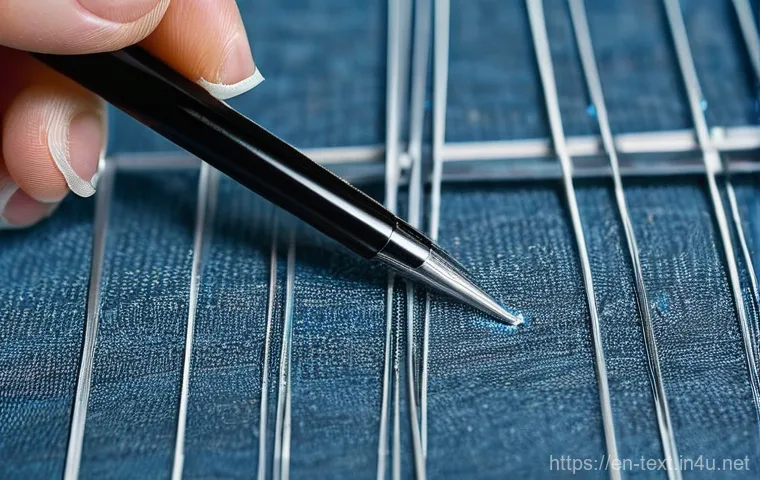
The textile industry is undergoing a massive transformation, with sustainability no longer just a buzzword but a fundamental necessity. As an aspiring textile engineer, demonstrating your understanding of eco-friendly practices and sustainable solutions will undoubtedly give you an edge in your practical exam and your career.
This isn’t about reciting environmental policies; it’s about understanding the practical implications of sustainable choices in material selection, process optimization, and waste management.
Think about the entire lifecycle of a textile product, from raw material extraction to end-of-life disposal. How can we minimize its environmental footprint at each stage?
I’ve seen firsthand how companies are rapidly adopting greener technologies, and having this knowledge isn’t just good for the planet, it’s good for business, and it shows you’re thinking proactively about the future of our industry.
Eco-Friendly Processes: What You Need to Know
Focus on areas like waterless dyeing technologies, solvent-free finishing, and the use of biodegradable or recycled materials. Understand the principles of waste heat recovery and energy efficiency in textile processing.
How do these innovations reduce environmental impact? What are the practical challenges and benefits of implementing them? For instance, understanding the mechanics of a closed-loop water system in a dyeing facility shows a much deeper comprehension than just knowing that less water is better.
It demonstrates your ability to apply sustainable thinking to real-world industrial scenarios. Many practical exams are now incorporating questions that assess your awareness of these crucial industry shifts.
Waste Reduction and Recycling: Real-World Applications
Textile waste is a huge global issue, and knowing how to address it practically is incredibly valuable. Familiarize yourself with different textile recycling methods, from mechanical and chemical recycling to upcycling initiatives.
Consider how design choices can facilitate end-of-life recycling. For example, designing garments with single-fiber composition makes them much easier to recycle.
Also, think about process waste – how can scraps from cutting and sewing operations be minimized or repurposed? I remember a factory tour where they had an impressive system for collecting all their fabric offcuts for downcycling into insulation material.
These kinds of practical examples illustrate your readiness to contribute to a more circular textile economy.
Acing the Oral Component: Articulating Your Expertise
Often, a significant part of the practical exam involves an oral component where you’ll explain your procedures, interpret your results, and answer direct questions from examiners.
This can be nerve-wracking, but it’s also your chance to really shine and demonstrate your depth of understanding. It’s one thing to perform a test correctly, but it’s another to clearly articulate *why* you did what you did, *what* your results mean, and *how* you would troubleshoot a problem.
This part of the exam truly measures your ability to communicate complex technical information effectively, which is a vital skill for any engineer. I’ve witnessed countless students who were incredibly capable with their hands but struggled to put their thoughts into coherent sentences under pressure.
Practice speaking about your work!
Explaining Your Practical Steps Clearly
When you’re performing a test, mentally narrate your actions. “First, I’m selecting the appropriate sample size according to standard ASTM DXXXX, then I’m carefully clamping it into the jaws of the tensile tester, ensuring there’s no slack.” This internal monologue helps you organize your thoughts and ensures you don’t miss any critical steps.
Practice explaining each procedure out loud, as if you’re teaching someone else. Be precise with your terminology and avoid jargon where simpler language suffices.
The goal is to convey competence and clarity, not to sound overly academic. Examiners want to see that you truly understand the process, not just that you can follow a checklist.
Handling Q&A with Confidence
Anticipate the kinds of questions you might be asked. Beyond “What did you do?”, expect “Why did you do it that way?”, “What would happen if…?”, or “How would you improve this process?”.
Don’t be afraid to say “I don’t know the exact answer, but based on my understanding of X, I would approach it by Y.” This shows critical thinking even if you’re unsure.
Practice active listening to ensure you fully understand the question before responding. If you need a moment to gather your thoughts, it’s perfectly acceptable to say, “That’s a good question, let me think for a moment.” Confidence comes from preparation, so the more you’ve practiced and solidified your understanding, the more natural and assured your answers will be.
Strategic Study Hacks: Optimizing Your Prep Time
Preparing for a textile engineering practical exam can feel like a marathon, not a sprint. The sheer volume of material and the need for hands-on proficiency can be daunting.
But trust me, with a smart, strategic approach, you can optimize your study time and turn that anxiety into assurance. It’s not just about putting in hours; it’s about putting in *effective* hours.
I’ve learned through my own experiences and by observing countless others that a well-structured study plan, combined with smart learning techniques, makes all the difference.
Don’t fall into the trap of passive learning; active engagement is your secret weapon here.
Creating a Mock Exam Environment
One of the most effective strategies is to simulate the actual exam conditions as closely as possible. If you can, get access to the actual lab equipment and run through full test procedures from start to finish.
Time yourself. Use the same types of samples you expect on the exam. If you don’t have lab access, set up a mock workspace at home with relevant materials and mentally walk through each step, articulating your actions as if an examiner were present.
This practice under pressure helps to identify weak points in your procedure or areas where you hesitate. It builds resilience and familiarizes you with the flow of the exam, reducing surprises on the big day.
I personally found that doing a complete run-through, including writing down results and conclusions, was invaluable for spotting tiny details I’d otherwise overlook.
Collaborative Learning: Study Groups That Work
Don’t underestimate the power of a good study group. Working with peers can provide different perspectives, clarify doubts, and even identify gaps in your own understanding.
Assign different topics to each member to research and then present to the group. Practice explaining concepts to each other – remember, teaching is one of the best ways to learn.
You can even create mock practical scenarios for each other to solve. The key is to keep the group focused and productive, not just a social gathering.
I found that having someone else ask me “why” I was doing a certain step often uncovered areas where my understanding was superficial, pushing me to dig deeper and solidify my knowledge.
Closing Thoughts
Whew! We’ve covered a lot, haven’t we? Looking back at my own journey, the transition from classroom theory to practical application was a game-changer. It’s where the real learning happens, where abstract concepts suddenly make perfect sense because you’ve seen them in action, felt them, and sometimes, even broken them (we’ve all been there!). This isn’t just about acing an exam; it’s about building a foundational skill set that will serve you throughout your entire career. The confidence you gain from successfully running a test, identifying a fabric defect, or even just troubleshooting a finicky machine is invaluable. It transforms you from a student who knows *about* textile engineering into a textile engineer who *does* textile engineering. So, embrace the challenge, get your hands dirty, and remember that every mistake is just a stepping stone to deeper understanding. You’ve got this, and I’m genuinely excited for you to discover the satisfaction of mastering these essential practical skills.
Useful Information to Know
1. Stay Curious and Connect: Beyond your textbooks and lab sessions, immerse yourself in the wider textile world. Follow industry blogs, attend virtual webinars, and connect with professionals on platforms like LinkedIn. The insights you gain from real-world practitioners are gold, and often, they’re happy to share their experiences.
2. Build a Digital Portfolio: Even before you land your first job, start documenting your practical experiences. Take photos or videos (with permission!) of lab setups, unique fabric samples, or even your meticulously drawn flowcharts. A visual record of your hands-on skills can be a powerful tool for showcasing your abilities to future employers.
3. Understand Industry Standards’ “Why”: Don’t just memorize ASTM or ISO standards; truly grasp *why* they exist. Why is a specific conditioning period necessary? Why are certain tolerance limits acceptable? This deeper understanding elevates you from a technician to a problem-solving engineer who understands the implications of every test result.
4. Think Critically About Sustainability: When you’re in the lab or studying processes, constantly ask yourself: “How could this be done more sustainably?” Whether it’s water usage, energy consumption, or waste generation, thinking with an eco-conscious mindset will make you a more valuable asset in today’s evolving textile industry.
5. Practice Your Explanations Out Loud: It sounds simple, but articulating complex technical concepts clearly and concisely is a skill. Explain procedures, results, and troubleshooting steps to a friend, a pet, or even just yourself in front of a mirror. This sharpens your communication, a crucial skill for both exams and your professional life.
Key Takeaways
In essence, excelling in your textile engineering practical exam, and indeed in your future career, boils down to a few core principles. First and foremost, embrace hands-on learning; theory only truly comes alive when you apply it. My personal journey showed me that the hours spent actually operating machinery and dissecting fabrics were far more impactful than just reading about them. Second, cultivate a keen eye for detail and a problem-solving mindset. Don’t just follow instructions; understand the ‘why’ behind each step and be prepared to troubleshoot when things don’t go according to plan. This level of critical thinking is what separates true professionals. Third, prioritize understanding quality control standards and the ever-growing importance of sustainability within the industry. These aren’t just academic concepts; they are the bedrock of responsible and successful textile manufacturing. Finally, never underestimate the power of clear communication. Being able to articulate your knowledge and interpret results confidently will significantly boost your performance. Remember, this exam is a stepping stone to becoming an impactful textile engineer who’s ready to innovate and lead. You’ve got the drive, now combine it with these practical insights, and you’ll be unstoppable.
Frequently Asked Questions (FAQ) 📖
Q: How can I effectively prepare for the textile engineering practical exam to really stand out, especially with all the new advancements constantly happening in our industry?
A: Oh, this is such a brilliant question, and honestly, it’s one I get all the time! When I was studying for my own practical exam, I felt that same pull between mastering the basics and keeping up with the cutting-edge stuff.
My biggest piece of advice, and something I truly believe sets you apart, is to prioritize hands-on experience, even if it means volunteering for extra lab hours or getting creative with materials at home.
It’s not enough to just read about fiber identification or weaving patterns; you need to feel the fibers, manipulate the loom, and see the fabric come to life.
I remember spending countless evenings in the lab, not just following instructions but trying to understand why each step was critical. What happens if I tension the warp threads differently?
How does a slight change in chemical concentration affect the dyeing process? This “why” approach, for me, transformed abstract knowledge into tangible understanding.
Don’t shy away from asking your professors or lab technicians for their insights; they’ve got decades of practical wisdom they’re usually thrilled to share.
Also, immerse yourself in industry news. While the core practicals might remain, knowing about sustainable textiles or smart fabrics shows you’re not just a technician, but a forward-thinking engineer ready for the future.
Q: What are some of the most common mistakes or challenges students face during the practical exam itself, and what’s your secret to staying calm and focused under pressure?
A: This is where the rubber meets the road, isn’t it? The practical exam can feel like a pressure cooker, and it’s totally normal to feel a bit overwhelmed.
I’ve seen some brilliant minds stumble not because they lacked knowledge, but because of common pitfalls. One biggie is time management. It’s incredibly easy to get bogged down in one section, perfecting it while other crucial parts go untouched.
My personal trick was to mentally (or even briefly, on a scrap piece of paper if allowed) map out the entire process beforehand, allocating estimated times for each segment.
If I hit a snag, I’d take a deep breath, quickly troubleshoot, and if it wasn’t resolving fast, I’d move on and come back to it if time permitted. Don’t dwell!
Another challenge is equipment familiarity. Sometimes, the exact machine in the exam might be slightly different from what you practiced on. My advice?
Get comfortable with the principles of operation rather than just memorizing button sequences. During my exam, a particular tensile tester was acting up, and I had to quickly recall the physics behind it to figure out a workaround.
And lastly, panicking when things go wrong. Trust me, something will go slightly off-script. The key isn’t to prevent issues, but to calmly assess and adapt.
It’s like when a thread breaks on a loom – you don’t stop the whole factory, you fix it and keep going. Taking a moment, a quick mental reset, can make all the difference between a minor hiccup and a complete derailment.
Q: Beyond just passing the exam, how do these hands-on textile engineering skills truly translate into a successful and rewarding career in the modern industry?
A: Ah, this is the heart of it, isn’t it? Passing the exam is just the first step, but what you gain from mastering those practical skills is invaluable – it’s your professional superpower!
From my own experience, and seeing how my peers have thrived, a strong foundation in practical textile engineering doesn’t just get you a job; it helps you excel and innovate.
Think about it: when you’re on the factory floor, troubleshooting a complex issue with a weaving machine, theoretical knowledge alone won’t cut it. You need to understand the mechanics, the material properties, and how they interact in real-time.
That hands-on experience allows you to quickly diagnose problems, propose effective solutions, and even optimize processes, which is a huge asset to any employer.
It also builds incredible confidence. When you’ve personally tested fabric strength or perfected a dyeing formula, you bring an undeniable authority to your insights and recommendations.
This isn’t just about being good at your job; it’s about becoming an indispensable problem-solver, a creative innovator, and someone who can truly lead projects.
Whether you’re in R&D, quality control, or production management, those practical insights give you a tangible edge, helping you drive innovation and contribute meaningfully to the ever-evolving world of textiles.