
Alright, fellow innovators and future textile wizards! I remember those days staring at textbooks, wondering if I’d ever truly grasp the intricate dance of fibers and finishes for the Textile Engineer practical exam.
It felt like a mountain, didn’t it? But let me tell you, passing that exam isn’t just about memorization; it’s about unlocking a world where sustainable fashion meets cutting-edge smart fabrics and high-performance materials.
This isn’t just an exam; it’s your stepping stone into an industry that’s rapidly evolving, demanding skilled professionals who understand both the theory and the hands-on application.
I’ve been there, I’ve felt the pressure, and I’ve come out the other side, seeing how truly essential a solid practical foundation is. From understanding fabric defects to mastering dyeing techniques, every bit of knowledge serves a purpose.
It’s not just about passing; it’s about building the confidence to innovate and problem-solve in a real-world setting. That’s why I’ve pulled together everything I learned, all the little tricks and essential preparation steps, into one comprehensive guide.
Think of it as your secret weapon, helping you navigate the complexities with a clear head and steady hands. My goal here is to cut through the noise and give you actionable insights that I genuinely wish I had when I was studying.
We’ll explore common pitfalls, efficient study methods, and even how to approach those tricky hands-on components that often stump even the most prepared candidates.
This isn’t just a list; it’s a roadmap crafted from real experience to ensure you don’t just pass, but excel. Ready to transform your exam anxiety into pure confidence and smash that practical?
Let’s get into the nitty-gritty and make sure you’re fully equipped to ace it!
Cracking the Code: Understanding the Exam’s Core Challenges

Alright, so you’ve poured over the textbooks, you’ve probably highlighted half the pages, and now that practical exam looms large. I totally get it. It’s a different beast entirely from multiple-choice questions or essay prompts. This isn’t just about regurgitating facts; it’s about demonstrating that you can actually *do* what a textile engineer does. Think of it less as a test and more as your first real project briefing. My own experience taught me that the biggest hurdle often isn’t the material itself, but the sheer unfamiliarity with the practical setup. What equipment will you use? What specific tests will be conducted? Knowing this upfront, even if you can’t physically practice with the exact machines, can dramatically reduce your anxiety. It’s like going into a new city – you’d check a map, right? This exam requires its own kind of navigational prep. From my perspective, the key is to simulate the environment as much as possible, even if that means mentally walking through each step of a test procedure, visualizing yourself performing it flawlessly. It builds a crucial layer of confidence that mere rote learning just can’t touch. And trust me, that confidence is a game-changer when you’re under pressure.
Deconstructing the Syllabus: What Really Matters
When I first looked at the syllabus for the practical, I felt a bit overwhelmed. It seemed like a laundry list of every possible textile process. But after digging in, I realized there are always core areas that form the backbone of the exam. For example, fiber identification, yarn testing, fabric analysis, and basic dyeing principles are almost always front and center. My advice? Don’t try to master every single obscure detail right off the bat. Instead, focus on building a robust understanding of these foundational elements. I found it incredibly helpful to break down each major topic into smaller, manageable chunks. For fiber identification, it wasn’t just about memorizing properties, but understanding the chemical tests and microscopic observations. For yarn, it was about tensile strength, twist, and count. Really focusing on these high-frequency topics ensures you’re ready for the majority of what the exam throws your way. It’s about smart studying, not just hard studying.
Navigating Equipment and Procedures: Your Practical Playbook
This is where the rubber meets the road. I can vividly recall the first time I saw some of the testing equipment – it looked intimidating! But honestly, once you understand the *why* behind each machine and its function, it becomes far less daunting. My strategy was to find diagrams, videos, or even old manuals online for common textile testing equipment: tensile testers, microscopes, spectrophotometers, and even basic lab dyeing apparatus. Understanding the setup, calibration, and operational steps for each is vital. It’s not enough to know what a “tensile strength test” is; you need to grasp *how* it’s performed, what safety precautions are necessary, and how to interpret the results. Even if you don’t have access to a lab, actively visualizing each step, perhaps even drawing flowcharts, can solidify your procedural knowledge. This hands-on, albeit mental, walkthrough prepares you for the actual execution, making you feel far more competent when you finally face the real thing.
Mastering the Material: From Fibers to Finishes
The world of textiles is a fascinating tapestry of materials, and the practical exam really wants to see if you can differentiate between the threads. It’s not enough to just know that cotton is a natural fiber; you need to be able to identify it under a microscope, perform a burn test, and describe its typical applications and limitations. I remember feeling a genuine “aha!” moment when I finally understood how the chemical structure of a fiber directly impacts its physical properties and how it reacts to dyes or heat. This isn’t rote memorization; it’s about connecting the dots. When you’re dealing with different fabric types – woven, knitted, non-woven – understanding their construction means you can predict their performance. My own journey involved creating elaborate comparison charts, contrasting everything from polyester’s resilience to wool’s unique crimp. This deep dive into materials isn’t just for the exam; it’s fundamental to your entire career, allowing you to innovate and solve real-world problems down the line.
Demystifying Fiber Identification: A Hands-On Approach
Fiber identification is a cornerstone of the practical exam, and frankly, it’s pretty cool once you get the hang of it. I found that combining theoretical knowledge with practical simulation made all the difference. Beyond just flashcards, try to mentally walk through the steps of a burn test for various fibers: what does cotton smell like when it burns? How does nylon melt? What kind of ash does rayon leave? Similarly, for microscopy, visualize the distinct cross-sections and longitudinal views of different fibers. My go-to method was to draw these out from memory, labeling key characteristics. It’s a sensory experience, even if you’re just imagining it. Understanding the principles of chemical solubility tests – how certain fibers dissolve in specific reagents – also provides a powerful tool for identification. The more you can integrate these different identification methods, the more confident you’ll be when presented with an unknown sample.
Fabric Analysis Essentials: Weaves, Knits, and Beyond
When it comes to fabric analysis, it’s like being a detective trying to understand a complex crime scene. You’re looking at the structure, the yarn types, the finishing effects – all clues that tell the story of the fabric. My journey through this section involved countless hours scrutinizing fabric swatches (even old clothes in my closet!) to identify plain weave, twill weave, satin weave, jersey knit, rib knit, and so on. Understanding how warp and weft threads interlace, or how loops are formed in knitting, isn’t just academic; it directly influences properties like drape, strength, and elasticity. I realized that a systematic approach was vital: first identify the construction (woven/knit), then the specific type, then the yarn characteristics, and finally any discernible finishes. This structured thinking helps you avoid missing crucial details under exam pressure, ensuring you present a comprehensive and accurate analysis.
The Colorful World of Dyeing and Finishing: Practical Insights
Dyeing and finishing were always subjects that fascinated me, largely because they transform a dull piece of fabric into something vibrant and functional. The practical exam often tests your understanding of fundamental dyeing processes and common finishing techniques. From my personal experience, the sheer number of dye classes and their specific application methods can feel overwhelming at first. But when you start to connect the dots – understanding that direct dyes are for cellulosic fibers, or that reactive dyes form a covalent bond – it all starts to click. It’s about grasping the underlying chemistry and the practical implications. For instance, knowing why a certain dye needs a specific mordant, or how temperature affects dye uptake, isn’t just theoretical; it’s critical to achieving a uniform color. I often found myself mentally troubleshooting potential dyeing problems: “What if the fabric comes out streaky? What could be the cause?” This kind of problem-solving mindset is invaluable, not just for the exam but for any future role in the industry. It truly feels like an art and a science rolled into one, demanding both precision and an intuitive understanding of materials.
Fundamental Dyeing Procedures: Getting the Color Right
When the exam asks about dyeing, it’s usually less about mixing specific shades and more about understanding the *process*. My prep involved meticulously outlining the steps for different dye classes: preparing the dye bath, adding the textile, controlling temperature and time, rinsing, and after-treatment. I also focused heavily on factors affecting dye uptake, like pH, electrolyte concentration, and liquor ratio. I even sketched out simple diagrams of typical dyeing machines like jiggers or jets, just to grasp the practical flow. A deep dive into the properties of various dyes – their fastness properties, affinity for different fibers, and application methods – is non-negotiable. I remember one particular challenge involved understanding how to correct common dyeing defects; this really cemented my understanding of the entire process, making me realize how many variables are at play.
Essential Finishing Techniques: Enhancing Fabric Performance
Finishing is where textiles gain their superpowers, becoming water-repellent, wrinkle-resistant, or incredibly soft. For the practical exam, knowing the common mechanical and chemical finishes and their effects is crucial. I spent a good amount of time understanding processes like calendering (for luster and smoothness), mercerization (for cotton strength and dye affinity), and various chemical treatments like flame retardancy or antimicrobial finishes. It’s important to know *why* a particular finish is applied and *how* it changes the fabric’s properties. For example, why is singeing done before dyeing? Or what’s the difference between a durable press finish and a wrinkle-resistant one? Understanding these nuances demonstrates a comprehensive grasp of textile processing and showcases your practical reasoning skills. It’s not just about listing finishes; it’s about explaining their impact and application.
Quality Control Conundrums: Ensuring Textile Excellence
In the real world of textile engineering, quality control isn’t just a buzzword; it’s the bedrock of reputation and profitability. When it comes to the practical exam, this often translates into understanding how to identify defects, perform standard tests, and interpret results against industry specifications. I recall spending countless hours looking at images of fabric defects – slubs, broken picks, barré, streaks – trying to identify their causes and potential remedies. It’s like learning to diagnose a patient; you observe the symptoms, connect them to possible causes, and then propose a treatment. This isn’t just about memorizing names; it’s about developing an analytical eye. My personal belief is that a good textile engineer is also a meticulous detective. Knowing the acceptable tolerances for various fabric properties, like tear strength or colorfastness, is also vital. The practical exam isn’t just testing your ability to perform a test; it’s testing your judgment and your ability to uphold quality standards, which is a critical skill in any textile manufacturing setting. It taught me the importance of precision and attention to detail in every single step.
Identifying and Analyzing Fabric Defects: The Detective Work
This section is where your observational skills truly shine. I learned that identifying fabric defects is often more about understanding the manufacturing process than just spotting a flaw. Is it a yarn defect, a weaving error, or a dyeing irregularity? Each type has its own tell-tale signs. For example, a “slub” indicates a thick spot in the yarn, while a “barré” suggests unevenness in dyeing or yarn count across the fabric width. My best preparation involved studying comprehensive defect charts, understanding their causes (e.g., machine malfunction, raw material issue, operator error), and visualizing how each defect would appear. Practicing describing these defects using correct terminology is also crucial for clear communication during the exam. It’s a skill that requires both visual recognition and a solid understanding of textile production.
Understanding Textile Testing Standards: The Numbers Game
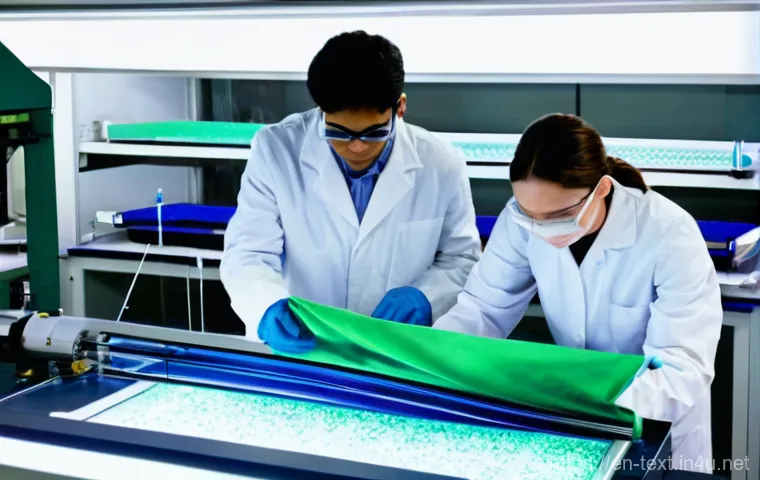
Let’s be real, nobody gets excited about standards documents, but for the practical exam, they are your holy grail. I quickly realized that knowing the relevant ASTM, ISO, or AATCC standards for specific textile tests (e.g., tensile strength, tear strength, pilling, colorfastness) wasn’t optional; it was essential. The exam expects you to know not just *how* to perform a test, but also *what standard* governs it and *how to interpret the results* in the context of those standards. My approach was to create a simplified table of key tests, their corresponding standards, and typical acceptable ranges or pass/fail criteria. This helped me to quickly reference and internalize the critical data. It’s not about memorizing every single number, but understanding the categories and general principles behind each standard, allowing you to quickly navigate the specific requirements during the exam.
| Test Category | Common Tests | Key Standards (Examples) | Why It Matters |
|---|---|---|---|
| Fiber Properties | Fiber Length, Fineness, Strength | ASTM D1440, D1447 | Determines yarn quality and fabric performance potential. |
| Yarn Properties | Yarn Count, Twist, Tenacity | ASTM D1907, D1422 | Impacts fabric strength, drape, and overall aesthetics. |
| Fabric Properties | Tensile Strength, Tear Strength, Pilling, Abrasion Resistance | ASTM D5034, D1424, D4970 | Measures durability, comfort, and aesthetic retention in use. |
| Colorfastness | Washing, Light, Crocking | AATCC Test Method 8, 16, 61 | Ensures color stability under various environmental conditions. |
| Dimensional Stability | Shrinkage to Washing | AATCC Test Method 135 | Crucial for garment fit and consumer satisfaction after laundering. |
Smart Study Strategies: Your Personalized Road Map to Success
Let’s talk about getting this knowledge to stick. I vividly remember feeling overwhelmed by the sheer volume of information, but I quickly learned that generic study methods just wouldn’t cut it. For a practical exam, you need strategies that bridge the gap between theory and application. My absolute game-changer was active recall – not just rereading notes, but actively testing myself. Could I explain a dyeing process step-by-step without looking at my book? Could I identify a fabric defect just from a verbal description? This pushed me beyond passive learning. Another powerful tool was spaced repetition, revisiting topics at increasing intervals. It sounds simple, but it truly reinforces memory, especially for procedural details and specific test parameters. And honestly, finding a study buddy who was as serious as I was made a massive difference. We’d quiz each other, explain concepts, and even just vent our frustrations, which kept us both motivated. It’s about being strategic with your time and choosing methods that truly resonate with the demands of the exam.
Active Learning Techniques: Beyond Rote Memorization
For me, the biggest leap in my preparation came when I stopped trying to memorize everything and started *understanding* everything. This involved active learning. I didn’t just read about how to perform a tensile strength test; I imagined myself in the lab, setting up the machine, clamping the sample, initiating the test, and recording the data. I drew diagrams of machine components and flowcharts of processes. I used mnemonics for lists of properties or defect types. Explaining complex concepts aloud, even to an empty room, helped solidify my grasp. It’s about engaging multiple senses and creating a richer, more interconnected web of knowledge in your mind. This approach not only made the information more digestible but also made the entire learning process far more enjoyable and less like a chore.
Practice Makes Perfect: Simulating the Exam Environment
You wouldn’t run a marathon without training, right? The same goes for the practical exam. While you might not have access to a full textile lab, you can still simulate the experience. My strategy included setting a timer and trying to answer hypothetical practical questions within a time limit, just as I would on exam day. I’d imagine a scenario: “You are given an unknown fabric sample. Describe the steps you would take to identify its fiber composition and weave structure, including relevant tests and expected results.” Then, I’d write down my detailed response. This helped me identify gaps in my knowledge and refine my procedural recall under pressure. Even practicing drawing labeled diagrams of equipment or processing lines under timed conditions proved invaluable. The more you can replicate the exam environment, the less a shock it will be on the actual day, giving you a significant edge.
Beyond the Exam: Cultivating a Textile Engineer’s Mindset
Passing the practical exam isn’t just about getting a certificate; it’s about solidifying the foundation for your career in textiles. What I truly believe sets successful engineers apart isn’t just their technical knowledge, but their ability to think critically, problem-solve creatively, and adapt to an ever-evolving industry. The exam is a crucible, forging these very skills. It demands that you apply theoretical knowledge to tangible problems, that you pay attention to detail, and that you understand the interconnectedness of various processes. My journey post-exam has been a testament to this – the concepts I struggled with during preparation became second nature once I started applying them in real-world scenarios. This continuous learning, coupled with an insatiable curiosity, is what truly defines a forward-thinking textile engineer. It’s about seeing textiles not just as materials, but as solutions, innovations, and expressions of human ingenuity. Embrace that mindset now, and you’ll be unstoppable.
Critical Thinking and Problem-Solving: The Engineer’s Toolkit
The practical exam, in its essence, is a series of problems waiting to be solved. My personal growth during this period wasn’t just in memorizing facts, but in developing my critical thinking muscles. When presented with a potential fabric defect, for instance, I learned to ask: “What are all the possible causes? What evidence supports each cause? How can I confirm my hypothesis?” This structured approach to problem-solving is an invaluable skill that extends far beyond the exam room. It’s about moving past a superficial understanding to truly diagnose issues and propose effective solutions. I even found myself applying this mindset to daily challenges, which was a fun, unexpected benefit. Cultivating this analytical thought process now will serve you incredibly well throughout your entire professional life, enabling you to tackle complex challenges with confidence and precision.
Staying Ahead: Continuous Learning in a Dynamic Industry
The textile industry is not static; it’s a dynamic, innovative field constantly pushing boundaries with smart textiles, sustainable practices, and advanced materials. I quickly learned that my education didn’t end with the exam; it was just the beginning. To truly thrive, I’ve had to embrace a mindset of continuous learning. This means staying updated on new fiber developments, emerging dyeing and finishing technologies, and evolving sustainability standards. I regularly read industry journals, attend webinars, and connect with professionals in the field. Think of the practical exam as your entry ticket, but your commitment to ongoing learning is what will keep you relevant and impactful. This industry offers incredible opportunities for those who are passionate and willing to adapt, and keeping your knowledge sharp is the best investment you can make in your own future. It’s an exciting time to be a textile engineer, and an open mind is your most valuable asset.
Wrapping Things Up
Whew! We’ve covered a lot, haven’t we? From deconstructing the syllabus to the nuances of quality control, preparing for this practical exam can feel like scaling a mountain. But honestly, as someone who’s been through it, I can tell you that every bit of effort you put in now is an investment in your future. It’s not just about passing; it’s about building a solid foundation, sharpening your critical thinking, and developing the hands-on intuition that truly defines a great textile engineer. Remember, this journey is as much about understanding the materials and processes as it is about understanding yourself under pressure. Stay curious, stay persistent, and trust in the preparation you’ve dedicated yourself to. You’ve got this, and I’m genuinely excited for the incredible things you’re going to achieve in this dynamic field!
Useful Information to Keep in Mind
1. Simulate, Simulate, Simulate: Even without a physical lab, mentally walking through each test procedure, visualizing equipment, and drawing diagrams will dramatically boost your confidence and recall. It’s like a mental rehearsal before the big show.
2. Connect the Dots: Don’t just memorize isolated facts. Always strive to understand *why* certain properties exist, *how* processes work, and *what* impacts the final product. This holistic understanding makes information stick better and aids problem-solving.
3. Find Your Study Tribe: Seriously, a good study partner or group can be invaluable. Explaining concepts to others, quizzing each other, and sharing resources makes the learning process more engaging and helps identify blind spots.
4. Master the Standards: While not the most thrilling read, getting familiar with key ASTM, ISO, or AATCC standards for common tests is non-negotiable. Knowing what’s expected and how to interpret results against these benchmarks is a cornerstone of textile engineering.
5. Embrace Continuous Learning: The textile world evolves rapidly! Consider this exam just the beginning. Stay updated with industry news, new technologies, and sustainable practices. Your growth as an engineer will be defined by your ongoing curiosity.
Key Takeaways
To truly excel in the textile engineering practical exam, and indeed in your career, it boils down to a few core principles. First, a deep, practical understanding of materials – from fiber identification to fabric analysis – isn’t just academic; it’s your primary toolkit. You need to grasp not only *what* something is but *how* it behaves and *why*. Second, procedural mastery is paramount. Knowing the steps, the safety precautions, and the variables involved in dyeing, finishing, and testing will set you apart. It’s about developing that hands-on intuition, even if initially, it’s through careful mental walkthroughs. Finally, cultivate a problem-solving mindset and an unwavering commitment to quality. The ability to identify defects, understand their causes, and interpret results against industry standards is what makes a textile engineer truly valuable. This exam isn’t just a hurdle; it’s a foundational experience that hones the very skills you’ll rely on throughout your professional journey. Approach it with dedication, a strategic mind, and a bit of genuine excitement for the challenges, and you’ll undoubtedly emerge stronger and more capable.
Frequently Asked Questions (FAQ) 📖
Q: What are the most common pitfalls students fall into during the practical exam, and how can I avoid them?
A: Oh, I’ve seen this play out so many times, and honestly, I’ve probably been guilty of a few myself! The biggest trap I’ve observed, and one I learned to steer clear of, is rushing through the instructions.
It’s so easy to skim, think you’ve got it, and then miss a tiny, yet critical, detail that throws your whole experiment off track. My top tip here is to literally read every single word, maybe even twice, and mentally (or physically, if allowed) tick off each step.
Don’t be afraid to highlight key verbs or values. Another common pitfall is not being truly familiar with the equipment. Knowing the theory is one thing, but if you’re fumbling with the controls of a tensile tester or struggling to calibrate a spectrophotometer under pressure, you’re losing precious time and confidence.
Spend as much time as you can getting hands-on with the actual machines you’ll use. Seriously, just operating them repeatedly builds muscle memory and takes away a huge chunk of anxiety.
Lastly, and this is a big one for demonstrating your understanding, students often neglect proper documentation of their observations. It’s not just about getting the right result; it’s about showing your process.
Make sure your notes are clear, precise, and include all relevant units and conditions. Trust me, examiners notice the details, and a well-documented process can sometimes make up for a minor experimental hiccup.
Q: How much should I focus on emerging trends like sustainable textiles and smart fabrics for the practical exam?
A: That’s an absolutely brilliant question, and one I wish I’d considered more deeply during my own prep! When I was studying, these topics were more like “bonus points” in a theoretical essay.
But let me tell you, the textile industry has transformed completely. Now, you absolutely must have a solid foundational understanding of these emerging trends for your practical exam.
Examiners aren’t just looking for someone who can perform basic tests; they’re looking for future innovators. Expect scenarios where you might need to identify sustainable fiber alternatives, understand basic quality control for recycled materials, or even interpret data related to smart fabric properties, like conductivity or sensor integration.
You might not be asked to design a smart fabric from scratch, but you should be able to articulate its applications and the challenges in its production or testing.
Demonstrating your awareness of current industry directions – things like circular economy principles in textiles or the functional benefits of wearable tech – shows you’re not just learning from old textbooks, but you’re ready to contribute to the evolving world of textile engineering.
So, yes, dedicate significant time to understanding how these trends translate into practical considerations. It truly gives you an edge!
Q: What’s the best way to prepare for the hands-on components, especially for someone who feels a bit rusty?
A: Oh, the hands-on components! That’s where the rubber meets the road, isn’t it? I totally get that feeling of being a bit rusty; it’s like trying to remember how to ride a bike after a long break.
My absolute best advice for anyone feeling this way is to prioritize actual physical practice. There is simply no substitute for getting your hands dirty.
If you have access to a lab, even if it’s just for a few hours, use it! Repeat those procedures – operating the yarn twist tester, performing a titration for dye concentration, or setting up a fabric strength test – until the movements become second nature.
You want that muscle memory to kick in when exam pressure hits. If lab access is limited, get creative. Can you practice knot-tying techniques with string at home?
Can you sketch out equipment diagrams and label every single part, mentally walking through the calibration process? I used to spend hours visualizing each step, down to the tiniest detail, and it genuinely helped.
Consider finding online videos of specific lab procedures if your textbooks lack detail. And if there’s any chance to shadow someone more experienced, take it!
Observing a seasoned professional can reveal subtle tricks and best practices that you’d never pick up from a manual. The goal here is to build confidence, because a calm, confident hand is a precise hand in the exam.