You know that feeling, right? Staring at a blank canvas, or perhaps a mountain of fabric samples, trying to bring a vision to life in today’s lightning-fast fashion world.
The textile industry moves at an insane pace, and honestly, keeping up with trends, ever-evolving consumer demands, and sustainable practices can often feel like an impossible juggling act.
But what if I told you there’s a powerful duo revolutionizing how we create, innovate, and even think about textiles? I’m talking about the brilliant minds of textile engineers collaborating seamlessly with the incredible capabilities of CAD (Computer-Aided Design) software.
From slashing development times to unlocking unimaginable design possibilities, this synergy is quickly becoming the unsung hero behind so many of the cutting-edge innovations we see popping up everywhere.
I’ve personally witnessed how a well-integrated CAD system can turn weeks of painstaking manual work into mere hours, not just for huge global brands but for independent designers and small businesses too, making their creative process smoother and far more efficient.
It’s truly a game-changer for anyone looking to make their mark in this dynamic industry, pushing boundaries in everything from intricate pattern creation to eco-friendly production methods.
Curious how this digital magic works and how you can tap into its full potential to revolutionize your own projects? Well, you’re in for a treat because I’m about to pull back the curtain and show you exactly how.
The Digital Loom: Weaving Dreams with Software
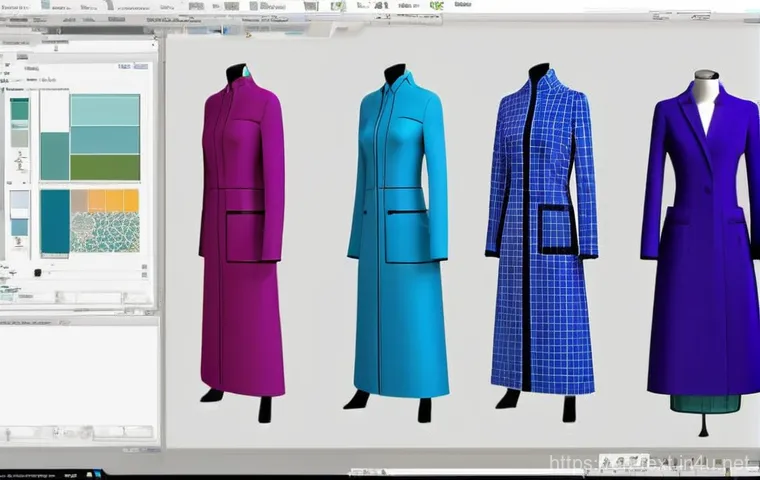
You know that moment when an idea sparks, and you can almost feel the texture of the fabric, the way it drapes, or the intricate pattern forming in your mind’s eye?
For the longest time, turning those vibrant mental images into a tangible reality felt like a long, winding road, often filled with trial and error. But honestly, watching textile engineers now harness the raw power of CAD software has been nothing short of transformative.
It’s like they’ve been handed a digital loom that can weave anything they can imagine, not just in theory, but with astonishing accuracy right on their screens.
This isn’t just about making things look pretty; it’s about fundamentally altering the very first step of creation, allowing for an unprecedented level of control and detail.
I’ve seen designers spend hours hand-sketching intricate repeats, only to find small inconsistencies. With CAD, those inconsistencies vanish, replaced by mathematical precision, giving them the freedom to push creative boundaries without being bogged down by the limitations of traditional methods.
It truly makes the initial stages of design feel less like a chore and more like pure, unadulterated creation, which is a feeling every creative craves.
The sheer visual fidelity and interactive nature of these tools mean that what you envision is what you get, or at least, what you can refine with incredible ease.
This digital journey from concept to design is a beautiful dance of engineering and artistry.
Transforming Initial Concepts into Tangible Designs
Think about the traditional way we’d begin a new textile project. You’d sketch, you’d paint, you might even cut and paste physical elements. It was tactile, yes, but also incredibly time-consuming and prone to errors that wouldn’t reveal themselves until much later in the process.
Now, with CAD, those initial sparks of inspiration can be immediately translated into a digital format that’s not only editable but also incredibly precise.
I remember working on a complex jacquard pattern once, and the sheer effort of translating a hand-drawn sketch into a workable loom draft was mind-boggling.
With CAD, you can draw directly onto a simulated fabric, adjust thread counts, colorways, and even visualize the weave structure in 3D. It’s a game-changer for speed and accuracy.
You can literally see how different yarns will interact, how the light will hit the finished product, and how the pattern will repeat seamlessly, all before a single thread is even dyed or woven.
This allows for an iterative process that feels much more fluid and responsive, enabling designers to experiment with concepts they might have previously dismissed due to the sheer difficulty of execution.
It’s an empowering tool that truly brings ideas to life with a vibrancy that’s hard to achieve otherwise.
The Unseen Hand: Precision and Iteration
One of the most profound impacts I’ve observed is the level of precision CAD brings to textile design. It’s almost like having an unseen hand guiding your creative process, ensuring every line, every curve, and every repeat is absolutely perfect.
For textile engineers, this means they can program exact specifications for machinery, knowing that the design on screen will translate directly into the physical product.
This wasn’t always the case, right? There was always a degree of approximation, a “hope for the best” element when moving from design to production. But now, with CAD, every minute detail, from yarn thickness to stitch density, can be meticulously defined and visualized.
This precision is absolutely crucial, especially when you’re dealing with high-performance textiles or intricate fashion pieces where a millimeter can make all the difference.
And the iteration? Oh, the iteration is where the magic truly happens. Instead of re-doing entire physical samples, which is both costly and wasteful, designers can make countless adjustments digitally.
Change a color palette? A few clicks. Adjust a pattern’s scale?
Instantaneous. It’s this rapid, precise, and cost-effective iteration that allows for unparalleled design refinement and ultimately, a superior product.
Beyond the Sketchbook: Revolutionizing Design Workflows
Let’s be real, the traditional design studio, while romanticized, often involved mountains of paper, fabric swatches, and a whole lot of manual effort.
It was a workflow that, while producing incredible results, was inherently slow and often fragmented. But now, with CAD at the heart of textile engineering, we’re talking about a complete paradigm shift.
It’s not just about digitizing existing processes; it’s about creating entirely new ways of working that are faster, more integrated, and frankly, far more enjoyable.
I’ve personally experienced the frustration of trying to communicate a nuanced design concept across continents using faxes or blurry email attachments.
The difference now, being able to share a fully rendered, interactive 3D model, is monumental. This move beyond the physical sketchbook means that creativity isn’t confined by geographical boundaries or the limitations of physical materials in the initial stages.
It allows for a fluidity and flexibility that was previously unimaginable, enabling designers and engineers to focus more on innovation and less on logistical hurdles.
The efficiency gains are tangible, allowing smaller teams to achieve what larger studios once struggled with, democratizing access to cutting-edge design capabilities.
Ditching the Drudgery: Efficiency Gains You Can Feel
Remember those days of manually rendering patterns, painstakingly coloring in designs, or spending hours calculating repeat dimensions? I certainly do, and honestly, a lot of it felt like drudgery rather than creative work.
That’s where CAD truly shines, by taking over the repetitive, detail-oriented tasks that used to eat up so much valuable design time. I’ve witnessed firsthand how a well-implemented CAD system can shave weeks off a product development cycle.
Imagine being able to instantly generate multiple colorways for a single pattern, or automatically adapt a design to different fabric widths. It frees up designers to do what they do best: create, innovate, and problem-solve, rather than getting bogged down in manual execution.
This isn’t just about speed; it’s about reducing mental fatigue and allowing for a more enjoyable, less stressful creative process. The ability to quickly visualize and tweak elements means less guesswork and more informed decisions right from the start, making the entire design journey smoother and far more predictable, which is a massive win for everyone involved.
Collaborative Canvas: Bridging Teams and Visions
One of the biggest headaches in any creative industry is ensuring everyone on the team is on the same page, especially when you have designers, engineers, marketing, and production all contributing.
In the textile world, this often meant physical meetings, shipping samples back and forth, and a lot of room for misinterpretation. What CAD has done is create a truly collaborative canvas.
Designers can work on a pattern, and engineers can immediately access the digital file to assess its manufacturability, identify potential issues, or even suggest structural improvements.
It removes so many communication barriers! I’ve been part of projects where a single CAD file became the central hub for all feedback and revisions, accelerating decision-making and dramatically reducing errors.
This seamless exchange of information fosters a much stronger sense of teamwork, where everyone is working from the most current version of a design, understanding its nuances and implications.
It’s like everyone is drawing on the same digital whiteboard, ensuring that the final product is a perfect synthesis of aesthetic vision and technical expertise.
From Concept to Closet: Accelerating Product Development
The journey from a designer’s initial spark of inspiration to a finished garment or textile product in a customer’s hands used to be an arduous one, often fraught with delays, misunderstandings, and costly reworks.
We’re talking months, sometimes even over a year, for complex items. However, what I’ve seen with the integration of textile engineers and CAD software is nothing short of a revolution in speed and efficiency in product development.
It’s truly amazing how much faster we can move, without sacrificing quality, in fact, often improving it. The traditional process involved a lot of physical hand-offs and waiting times – waiting for samples to be made, shipped, and reviewed.
Each of these steps introduced potential delays and costs. With CAD, so much of that waiting game is eliminated. We can iterate on designs, simulate fabric behavior, and even generate production-ready files almost instantaneously.
It’s like cutting out all the red tape and getting straight to the heart of creation. For businesses, this means faster time-to-market, which is absolutely critical in today’s trend-driven fashion and textile industries.
Speeding Up Sampling and Prototyping
Physical sampling has always been one of the most resource-intensive and time-consuming parts of textile development. Imagine creating multiple versions of a fabric or garment just to test different colors, patterns, or fit.
Each sample requires material, labor, and shipping, which adds up quickly in both cost and environmental impact. CAD changes this entirely. Textile engineers can now create highly accurate virtual prototypes that simulate not just the visual aspects but also the drape, texture, and even the stretch of a fabric.
I remember a project where we used to create at least five physical prototypes for a complex activewear garment to get the fit and fabric combination just right.
With CAD, we could reduce that to one or two physical samples, only after extensive virtual testing. This drastically cuts down on material waste and production costs, and perhaps most importantly, it slashes the time needed to get a product from design to a finalized prototype.
It’s not just an improvement; it’s a fundamental shift that enables companies to be far more agile and responsive to market demands, getting trendy items into consumers’ hands much quicker.
Minimizing Missteps: Catching Flaws Before Production
One of the most frustrating things in the old textile development pipeline was discovering a critical flaw only after a large production run had begun.
Talk about a costly mistake! Think about a subtle error in a repeat pattern that becomes glaringly obvious on a 100-yard bolt of fabric, or a structural issue in a weave that compromises the integrity of the material once it’s off the loom.
These kinds of missteps could lead to massive waste of resources, time, and money. This is where the collaborative power of textile engineers and CAD software truly shines.
By using sophisticated simulation tools within CAD, engineers can rigorously test and analyze every aspect of a design before it even reaches the production floor.
They can identify potential weaving errors, assess color fastness under different conditions, and even predict how a fabric will perform under stress.
I’ve seen engineers use these tools to catch pattern distortions that would have been invisible on a small physical swatch but catastrophic in a larger production.
This proactive flaw detection is invaluable, saving businesses untold amounts in rework, scrapped materials, and lost revenue. It’s a peace of mind that translates directly to a healthier bottom line and a more sustainable process overall.
Sustainability’s New Thread: Eco-Conscious Design with Tech
It’s no secret that the textile industry has faced its fair share of criticism regarding its environmental footprint. From excessive water usage in dyeing to textile waste piling up in landfills, the challenges are immense.
As someone deeply invested in the future of fashion and textiles, I’ve always been on the lookout for genuine solutions, and honestly, the collaboration between textile engineers and CAD software offers one of the most promising paths forward.
This isn’t just about making things look good on screen; it’s about fundamentally rethinking how we design, produce, and consume textiles in a way that prioritizes our planet.
The beauty of this digital integration lies in its ability to empower designers and engineers to make more informed, eco-conscious decisions at every stage, significantly reducing the environmental impact that has historically plagued our industry.
I’ve seen firsthand how a small change in a digital design, guided by engineering insights, can lead to substantial reductions in waste during production, proving that technology can truly be a force for good.
Reducing Waste: A Greener Way to Create
Textile waste is a massive global issue, with tons of fabric scraps and unsold garments ending up in landfills every year. A significant portion of this waste originates from inefficient design and production processes.
This is where CAD, wielded by skilled textile engineers, becomes a powerful tool for sustainability. By creating precise digital patterns and layouts, designers can optimize fabric utilization, minimizing off-cuts and reducing the amount of material that simply gets thrown away.
Think about the intricate process of cutting fabric for garments; even a slight misalignment or inefficient pattern placement can lead to significant waste over a large production run.
CAD systems, however, can calculate the most efficient nesting patterns, virtually eliminating unnecessary scrap. I’ve personally been involved in projects where implementing CAD-driven pattern optimization led to a 10-15% reduction in fabric waste, which, when scaled across thousands of units, is an astronomical saving both environmentally and financially.
It’s a tangible, measurable impact that proves digital tools are not just about speed, but also about responsibility.
Material Intelligence: Smart Choices for a Better Planet

Making sustainable material choices is another cornerstone of eco-conscious textile design, but it’s not always straightforward. There’s so much to consider: the origin of fibers, the environmental impact of processing, dye compatibility, and end-of-life recyclability.
Textile engineers, armed with advanced CAD software, are now able to integrate “material intelligence” directly into the design process. This means they can access databases of sustainable materials, understand their properties, and even simulate how these materials will perform in a design, all before committing to a physical purchase.
For instance, a designer might be debating between organic cotton and recycled polyester. With CAD, an engineer can help them visualize how each material would affect the drape, texture, and even the environmental footprint of the final product.
I’ve seen teams use these tools to calculate the lifecycle impact of different material choices, guiding them towards options that are not only aesthetically pleasing but also genuinely better for the planet.
This blend of engineering data and design aesthetics is crucial for building a truly sustainable textile future, moving us away from guesswork and towards data-driven, responsible creation.
Mastering Materials: The Science Behind Smart Textiles
The world of textiles is evolving at an incredible pace, far beyond just aesthetics. We’re now seeing an explosion of “smart textiles” – fabrics that can monitor vital signs, change color, generate electricity, or even regulate temperature.
This isn’t magic; it’s the brilliant work of textile engineers who are pushing the boundaries of material science, and they’re doing it largely with the indispensable help of CAD software.
Honestly, trying to engineer these complex, multi-functional materials with traditional methods would be like trying to build a skyscraper with just a hammer and nails – nearly impossible!
CAD provides the microscopic precision and simulation capabilities needed to design and understand these advanced materials at their foundational level.
It’s truly fascinating to see how they integrate different fiber types, conductive threads, and even embedded sensors into a cohesive and functional textile structure.
This synergy between deep engineering knowledge and powerful digital tools is what’s driving the next wave of innovation in textiles, creating fabrics that aren’t just worn, but actively interact with their environment and us.
Simulating Performance: Predicting Fabric Behavior
Before CAD, predicting how a new fabric structure would behave in the real world was often a matter of educated guesswork followed by expensive and time-consuming physical tests.
Would it stretch too much? Would it pill after a few washes? How would it react to moisture or extreme temperatures?
These questions were critical but hard to answer without producing actual samples. Now, textile engineers are using advanced CAD simulations to virtually “test” fabrics long before they’re ever made.
These sophisticated tools can model stress, strain, drape, breathability, and even thermal properties. I’ve personally watched demonstrations where engineers could show exactly how a new composite fabric would perform under various conditions, identifying potential weak points or areas for improvement, all within the digital environment.
This capability is revolutionary for developing everything from high-performance athletic wear to medical textiles, ensuring that the materials meet stringent performance requirements without endless rounds of physical prototyping.
It’s a level of predictive power that significantly de-risks product development and accelerates innovation.
Innovating with Advanced Fibers and Structures
The beauty of modern textile engineering, amplified by CAD, lies in its ability to not just work with existing materials, but to truly innovate new ones.
We’re talking about everything from designing fabrics with embedded micro-capsules that release scents or moisturizers, to creating intricate 3D-woven structures that offer superior strength-to-weight ratios.
These kinds of innovations often require a deep understanding of fiber mechanics, chemical interactions, and complex weave or knit patterns – areas where CAD software becomes an invaluable partner.
Engineers can experiment with different fiber blends, filament orientations, and structural geometries in a virtual space, optimizing for specific properties like elasticity, durability, or conductivity.
I’ve seen some truly mind-bending designs for flexible electronic textiles, all painstakingly developed and refined within a CAD environment before a single specialized fiber was even ordered.
It’s this ability to visualize, manipulate, and optimize at such a granular level that allows for the creation of truly advanced and often groundbreaking textile products that were once confined to the realm of science fiction.
The Future is Fabricated: Innovation at Our Fingertips
If you’ve been following the textile industry even casually, you know it’s no longer just about fashion seasons and color trends. We’re on the cusp of, and in many ways already experiencing, a profound shift driven by technological innovation.
The seamless integration of textile engineering and CAD software isn’t just improving existing processes; it’s fundamentally reshaping what’s possible in the world of fabrics and garments.
This powerful duo is putting previously unimaginable capabilities right at our fingertips, enabling levels of customization, responsiveness, and creativity that were once distant dreams.
I feel like we’re just scratching the surface of what’s achievable. From hyper-personalized clothing that fits perfectly and performs exactly as desired, to completely new material functionalities that blend technology with comfort, the future of textiles is being fabricated right before our eyes, and it’s an incredibly exciting time to be a part of this journey.
The pace of innovation is accelerating, and CAD is definitely a key driver in that.
Customization at Scale: Tailoring to Every Demand
The desire for personalized products has exploded, and the textile industry is no exception. Everyone wants something unique, something that fits them perfectly, or reflects their individual style.
Historically, bespoke production was expensive and slow, reserved for luxury items. But with textile engineers leveraging CAD, customization at scale is becoming a very real possibility.
Imagine a system where a customer’s unique body scans could instantly generate a perfectly tailored garment pattern in CAD, ready for automated production.
Or a service where you can design your own intricate fabric pattern, and it’s produced just for you, without exorbitant costs. I’ve seen smaller brands already experimenting with this, offering bespoke options with much shorter lead times and more accessible price points thanks to streamlined digital workflows.
This isn’t just about individual garments; it extends to home textiles, upholstery, and even technical fabrics, allowing for precise functional customization.
This shift means that manufacturers can cater to niche markets and individual preferences with unprecedented agility, moving away from mass-produced uniformity towards a more personalized, customer-centric model.
Emerging Technologies: What’s Next in Textile Tech
The exciting thing about this powerful combination of textile engineering and CAD is that it’s constantly evolving, with new technologies emerging that promise to push the boundaries even further.
We’re talking about advancements like artificial intelligence integrating with CAD to suggest novel material compositions or design variations based on performance data.
Or the growing potential of virtual and augmented reality to allow designers to “wear” their creations in a digital space, assessing drape and fit with stunning realism before any physical sample is made.
I’m particularly intrigued by the potential for generative design, where algorithms can explore thousands of design permutations that a human might never conceive, optimized for specific criteria like sustainability, performance, or aesthetic appeal.
The convergence of these technologies means that the textile design process will become even more intelligent, efficient, and creatively boundless. It’s not just about what we can do now, but what’s just around the corner, and believe me, it’s going to be transformative.
Unlocking Creativity: Personal Stories from the Digital Frontier
When you talk about technology in creative fields, sometimes people worry it might stifle true artistry, or make everything feel too sterile. But from my own experience, and from countless stories I’ve gathered from textile designers and engineers, the exact opposite is true when it comes to CAD in textiles.
It’s not about replacing human ingenuity; it’s about augmenting it, providing tools that remove the tedious roadblocks and allow creativity to truly flourish.
I’ve personally seen how frustrated designers, once wrestling with complicated manual processes, suddenly light up with excitement as they discover the freedom and speed that CAD offers.
It transforms their creative landscape, opening up avenues for experimentation that were previously inaccessible due to time, cost, or technical difficulty.
This isn’t just a professional observation; it’s a deep-seated belief born from seeing the genuine joy and innovation these tools unlock in individuals and teams across the industry.
My Own Aha! Moment with CAD
I’ll never forget my own “aha!” moment with CAD. I was working on a tricky pattern repeat for a sportswear line, and no matter how many times I sketched it out and tried to scale it, something just felt off.
The geometric precision I needed was incredibly hard to achieve manually without it looking stiff. A colleague suggested I try a basic CAD module designed for pattern making.
Hesitantly, I gave it a go. Within an hour, what had been a day-long struggle turned into a beautifully rendered, perfectly repeating pattern that I could manipulate with incredible ease.
I could change the scale, rotate elements, and even see how it would look on different body shapes instantly. It was truly liberating! That experience completely shifted my perspective.
It wasn’t about replacing my drawing skills, but about enhancing them, giving me a level of control and precision that empowered me to create designs I simply couldn’t have achieved as effectively before.
It felt like I’d found a superpower, freeing up my mental energy to focus on the truly creative aspects rather than wrestling with technical minutiae.
Empowering Small Businesses and Independent Innovators
One of the most heartwarming aspects of this digital revolution is how it’s democratizing access to high-level textile design and engineering capabilities.
It’s no longer just the massive corporations with huge R&D budgets that can tap into cutting-edge innovation. Small businesses, independent designers, and even aspiring entrepreneurs are now able to leverage sophisticated CAD software, often through more accessible cloud-based platforms or educational licenses.
I’ve encountered numerous independent textile artists who, with a laptop and CAD software, are creating incredibly intricate and unique fabric designs that compete directly with much larger players.
This technology empowers them to bring their unique visions to life, to prototype quickly, and to communicate their designs professionally to manufacturers, regardless of their scale.
It levels the playing field, fostering a much more vibrant and diverse textile ecosystem. This means more unique products for consumers and more opportunities for creative minds to make their mark without needing an enormous initial investment, which is a fantastic development for the entire industry.
| Feature | Traditional Textile Design | CAD-Enhanced Textile Design |
|---|---|---|
| Design Iteration Speed | Slow, weeks for physical samples | Rapid, hours to minutes for virtual models |
| Cost of Prototyping | High, materials, labor, shipping for each physical sample | Significantly lower, primarily software and virtual rendering |
| Material Waste | Often high, due to manual cutting, miscalculations, and excess samples | Greatly reduced through pattern optimization and virtual testing |
| Precision & Accuracy | Subject to human error, hand measurements | High, mathematically precise, digital specifications |
| Collaboration | Physical meetings, shipping samples, potential miscommunication | Seamless digital sharing, real-time feedback, centralized files |
| Time to Market | Longer cycles, delays due to physical production stages | Shorter cycles, faster product launches and trend responsiveness |
| Environmental Impact | Higher, more physical resources consumed, increased carbon footprint from shipping | Lower, reduced material usage, fewer physical samples, less shipping |
Frequently Asked Questions (FAQ) 📖
Q: What are the biggest advantages of combining textile engineering expertise with C
A: D software? A1: Oh, where do I even begin? When textile engineers, with their deep understanding of materials, weaves, and construction, team up with CAD software, it’s like pure magic for your workflow.
The biggest, most immediate benefit I’ve seen firsthand is the incredible leap in speed and efficiency. Seriously, what used to take weeks of painstaking manual drafting, cutting, and fitting can now be accomplished in mere hours or days.
You can literally whip up intricate designs, patterns, and even entire garment prototypes digitally. This drastically cuts down your time-to-market, which is a huge competitive edge in our fast-paced industry.
Beyond speed, the precision and accuracy you gain are game-changers. No more accidental snips or slight misalignments; CAD eliminates manual errors, ensuring every measurement is exact and every pattern piece fits together flawlessly.
This precision extends to grading patterns across different sizes, which used to be such a headache! And let’s talk about cost savings. Because you’re doing so much development virtually, you drastically reduce the need for physical samples and prototypes, meaning less wasted fabric and materials.
Plus, CAD software can optimize fabric layouts for cutting, minimizing waste and putting more money back in your pocket. It’s a win-win for your bottom line and for the planet.
But it’s not just about practicality; it’s about unleashing creativity. CAD allows designers to experiment with complex patterns, vivid colorways, and realistic fabric textures digitally before committing to production.
You can visualize how a fabric drapes, how a pattern repeats, and how different elements interact – all on screen. This iterative process fosters innovation and helps you refine your vision to perfection.
Finally, communication gets a massive upgrade. Sharing digital files with manufacturers, clients, or team members across the globe is seamless, ensuring everyone is literally on the same page.
It really is a complete overhaul of the design process, making it smarter, faster, and more imaginative.
Q: How can even small businesses or independent designers leverage this textile engineering + C
A: D synergy without breaking the bank? A2: This is a question I get asked all the time, and honestly, it’s fantastic news for the smaller players! When I first dipped my toes into the world of digital design, it felt like these powerful tools were only for the big corporations.
But not anymore! The market has evolved so much, offering incredibly accessible CAD solutions tailored for every budget and skill level. You don’t need a massive, expensive, enterprise-level suite to get started.
Many reputable software providers offer scalable options, often with subscription-based models that significantly reduce the upfront investment. This means you can pay as you go, which is perfect for managing cash flow.
Think about popular graphic design software like Adobe Illustrator or CorelDRAW; they can be excellent starting points for 2D pattern creation and digital textile print designs before you even dive into specialized textile CAD.
When you’re first exploring, focus on the core modules that will give you the most bang for your buck: pattern making, grading, and basic visualization.
Many platforms, like Optitex or Gerber AccuMark, have modules that cater to this, and even offer trials or more economical versions. Plus, the sheer volume of online tutorials, free courses, and supportive communities out there is astounding.
You can teach yourself the essentials and build your skills without enrolling in an expensive program. I’ve personally seen designers go from zero CAD experience to creating stunning, production-ready patterns just by dedicating time to online learning.
Leveraging even basic CAD capabilities significantly boosts your design quality, speed, and reduces costly errors, making you incredibly competitive, even against larger brands.
It truly levels the playing field!
Q: What are some exciting future trends or unexpected applications we can expect from this collaboration?
A: Oh, this is where my inner tech geek truly gets excited! The future of textile engineering and CAD is not just bright; it’s practically glowing with unimaginable possibilities.
We’re already seeing incredible advancements, and it feels like we’re just scratching the surface. One of the biggest game-changers is the integration of Artificial Intelligence (AI) and Machine Learning into CAD software.
Imagine AI suggesting design elements based on current market trends, automating complex pattern adjustments, or even generating entirely new patterns with just a few clicks.
It’s going to supercharge the creative process and streamline development even further. Then there’s the truly immersive experience of Virtual Reality (VR) and Augmented Reality (AR).
Soon, designers won’t just see 3D renderings on a screen; they’ll be able to step inside virtual showrooms, manipulate fabrics and garments in a fully immersive digital space, or even host virtual fashion shows.
And for customers? Think about virtual try-on experiences that are so realistic, you won’t need to physically try on clothes again. And let’s not forget smart textiles!
CAD is becoming crucial for engineers to design fabrics that seamlessly integrate electronics, creating interactive and functional garments. From jackets that adjust temperature to shirts that monitor your heart rate, CAD helps visualize and plan the intricate placement of these components within the textile structure.
We’re also going to see 3D printing mature to a point where we can directly print complex textile structures, or even entire garments and accessories, on demand.
This could revolutionize personalized fashion and massively reduce waste. Ultimately, this collaboration is pushing us toward hyper-personalization, allowing for bespoke designs with unparalleled ease, and an even more radically sustainable industry where every material and process is optimized for minimal environmental impact.
It’s truly a thrilling time to be in textiles, and I for one, can’t wait to see what brilliant innovations come next!