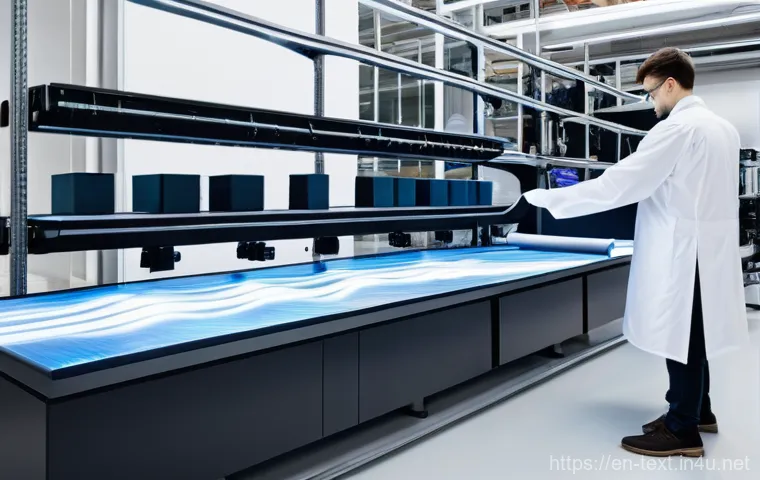
Hey there, future-shapers! Ever found yourself wondering if a textile engineering certification is truly worth it in today’s incredibly fast-paced world?
I mean, with all the buzz around AI, automation, and ever-evolving tech, sometimes it feels like traditional engineering fields might be taking a back seat, right?
But let me tell you, from my own deep dive into the industry and countless conversations with seasoned professionals, the textile world is anything but stagnant.
In fact, it’s undergoing a massive, exciting transformation! We’re talking about everything from smart fabrics that monitor your health and seamlessly communicate with your devices, to groundbreaking sustainable innovations that are literally reshaping our planet’s future.
This isn’t just about weaving threads and operating machinery anymore; it’s a dynamic, high-tech field brimming with incredible potential, far beyond what most people typically imagine.
If you’ve been eyeing that textile engineering certification, thinking about the genuinely impactful doors it could open for your career, you are absolutely on the right track.
It’s a landscape that desperately needs sharp minds, creative problem-solvers, and innovative spirits ready to tackle some of the biggest global challenges.
So, do you want to truly understand what opportunities actually await you and how this qualification can genuinely propel your career forward? Let’s uncover all the exciting details together, right now!
The Digital Threads: Weaving Tech into Textiles
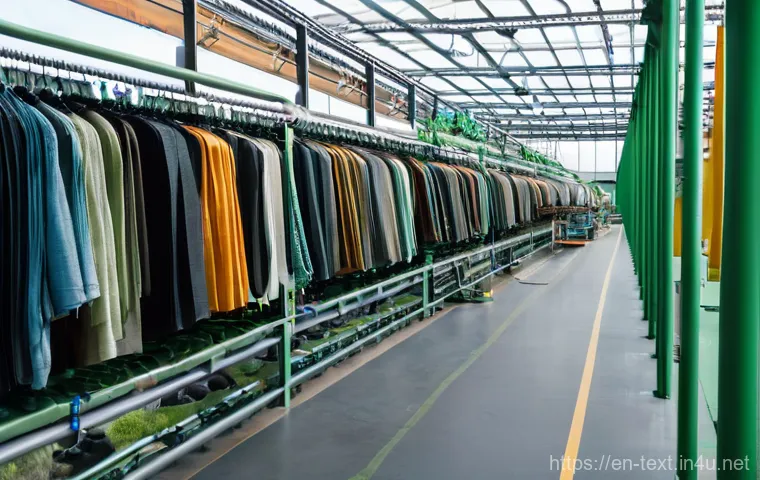
Believe it or not, the world of textile engineering has undergone a profound digital revolution, much like every other industry we hold dear. Forget the dusty, antiquated image of old-school factories; today, we’re talking about state-of-the-art facilities where algorithms dictate design and robots handle the intricate dance of production.
From my own observations and conversations with folks on the cutting edge, it’s clear that understanding how technology integrates with textiles is no longer a niche skill, it’s absolutely fundamental.
You see, the demand for efficiency, customization, and complex material properties means that traditional methods simply won’t cut it anymore. We’re talking about a field where your ability to merge engineering principles with digital tools can truly set you apart, creating materials and processes that were once the stuff of science fiction.
It’s a thrilling time to be involved, witnessing firsthand how digital innovation is literally spinning new possibilities into existence, making production faster, smarter, and incredibly precise.
This transformation isn’t just about faster machines; it’s about a complete reimagining of the textile lifecycle through a digital lens. It truly feels like the industry is finally catching up to the digital age, and the pace of change is exhilarating.
From CAD to AI: Designing the Future of Fabrics
When I first started exploring the textile space, Computer-Aided Design (CAD) was already a game-changer, allowing designers to visualize and iterate much faster.
But now, it’s gone so far beyond that! We’re talking about Artificial Intelligence and machine learning algorithms that can predict material performance, optimize fabric structures for specific uses, and even generate entirely new textile designs based on a set of parameters.
Imagine feeding an AI data on desired breathability, stretch, and durability, and having it spit out a blueprint for a brand-new performance fabric! From what I’ve seen, this isn’t just a hypothetical scenario; it’s happening right now in leading textile labs and design studios.
A textile engineering certification truly grounds you in the fundamental properties of materials, giving you the expertise to effectively communicate with these advanced systems and interpret their outputs.
You become the critical bridge between cutting-edge AI and the tangible, beautiful products we use every day. It’s not about being replaced by machines; it’s about leveraging them to push the boundaries of creativity and functionality in ways we never thought possible.
Automation and Robotics: Precision in Production
Stepping onto the floor of a modern textile manufacturing plant is an eye-opening experience. The sheer level of automation and precision robotics is astounding.
Gone are the days of purely manual, repetitive tasks. Now, complex robotic arms handle delicate fibers, laser cutters sculpt intricate patterns with millimeter accuracy, and automated systems monitor every stage of production to ensure consistency and minimize waste.
My friend, who’s been in the industry for years, often talks about how the textile engineer’s role has evolved from merely overseeing human labor to programming, maintaining, and innovating these sophisticated robotic systems.
Your certification provides you with the foundational knowledge of materials and processes needed to effectively manage these highly automated environments.
It’s about understanding the mechanics of a loom, for instance, but also knowing how to integrate it with smart sensors and robotic feeders for optimal output.
This blend of traditional engineering know-how with modern automation expertise is what makes you such a valuable asset in today’s manufacturing landscape, directly impacting productivity and quality.
Sustainability is the New Black: Revolutionizing the Textile Lifecycle
If there’s one area where textile engineering is not just thriving but absolutely essential, it’s sustainability. Seriously, it’s no longer just a buzzword; it’s the core of innovation in the textile world.
Consumers, brands, and even governments are demanding more environmentally responsible products, and it’s textile engineers who are at the forefront of delivering these solutions.
From developing materials that reduce water consumption to creating closed-loop systems that eliminate waste, the opportunities here are immense and, frankly, incredibly impactful.
I’ve personally seen a massive shift in focus within the industry towards genuinely green practices, moving away from quick fixes to truly systemic changes.
This isn’t just about feeling good; it’s about creating economic value and a competitive edge in a market that increasingly values ecological responsibility.
A textile engineering certification gives you the deep understanding of material science and production processes needed to innovate in this critical space, allowing you to design solutions that are both environmentally sound and economically viable.
It’s truly inspiring to see engineers actively shaping a greener future with every fiber they touch.
Eco-Friendly Materials and Processes
The quest for eco-friendly materials is a huge part of what makes modern textile engineering so exciting. We’re moving beyond just organic cotton and into a realm of truly innovative fibers derived from unexpected sources.
Think about fabrics made from algae, mushroom mycelium, or even recycled plastic bottles transformed into high-performance sportswear. From my discussions with material scientists, the challenge isn’t just finding new sources, but also developing processes that are low-impact in terms of water, energy, and chemical use.
This is where your engineering expertise truly shines. You learn about the entire lifecycle of a material, from its origin to its eventual disposal or recycling.
This holistic view is crucial for identifying genuine sustainable alternatives and avoiding “greenwashing.” A certification equips you with the knowledge to assess the environmental footprint of different materials and processes, enabling you to make informed decisions that drive real, positive change.
It’s about designing textiles that not only look good and perform well but also respect our planet.
Circular Economy in Fashion and Beyond
The concept of a circular economy in textiles, where waste is minimized and resources are kept in use for as long as possible, is rapidly gaining traction, and honestly, it’s one of the most promising avenues for impact.
Instead of the old “take-make-dispose” model, we’re talking about designing garments and textiles that can be easily repaired, recycled, or biodegraded, effectively closing the loop.
I’ve seen companies investing heavily in technologies that allow them to recover fibers from old clothes and turn them into new ones, or even develop biodegradable textiles that return nutrients to the earth.
A textile engineering certification provides you with the technical understanding of polymer science, fiber properties, and textile chemistry required to develop these innovative solutions.
You’ll be instrumental in designing products for disassembly, creating new recycling methodologies, or even engineering fibers that break down harmlessly.
This isn’t just about making products; it’s about reimagining the entire system and creating a regenerative industry, which is a truly empowering position to be in.
Smart Fabrics: Where Fashion Meets Functionality
Have you ever imagined wearing clothes that could monitor your heart rate, adjust to the ambient temperature, or even charge your phone? Well, hold onto your hats because smart fabrics are making these seemingly futuristic concepts a reality, right now!
This isn’t just a fleeting trend; it’s a whole new frontier where textile engineering is merging with electronics, data science, and even healthcare. From what I’ve observed, the demand for these integrated textiles is skyrocketing across various sectors, from high-performance athletic wear to medical garments and even defense applications.
A textile engineering certification places you squarely in the middle of this exciting intersection, giving you the foundational knowledge of materials science to understand how to embed sensors, conductive threads, and micro-electronics directly into fabrics without compromising comfort or durability.
It’s a truly interdisciplinary field that requires creative problem-solving and a willingness to explore beyond traditional boundaries. I find it absolutely fascinating to see how fabrics are evolving from passive coverings to active, intelligent interfaces, truly enhancing our daily lives in subtle yet profound ways.
Wearable Tech and Health Monitoring
The explosion of wearable technology has significantly impacted the textile world, pushing engineers to innovate in ways that were unimaginable just a decade ago.
We’re not just talking about strapping a gadget to your wrist anymore; now, the garment itself *is* the gadget. Think about compression shirts that track muscle activity during a workout, socks that detect early signs of foot ulcers in diabetic patients, or even baby monitors integrated into onesies.
From my experience talking to product developers, the biggest challenge is making these smart textiles durable, washable, and comfortable, all while maintaining their electronic functionality.
Your textile engineering background gives you a critical edge here, as you understand the nuances of fiber properties, weaving techniques, and material integration.
You’re the one who can figure out how to weave conductive threads seamlessly, encapsulate delicate sensors, and ensure the entire garment can withstand the rigors of everyday life, all while providing accurate data.
It’s a field brimming with potential for impactful innovations that genuinely improve people’s health and well-being.
Responsive Materials and Interactive Garments
Beyond just monitoring, the next wave of smart textiles involves materials that *respond* to their environment or user input. Imagine a jacket that automatically warms up when the temperature drops, or a garment whose color changes based on your mood or surroundings.
I’ve seen some incredible prototypes, from fabrics that generate electricity through movement to textiles that change texture or even emit light. These aren’t just cool party tricks; they have serious applications in safety, fashion, and accessibility.
Developing these responsive materials requires a deep understanding of advanced polymers, nanotechnology, and specialized coatings—all areas where a textile engineering certification provides an invaluable foundation.
You learn about the chemical and physical properties that allow materials to react to stimuli like heat, light, or electrical impulses. This niche within smart textiles is rapidly expanding, offering unique opportunities for engineers who are passionate about pushing the boundaries of what fabric can do.
It’s about turning passive materials into active, intelligent partners in our daily lives.
Beyond the Loom: Diverse Career Pathways Unlocked by Certification
One of the biggest misconceptions I frequently encounter is that a textile engineering certification pigeonholes you into a very specific, narrow career path.
Oh, how wrong that assumption is! From my perspective, and having seen countless professionals thrive, a textile engineering background actually opens up an incredibly diverse range of opportunities, far beyond traditional manufacturing roles.
The skills you acquire—problem-solving, material analysis, process optimization, and understanding complex systems—are highly transferable and sought after in numerous industries.
You’re not just learning about fibers and fabrics; you’re learning about innovation, efficiency, and quality control, all of which are invaluable in today’s dynamic job market.
It’s truly inspiring to see how many doors this specific expertise can open, leading to roles in areas you might never have initially considered. It’s about leveraging your specialized knowledge to solve broader industry challenges.
From R&D to Supply Chain Management
Let me tell you, the career landscape for textile engineers is incredibly varied. On one hand, you have the thrilling world of Research and Development, where you’re literally inventing the next generation of materials and technologies.
This is where you get to experiment, innovate, and bring truly groundbreaking ideas to life. I’ve spoken with R&D engineers who are developing everything from self-cleaning fabrics to ballistic protection materials.
On the other hand, a robust understanding of textile processes makes you an invaluable asset in Supply Chain Management. Knowing the intricacies of production, material sourcing, and quality control allows you to optimize global supply chains for efficiency, sustainability, and cost-effectiveness.
This means ensuring ethical sourcing, reducing lead times, and implementing robust quality assurance protocols. Your certification gives you the credibility and technical know-how to excel in either of these demanding yet rewarding fields, offering a fascinating contrast of roles within the same overarching industry.
Niche Markets and Specialized Roles

What really excites me about textile engineering is the explosion of specialized roles and niche markets that are emerging. It’s not just about apparel anymore.
Think about biomedical textiles for implants and wound care, geotextiles for civil engineering projects, or even aerospace textiles for lightweight, high-strength components.
These are highly specialized areas that demand engineers with a deep understanding of material properties and performance under extreme conditions. For instance, I recently learned about a company that exclusively hires textile engineers to develop advanced filtration systems for industrial applications.
| Specialized Textile Field | Key Applications | Skills Emphasized |
|---|---|---|
| Biomedical Textiles | Surgical implants, wound dressings, prosthetics, drug delivery systems | Biocompatibility, material sterility, polymer science, precision manufacturing |
| Geotextiles & Industrial Fabrics | Road construction, erosion control, filtration, automotive components, aerospace | Mechanical strength, durability, chemical resistance, process optimization |
| Protective & Performance Wear | Firefighter gear, military uniforms, extreme sports apparel, smart health wear | Thermal regulation, impact resistance, moisture management, sensor integration | Sustainable Textiles | Recycled fabrics, biodegradable materials, natural fiber development, eco-dyeing | Life cycle assessment, eco-design, green chemistry, waste reduction techniques |
A textile engineering certification opens doors to these incredibly specific and often high-paying positions, because you bring a unique blend of material science, process understanding, and problem-solving capabilities that are simply indispensable.
These roles often involve close collaboration with other engineering disciplines, from mechanical to chemical and electrical, making for a truly interdisciplinary and intellectually stimulating career.
The Entrepreneurial Edge: Turning Ideas into Textile Innovations
For those of you with an entrepreneurial spirit, a textile engineering certification isn’t just a ticket to a job; it’s a launchpad for your own ventures.
I’ve seen a growing number of textile engineers taking the plunge and starting their own businesses, driven by a passion for innovation and a keen eye for market gaps.
The beauty of this field right now is its dynamic nature—there are so many unmet needs and emerging opportunities, especially in sustainability and smart textiles.
Your deep technical knowledge gives you a distinct advantage, allowing you to not only conceptualize groundbreaking products but also understand the intricacies of bringing them to market, from material sourcing to production scaling.
It’s incredibly empowering to be able to turn a complex technical idea into a tangible product that solves real-world problems. This path isn’t for the faint of heart, but for those with the drive, it offers immense rewards, both personal and professional.
It truly feels like the perfect time to be an innovator in this space.
Identifying Market Gaps in Textile Tech
One of the most valuable skills you gain through a textile engineering program is the ability to critically analyze existing products and processes, which naturally leads to identifying market gaps.
I remember a friend from my university days, armed with his textile engineering degree, who noticed a significant need for truly sustainable and durable activewear.
He wasn’t just thinking about fashion; he was thinking about the material science behind breathability, moisture-wicking, and circularity. His expertise allowed him to spot where current offerings fell short and to envision a product that addressed those shortcomings head-on.
This isn’t just about making something “new”; it’s about making something “better” and “smarter” based on a foundational understanding of what textiles can and should do.
Your certification trains your mind to look beyond the surface, to understand the performance limitations and environmental impacts of current solutions, empowering you to innovate where it truly matters.
It’s like having X-ray vision for fabric!
Building Your Own Sustainable Fashion or Tech Brand
Imagine having the technical prowess to design a truly eco-friendly line of clothing, from the fibers up, or to create a new generation of smart garments that genuinely enhance user experience.
That’s the power of a textile engineering certification for entrepreneurs. You’re not just a designer or a marketer; you’re the engineer who understands how to source sustainable materials, optimize production for minimal waste, and ensure your products meet the highest performance standards.
I’ve personally witnessed several textile engineers launch incredibly successful brands, precisely because they could back up their bold claims with solid scientific and engineering principles.
They understand the chemistry of dyes, the mechanics of weaving, and the entire supply chain, which gives them unparalleled control and credibility. This holistic understanding allows you to build a brand that is not only innovative but also robust, ethical, and built to last, truly embodying the principles of both sustainability and cutting-edge technology.
It’s your blueprint for making a tangible impact on the world, one thread at a time.
Cultivating Expertise: Why Your Certification is More Relevant Than Ever
In an era where technology is constantly evolving and information is often superficial, true expertise stands out like a beacon. That’s precisely why a textile engineering certification is not just relevant; it’s more crucial than ever before.
It’s not just a piece of paper; it represents a rigorous education in fundamental principles, critical thinking, and problem-solving methodologies that are timeless.
From my conversations with industry leaders, they consistently emphasize the need for individuals who possess a deep, foundational understanding, rather than just surface-level knowledge.
This certification tells the world that you’ve put in the work, that you understand the “why” behind the “what,” and that you have the robust intellectual toolkit to tackle complex challenges.
In a world increasingly saturated with generalists, being a specialist with certified expertise gives you an undeniable competitive advantage. It’s an investment in yourself that truly pays dividends in credibility and capability, distinguishing you in a dynamic and demanding global marketplace.
Bridging the Skills Gap in a Dynamic Industry
Let’s be honest, the textile industry is transforming at an incredible pace, and this rapid evolution has created a significant skills gap. Companies are desperately searching for professionals who can navigate the complexities of smart textiles, sustainable manufacturing, and advanced material development.
Traditional textile education might not always keep up with these rapid changes, but a modern textile engineering certification is designed to do just that.
It equips you with the latest knowledge in areas like composites, nanotechnology, digital manufacturing, and circular economy principles. I often hear from recruiters how challenging it is to find candidates who truly understand both the science of textiles and the engineering required to implement cutting-edge solutions.
Your certification positions you as a vital bridge over this skills gap, making you an incredibly attractive candidate for companies looking to innovate and stay ahead of the curve.
You become the go-to expert who can translate scientific breakthroughs into practical, scalable solutions, which is a truly valuable position to be in.
The Power of Critical Thinking and Problem-Solving
Beyond the specific technical knowledge, one of the most enduring and valuable skills you hone through a textile engineering program is critical thinking and problem-solving.
Believe me, in the real world, things rarely go perfectly according to plan. Materials behave unexpectedly, machines malfunction, and new challenges constantly arise.
Your engineering education teaches you how to approach these complex situations systematically, to analyze root causes, and to devise effective, innovative solutions.
I’ve personally found this skill to be absolutely indispensable, whether I’m troubleshooting a production line issue or figuring out how to make a fabric more durable.
It’s not just about memorizing facts; it’s about learning how to think like an engineer, breaking down intricate problems into manageable parts and building solutions from the ground up.
This ability to critically assess situations and solve problems creatively is a superpower that transcends any single industry, making your textile engineering certification a testament to your intellectual rigor and adaptability.
It’s truly about preparing you for any challenge that comes your way.
Closing Remarks
And there you have it, folks! What an incredible journey we’ve taken through the fascinating world of textile engineering. It’s truly a field brimming with innovation, creativity, and boundless potential. From my own vantage point, having seen so much evolution firsthand, I genuinely believe that if you’re looking for a career that’s not only technically stimulating but also deeply impactful, this is it. Don’t let anyone tell you textiles are old-fashioned; they’re at the very heart of our smart, sustainable future. Keep exploring, keep learning, and keep pushing those boundaries!
Useful Information to Know
Here are a few nuggets of wisdom and practical tips I’ve gathered along my journey, which I truly believe will serve anyone looking to dive deeper into textile engineering or enhance their current career path.
1. Embrace Continuous Learning: The textile industry, especially at the intersection of tech and sustainability, is incredibly dynamic. What’s cutting-edge today might be standard practice tomorrow. Regularly read industry journals, attend webinars, and consider advanced certifications in areas like sustainable materials, smart manufacturing, or data analytics for production optimization. This isn’t just about staying current; it’s about being prepared for what’s next. It’s truly a lifelong learning adventure, and the more you put in, the more you get out, both intellectually and professionally.
2. Network, Network, Network: Seriously, your network is your net worth. Connect with professionals on LinkedIn, attend industry conferences (even virtual ones!), and join professional organizations like the Textile Institute or the American Association of Textile Chemists and Colorists. These connections aren’t just for job hunting; they offer invaluable insights, mentorship opportunities, and collaborative potential. I’ve personally found some of my most impactful opportunities simply by having genuine conversations with others passionate about textiles.
3. Focus on Interdisciplinary Skills: While your textile engineering certification provides a solid foundation, remember that the future is interdisciplinary. Developing skills in areas like basic coding (for automation or data analysis), graphic design (for CAD applications), or even business development (for entrepreneurial ventures) can significantly broaden your horizons and make you an indispensable asset. The ability to bridge gaps between different fields is where true innovation happens, and companies are actively seeking individuals who can wear multiple hats effectively.
4. Seek Practical Experience: Nothing beats hands-on experience. Whether it’s an internship, a co-op program, or even personal projects, getting your hands dirty (metaphorically speaking!) with real-world applications of textile engineering principles is crucial. This not only solidifies your theoretical knowledge but also gives you a tangible portfolio of work to showcase your capabilities. I’ve always found that the biggest learning curves happen when you’re actually trying to build or fix something in a real-world setting.
5. Champion Sustainability: This isn’t just a trend; it’s the future. Whether you’re in R&D, production, or design, always consider the environmental and social impact of your work. Advocate for eco-friendly materials, closed-loop systems, and ethical supply chains. Your commitment to sustainability can not only differentiate you professionally but also contribute to a better world. It’s a powerful way to use your expertise for good and truly make a lasting difference in the industry and beyond.
Key Takeaways
The textile engineering landscape is experiencing an unprecedented transformation, moving far beyond traditional manufacturing to embrace a future where digital innovation, sustainability, and smart functionalities are paramount. We’ve seen how a robust textile engineering certification is no longer just a credential; it’s a vital passport to an incredibly diverse and impactful career. It equips you with the fundamental knowledge to navigate the digital revolution, from AI-driven design to robotic automation, ensuring precision and efficiency in production. Moreover, this expertise is crucial in leading the charge towards a truly sustainable industry, fostering the development of eco-friendly materials and spearheading circular economy initiatives that minimize waste and maximize resource utilization. The rise of smart fabrics, integrating electronics for health monitoring and responsive garments, highlights the exciting convergence of fashion and functionality, pushing the boundaries of what textiles can do. Furthermore, this certification unlocks a multitude of career pathways, from cutting-edge R&D and intricate supply chain management to specialized niche markets in biomedical or industrial textiles. For those with an entrepreneurial spirit, it provides the technical foundation to identify market gaps and build innovative, sustainable fashion or tech brands. Ultimately, in a rapidly evolving world, cultivating true expertise through a textile engineering certification bridges critical skills gaps, fosters essential critical thinking, and empowers individuals to be at the forefront of innovation, ensuring relevance and impact in a dynamic global marketplace.
Frequently Asked Questions (FAQ) 📖
Q: Is a textile engineering certification truly relevant in today’s tech-dominated job market, or is it a field that’s becoming obsolete?
A: Oh, believe me, this is the million-dollar question I hear all the time! And let me tell you, if you think textile engineering is just about old looms and dusty factories, you couldn’t be further from the truth.
From my own deep dive into the industry and countless chats with folks who are literally shaping its future, this field is not only relevant, but it’s absolutely exploding with innovation.
Think about it: our clothes, our homes, even medical devices – they all rely on textiles, and now these textiles are becoming smarter, more sustainable, and incredibly high-tech.
We’re talking about fabrics that monitor your heart rate, materials that generate energy, and closed-loop systems that eliminate waste. This isn’t just a traditional engineering discipline anymore; it’s a dynamic blend of materials science, electronics, software, and design.
A certification here signals to employers that you’re ready to tackle these interdisciplinary challenges, bringing both foundational knowledge and a forward-thinking perspective.
It’s truly a certification for the future, not the past.
Q: What kind of career paths can I actually pursue with a textile engineering certification? Will I be stuck in traditional manufacturing roles?
A: That’s a fantastic question, and it gets right to the heart of why I’m so excited about this field! Forget the idea of being “stuck” anywhere. My friends and colleagues who’ve gone this route are doing incredibly diverse and impactful work.
You could be a research and development engineer, pioneering new smart fabrics for wearables or aerospace. Imagine designing sustainable textiles from recycled plastics or even algae!
Then there are roles in product development, where you bring those innovative concepts to life, or in quality control, ensuring high-tech materials meet rigorous standards.
On the more business-oriented side, there are opportunities in supply chain management, optimizing global production with an eye on ethical sourcing and environmental impact.
And let’s not forget technical sales or consulting, where you’d be the expert bridging the gap between cutting-edge tech and real-world applications. Seriously, the scope is far broader than most people imagine, touching everything from fashion and automotive to healthcare and sports.
It’s about being a problem-solver in a material world, and that’s a job description that’s always in demand.
Q: How does a textile engineering certification help me contribute to cutting-edge innovations like smart fabrics and sustainability, as you mentioned?
A: This is where it gets really exciting, and where your certification truly shines! When I speak with hiring managers and industry leaders, they emphasize that a textile engineering background provides a unique foundation for these advanced areas.
You learn the fundamental properties of fibers, yarns, and fabrics, understanding how they behave at a molecular level. This knowledge is absolutely crucial when you’re trying to embed electronics into a shirt to create a smart garment, or when you’re engineering a new textile that can biodegrade entirely.
You’ll gain expertise in material selection, process optimization, and even the chemistry behind innovative finishes. This isn’t just about theory; you’ll often get hands-on experience with advanced testing equipment and software simulations, preparing you to dive straight into R&D for medical textiles, protective gear, or even the next generation of eco-friendly fashion.
For instance, I know someone who used their textile engineering knowledge to develop a fully compostable packaging material. It’s about having that deep, specific understanding of materials and processes that allows you to truly innovate and push the boundaries in sustainable and smart textile technologies.
You become an indispensable part of the team driving these critical advancements!