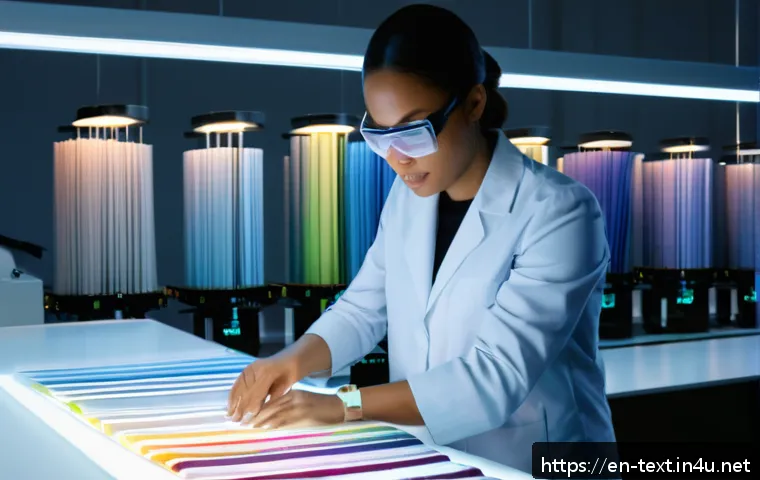
Hey everyone! You know, for the longest time, when I heard “textile industry,” my mind just went straight to fashion and fabric. But after digging a bit deeper, I’ve realized how much more there is to it – especially when it comes to the incredible minds we call textile engineers.
These brilliant folks are not just designing the next big trend; they’re literally weaving the future, pushing boundaries with everything from sustainable materials that are kind to our planet to groundbreaking smart fabrics that can monitor our health and even generate power.
It’s a field that’s exploding with innovation, blending artistry with cutting-edge science, and honestly, the opportunities are endless. We’re talking about a global industry undergoing a massive transformation, driven by consumer demand for eco-conscious products and futuristic wearable technology.
It’s not just about what we wear anymore; it’s about how textiles can solve real-world problems. I’ve been so fascinated by the seismic shifts happening, the way technology is revolutionizing production, and the sheer ingenuity involved.
Are you ready to uncover the truly exciting future being crafted by textile engineers and see exactly where this dynamic industry is headed? Let’s dive right into the details!
Revolutionizing Our Wardrobes: The Era of Smart Fabrics

You know, when I first heard about “smart fabrics,” my imagination went wild, picturing something out of a sci-fi movie. But honestly, having seen some of these innovations firsthand, it’s even more incredible than I imagined. We’re not just talking about clothes that look good anymore; we’re talking about textiles that can actively interact with their environment and even us! Imagine your running shirt monitoring your heart rate, sweat levels, and even your posture, giving you real-time feedback to optimize your workout. That’s not a dream; it’s happening right now thanks to the brilliant minds in textile engineering. These engineers are embedding tiny sensors, conductive yarns, and even micro-electronics directly into the fabric itself, making our clothing an extension of our digital lives. It’s truly mind-boggling how seamlessly they’re blending traditional textile techniques with cutting-edge electronics. My own experience with a prototype smart jacket that could adjust its temperature based on ambient conditions completely blew me away – it felt like magic, but it’s pure engineering genius. This field isn’t just about making things “techy”; it’s about making them more intuitive, more responsive, and ultimately, more useful to our daily lives. The potential for enhancing athletic performance, ensuring workplace safety, and even providing new levels of personal comfort is just immense, and honestly, we’re only scratching the surface of what’s possible. I genuinely feel like we’re on the cusp of a whole new dimension in how we perceive and use textiles, and it’s exhilarating to witness.
The Unseen Power: Integrating Electronics Seamlessly
The real trick to smart textiles, and something textile engineers have truly mastered, is making all that tech virtually invisible. Nobody wants to wear a clunky circuit board! What I’ve learned is that they’re achieving this by developing conductive threads that can be woven directly into the fabric, flexible sensors that feel just like regular cloth, and tiny power sources that are practically imperceptible. It’s an art form as much as it is science. They have to consider everything from washability and durability to how the integrated components will feel against the skin. From my perspective, this meticulous attention to detail is what sets true innovation apart. When you slip on a smart garment, you shouldn’t feel the tech; you should just experience its benefits. This level of integration is opening up incredible possibilities, allowing everything from biometric data collection to interactive displays to be part of our everyday wear without sacrificing comfort or style.
Beyond Fitness Trackers: Smart Textiles for Everyday Life
While fitness and health monitoring are huge drivers for smart textiles, their applications stretch far beyond the gym. Think about workers in hazardous environments wearing uniforms that can detect dangerous gases or monitor vital signs, alerting them and their supervisors to potential issues before they become critical. Or imagine clothing that can charge your phone while you walk, harnessing kinetic energy. I’ve even seen prototypes of smart bedding designed to monitor sleep patterns and adjust temperature for optimal rest. This diversification is truly exciting because it means smart textiles are moving out of niche markets and into solutions for broad, everyday problems. The ability to embed intelligence into the very fabric of our lives is changing how we interact with our environment, making it more responsive and intuitive, and it’s all thanks to the imaginative work of textile engineers.
Weaving a Greener Future: Sustainable Innovations in Textiles
Honestly, for years, the textile industry had a bit of a reputation, and not always a good one, when it came to environmental impact. But what I’ve witnessed lately is a monumental shift, a genuine commitment from textile engineers to not just mitigate harm, but to actively heal the planet through their innovations. It’s truly inspiring to see. They’re tackling everything from resource-intensive manufacturing processes to the mountain of textile waste that piles up in landfills. This isn’t just about using recycled materials, though that’s a huge part of it; it’s about fundamentally rethinking the entire lifecycle of a textile product. My personal journey into understanding sustainable fashion opened my eyes to the incredible ingenuity behind materials like textiles made from algae, pineapple leaves, or even mycelium, the root structure of mushrooms. These aren’t just eco-friendly alternatives; they often boast unique properties that traditional materials can’t match. It’s a complete paradigm shift, moving away from a linear “take-make-dispose” model towards a circular economy where materials are reused, repurposed, and regenerated. The passion I see in these engineers to create truly sustainable solutions is palpable, and it gives me so much hope for a future where fashion and function don’t come at the Earth’s expense. They’re truly the unsung heroes in the fight for a healthier planet.
From Waste to Wearable: The Circular Economy in Action
One of the most exciting aspects of sustainable textile engineering is the push towards a circular economy. This means designing products that can be easily recycled, biodegraded, or upcycled at the end of their life, rather than ending up in a landfill. I’ve personally seen brands experimenting with take-back programs, where old garments are collected and processed to create new fibers. Textile engineers are at the forefront of this, developing innovative methods for fiber-to-fiber recycling that can maintain material quality, which is no small feat. They’re also exploring biodegradable polymers that break down harmlessly, and even designing textiles that are inherently durable and repairable, extending their lifespan significantly. It’s a holistic approach that requires creativity and a deep understanding of material science, and it’s truly transforming the industry from the ground up.
Eco-Conscious Materials: Beyond Organic Cotton
When most people think “sustainable textiles,” organic cotton often comes to mind. And while it’s great, textile engineers are pushing the boundaries far beyond that. We’re now seeing incredible advancements in bio-based textiles derived from renewable resources like hemp, bamboo, and even agricultural waste. But it gets even more fascinating: materials grown in labs, like spider silk mimics or cellular-based leather, are becoming a reality. These innovations significantly reduce the demand for land, water, and harsh chemicals, offering truly revolutionary alternatives. My own research into these bio-engineered fabrics revealed a world of possibilities, from textiles that breathe better to those with inherent antimicrobial properties, all while minimizing our ecological footprint. It’s not just about doing less harm; it’s about actively creating textiles that contribute positively to the environment.
Beyond Fashion: Textiles in Medicine and Beyond
It’s funny, when I used to think of textiles and medicine, my mind immediately went to hospital gowns and bandages. Simple, functional, but nothing particularly glamorous. Boy, was I wrong! The more I delved into the world of textile engineering, the more I realized just how pivotal and truly life-changing their contributions are to healthcare and other critical sectors. We’re talking about advanced materials that are literally saving lives and improving quality of life for millions. Think about it: engineers are crafting implantable textiles like vascular grafts that help repair damaged arteries, or sophisticated sutures that dissolve harmlessly after doing their job. They’re also developing wound dressings embedded with sensors that can monitor healing progress and release medication on demand. I mean, how incredible is that? It’s a field where precision, biocompatibility, and functionality are absolutely paramount, and textile engineers are delivering on all fronts. My experience speaking with a textile engineer who specialized in medical applications was truly humbling; hearing about how their work directly impacts patient recovery and surgical outcomes really puts into perspective the profound impact of this profession. It’s far from the catwalk, but it’s infinitely more impactful.
Healing Threads: Medical Textiles Saving Lives
The role of textiles in medicine extends far beyond what most of us imagine. Textile engineers are designing everything from surgical meshes that support weakened tissues to biocompatible scaffolds that help regenerate damaged organs. They’re exploring advanced composite materials for prosthetics that are lighter, stronger, and more comfortable. Even something as seemingly simple as a compression sock is a marvel of textile engineering, designed with specific gradients of pressure to improve circulation. The innovation here is constant, driven by the critical need for materials that are sterile, durable, non-allergenic, and capable of performing complex biological functions. It’s a high-stakes arena where the quality of the textile can literally mean the difference between life and death or a successful recovery, which is a responsibility these engineers take incredibly seriously.
From Space Suits to Filtration: High-Performance Industrial Textiles
But the impact of textile engineering doesn’t stop at medicine. These specialists are also creating high-performance textiles for some of the most demanding environments imaginable. Think about the fabrics used in firefighters’ gear, designed to withstand extreme heat while remaining flexible enough for movement. Or the advanced materials in astronaut space suits that protect against radiation and extreme temperatures. Even the filters in our air purifiers or water treatment plants are the result of sophisticated textile engineering, designed to capture specific particles with incredible efficiency. I’ve always been fascinated by how these specialized textiles are engineered for specific, often extreme, conditions, requiring a deep understanding of material properties, structural integrity, and chemical resistance. It’s a testament to the versatility and critical importance of textile engineering across a vast array of industries.
The Digital Thread: AI, Automation, and the Future of Production
Stepping into a modern textile manufacturing facility today is like walking into a vision of the future, and frankly, it’s nothing like the dusty, noisy factories you might picture from decades past. The sheer scale of technological integration, driven by artificial intelligence and automation, is absolutely breathtaking. Textile engineers are at the helm of this transformation, orchestrating a symphony of robotics, data analytics, and smart machinery to create more efficient, sustainable, and customizable production lines. I’ve personally seen how AI algorithms are being used to optimize everything from yarn spinning to fabric cutting, minimizing waste and maximizing output with a precision that human hands simply can’t match. This isn’t about replacing people, but rather augmenting human capabilities and freeing up skilled workers to focus on more complex, creative, and problem-solving tasks. The blend of traditional craftsmanship with cutting-edge digital tools is truly redefining what’s possible in textile manufacturing. It’s a dynamic and exciting space where innovation happens daily, pushing the boundaries of what textiles can be and how efficiently they can be brought to market. My visit to a facility that used AI for quality control was genuinely eye-opening; the system could identify flaws imperceptible to the human eye, ensuring consistent, high-quality products every single time.
Automated Excellence: Revolutionizing Production Lines
Automation in textile manufacturing is moving far beyond simple machinery. We’re now seeing intelligent robotic systems capable of intricate weaving patterns, precision cutting, and even automated garment assembly. This not only speeds up production but also significantly reduces human error and improves consistency. Textile engineers are the ones designing these automated systems, developing the software that controls them, and integrating them seamlessly into existing workflows. It’s a complex dance of mechanical engineering, computer science, and textile knowledge. From my observations, the goal isn’t just speed; it’s about creating a more responsive and adaptable manufacturing process that can quickly pivot to new designs and demands, which is crucial in today’s fast-paced market. This adaptability means smaller batch sizes, more customized products, and quicker turnarounds, all contributing to a more dynamic industry.
AI-Driven Design and Supply Chain Optimization
Beyond the factory floor, AI is also revolutionizing textile design and supply chain management. Imagine AI tools that can analyze market trends, predict consumer preferences, and even generate novel textile patterns or material compositions based on specific performance requirements. Textile engineers are leveraging these tools to accelerate the design process and bring innovative products to market faster. Moreover, AI is optimizing the entire supply chain, from sourcing raw materials to logistics and distribution, ensuring greater transparency, efficiency, and sustainability. My deep dive into this aspect of the industry showed me how data analytics is being used to minimize waste, reduce lead times, and make the entire process more environmentally friendly and cost-effective. It’s about making smarter decisions at every stage, from concept to customer, and AI is the powerful engine driving this forward.
Unveiling New Materials: From Nanofibers to Bio-Synthetics

The world of textile materials is exploding with innovation, and honestly, it feels like we’re living in a golden age of material science, thanks in large part to the relentless curiosity and ingenuity of textile engineers. For years, we’ve relied on traditional fibers, but now, these brilliant minds are pushing the boundaries into realms that were once pure science fiction. We’re talking about everything from nanofibers so tiny they can imbue fabrics with entirely new properties, to bio-synthetics grown in labs that are both eco-friendly and incredibly versatile. I remember attending a material science conference where a textile engineer demonstrated a fabric made from algae – it felt just like cotton but was entirely biodegradable and produced with minimal environmental impact. That kind of innovation isn’t just impressive; it’s genuinely revolutionary. This constant quest for new and improved materials is driven by a desire for better performance, enhanced sustainability, and entirely new functionalities that traditional fibers simply can’t offer. It’s a fascinating blend of chemistry, physics, and design, all coming together to weave the very fabric of our future. Every time I think I’ve seen it all, another groundbreaking material emerges, showcasing the limitless possibilities in this field.
The Marvel of Nanofibers: Tiny Strands, Big Impact
Nanofibers are truly a game-changer in textile engineering. These fibers are incredibly thin, often hundreds or thousands of times smaller than a human hair, and their minuscule size gives them extraordinary properties. Textile engineers are using them to create fabrics with enhanced strength, superior filtration capabilities, and even self-cleaning or water-repellent surfaces. Imagine a shirt that repels stains effortlessly or a bandage made from nanofibers that accelerates wound healing. My personal experience with a jacket incorporating nanofiber technology highlighted its incredible lightweight yet insulating properties, making it perfect for unpredictable weather. The surface area of nanofibers is enormous compared to their volume, which allows for unique interactions at the molecular level, leading to these remarkable advancements. It’s a field where microscopic changes lead to macroscopic improvements in performance and functionality.
Bio-Synthetics: Nature and Science in Harmony
The future of textile materials is undoubtedly green, and bio-synthetics are leading the charge. These aren’t just natural fibers; they’re often engineered from renewable resources, sometimes even waste products, to create materials with specific, desirable characteristics. Think about textiles made from agricultural by-products like orange peels or coffee grounds, or innovative fibers derived from plant-based polymers. What’s truly exciting, from my perspective, is the way textile engineers are mimicking nature’s own designs, creating materials that are not only sustainable but also biodegradable and often possess superior performance attributes like breathability or moisture-wicking properties. This blending of biological science and synthetic engineering is paving the way for a new generation of textiles that are both high-performing and incredibly kind to our planet. It’s a testament to how innovation can perfectly align with environmental stewardship.
Career Paths: What It’s Really Like Being a Textile Engineer
You know, when I started researching for this blog, one of the things that truly struck me was the sheer diversity of career paths available to textile engineers. It’s so much more than just working in a factory! These aren’t just specialists in one niche; they’re innovators, problem-solvers, and critical thinkers shaping industries from healthcare to aerospace. My conversations with various professionals in the field revealed a dynamic and intellectually stimulating environment where no two days are ever quite the same. One engineer might be developing advanced wound dressings in a lab, while another is optimizing a sustainable dyeing process in a state-of-the-art facility, and yet another is designing smart uniforms for athletes. The breadth of their expertise is genuinely impressive, encompassing everything from material science and chemistry to mechanical engineering and even fashion design. What I’ve consistently heard from these individuals is a deep sense of purpose and satisfaction, knowing that their work contributes to tangible products that impact our daily lives in meaningful ways. It’s a profession that truly bridges the gap between scientific discovery and practical application, and it’s absolutely brimming with opportunities for those with a curious mind and a passion for innovation.
From Lab Coats to Boardrooms: Diverse Roles and Responsibilities
The roles a textile engineer can take on are incredibly varied. Many start in research and development, painstakingly experimenting with new fibers, finishes, and manufacturing processes in a lab setting. But their careers can evolve rapidly, leading them into product development, where they translate scientific breakthroughs into market-ready products. Others find themselves in production management, overseeing automated facilities and ensuring quality control. Then there are those who specialize in technical sales, bridging the gap between complex engineering concepts and client needs, or even sustainability consulting, guiding companies towards greener practices. My own discussions highlighted that strong communication skills, problem-solving abilities, and a willingness to continuously learn are just as crucial as technical expertise in navigating these diverse career paths. It’s a profession that offers a unique blend of hands-on technical work and strategic leadership opportunities.
The Entrepreneurial Spirit: Starting Your Own Textile Venture
What I find particularly exciting is the growing trend of textile engineers venturing into entrepreneurship. With their deep understanding of materials, processes, and market needs, many are launching their own startups, creating innovative products that address specific gaps or introduce entirely new concepts. We’re seeing everything from sustainable fashion brands built on revolutionary eco-friendly fabrics to tech companies developing specialized smart textiles for niche applications. My friend, who’s a textile engineer, recently launched a successful brand focused on performance wear made from recycled ocean plastics, and it’s been incredible to watch her journey from concept to market. This entrepreneurial path allows textile engineers to not only apply their technical knowledge but also to lead, innovate, and bring their unique visions to life, directly impacting consumer choices and industry trends. It’s a challenging but incredibly rewarding avenue for those with a pioneering spirit.
Monetizing Innovation: The Economic Impact of Advanced Textiles
Let’s be real, while innovation is fantastic, it also needs to make economic sense to truly thrive and impact the world at scale. And what I’ve observed in the advanced textiles sector is a tremendous opportunity for growth, investment, and ultimately, substantial returns. This isn’t just about small, niche markets anymore; we’re talking about a global industry that’s projected to reach astronomical figures in the coming years, driven by consumer demand for higher performance, greater sustainability, and personalized products. The value proposition of smart fabrics, for instance, isn’t just their technological prowess, but also their potential to create entirely new revenue streams through data collection, subscription services for health monitoring, or specialized applications. When I delved into the market reports, the numbers truly painted a picture of a sector poised for explosive growth, attracting significant venture capital and fostering countless new businesses. It’s a testament to the fact that when you solve real-world problems with cutting-edge engineering, the economic rewards naturally follow. For anyone looking to invest their time or capital, the advanced textile industry represents a genuinely compelling frontier with immense potential. My own feeling is that we’re only seeing the beginning of its economic footprint, and it’s exciting to imagine the future landscape it will shape.
Investment Opportunities in High-Growth Textile Sectors
The advanced textile market is ripe with investment opportunities across various high-growth sectors. From companies specializing in sustainable material development and circular economy solutions to those pioneering smart textiles for healthcare or military applications, the scope is vast. What I’ve found is that investors are increasingly drawn to firms that demonstrate strong intellectual property, innovative production methods, and a clear path to commercialization. The potential for licensing groundbreaking technologies, developing proprietary materials, and establishing market leadership in emerging niches makes this a very attractive space. It’s a sector that rewards foresight and a willingness to back cutting-edge research and development, understanding that today’s lab breakthroughs are tomorrow’s market disruptors. The table below illustrates some key areas of growth:
| Growth Sector | Key Innovations | Market Impact / Outlook |
|---|---|---|
| Smart Textiles | Wearable sensors, integrated electronics, e-textiles | Rapid expansion in healthcare, sports, military; high average selling prices |
| Sustainable Materials | Bio-based fibers, recycled synthetics, closed-loop systems | Growing consumer demand, regulatory push, reduced environmental costs |
| Medical Textiles | Implantable devices, advanced wound care, smart monitoring fabrics | Critical applications, high value-add, strong R&D investment |
| Technical & Industrial Textiles | High-performance composites, protective wear, filtration media | Essential for aerospace, automotive, infrastructure; consistent demand |
New Business Models and Revenue Streams
The innovation in textile engineering isn’t just about creating new products; it’s also about fostering entirely new business models and revenue streams. Beyond traditional sales, companies are exploring subscription services for smart garments that provide continuous health data, or offering textile-as-a-service models for specialized industrial applications. There’s also immense potential in licensing proprietary material technologies or manufacturing processes. Furthermore, the push for customization and on-demand production, enabled by digital advancements, is opening up lucrative direct-to-consumer opportunities that bypass traditional retail channels. From my perspective, this adaptability and willingness to embrace novel economic frameworks are crucial for thriving in the rapidly evolving landscape of advanced textiles. It’s a dynamic environment where creativity in business strategy is just as important as scientific ingenuity, ultimately leading to higher returns and sustained growth for those who dare to innovate.
Wrapping Up
And there you have it, folks! What an incredible journey we’ve taken through the dynamic and ever-evolving world of textile engineering. It’s truly mind-blowing to think about how much innovation is happening right beneath our noses, in the very fabrics we wear and interact with daily. From smart clothes that monitor our health to sustainable materials that are healing our planet, and even advanced textiles pushing the boundaries in medicine and space exploration, these engineers are truly crafting the future, one thread at a time. I hope this deep dive has opened your eyes to the sheer ingenuity and passion driving this field, just as it has for me. It’s a field that constantly reminds me that with creativity and dedication, there’s no limit to what we can achieve, and it makes me incredibly excited for what’s coming next. It’s not just about clothes anymore; it’s about a smarter, safer, and more sustainable world woven into existence by brilliant minds.
Good to Know: Essential Insights
Here are some key takeaways and exciting nuggets of information that I’ve gathered and personally found incredibly useful as I explored the fascinating world of textile engineering:
1. Smart Textiles are Everywhere: It’s not just for athletes anymore! Smart fabrics are revolutionizing healthcare with advanced monitoring, enhancing workplace safety, and even making our homes more responsive and comfortable. Keep an eye out – you’ll be interacting with them more than you think.
2. Sustainability is the New Standard: The industry is making huge strides towards a circular economy, moving away from waste and towards innovative, eco-friendly materials and processes. We’re seeing textiles made from unexpected sources like algae and mushrooms, which is genuinely inspiring and shows a true commitment to our planet’s future.
3. Beyond Fashion: Textile engineering plays a critical, life-saving role in medicine, with innovations like implantable devices and smart wound dressings. It also underpins high-performance industrial applications, from astronaut suits to crucial filtration systems, proving its vital importance across diverse sectors.
4. AI and Automation are Game-Changers: Modern textile manufacturing is a high-tech marvel, leveraging AI and robotics to create more efficient, sustainable, and customizable production lines. This isn’t just about speed; it’s about precision, reduced waste, and the ability to bring innovative designs to market faster than ever before.
5. A World of New Materials: We’re experiencing a material science renaissance, with advancements like ultra-fine nanofibers that offer incredible new properties, and bio-synthetics that blend nature and technology for superior, eco-conscious performance. The possibilities seem truly endless, and it’s exciting to think about what these materials will enable next.
Key Takeaways
From my perspective, after diving deep into this fascinating field, the biggest takeaway is just how foundational and pervasive textile engineering truly is. It’s a multidisciplinary powerhouse, seamlessly blending science, technology, and design to impact virtually every aspect of our lives – often in ways we don’t even realize. We’ve seen how textile engineers are not just designing clothes, but are actively addressing some of the world’s most pressing challenges, from environmental sustainability to advanced healthcare solutions. Their innovative spirit is driving economic growth, opening up exciting career paths, and pushing the boundaries of what materials can do. This isn’t just about fabric; it’s about the very threads that weave together our future, making it smarter, greener, and more connected. The sheer potential for continued growth and groundbreaking discoveries in this sector is immense, making it an incredibly exciting space to watch and engage with.
Frequently Asked Questions (FAQ) 📖
Q: What exactly do textile engineers do? I mean, beyond just clothes and fashion, what’s their day-to-day like?
A: Oh, this is such a great question! When I first started looking into this, I was genuinely surprised by the sheer breadth of their work. A textile engineer’s role is incredibly diverse and fascinating.
It’s not just about picking colors or designing patterns – though that can certainly be part of it! These brilliant minds are essentially material scientists specializing in fibers, yarns, and fabrics.
They delve deep into the chemistry and physics of textiles, innovating everything from how threads are spun to how fabrics perform under extreme conditions.
For instance, they might be developing lightweight, durable materials for aerospace, or creating smart textiles that can monitor vital signs in hospitals.
They’re constantly researching new sustainable processes, finding ways to recycle clothing waste, or even engineering fabrics that can generate electricity from movement.
From what I’ve personally observed, their work involves a lot of lab time, computer modeling, and collaborating with designers, chemists, and even medical professionals.
It’s a dynamic blend of science, creativity, and problem-solving, always with a keen eye on how textiles can improve our lives and the planet.
Q: You mentioned “groundbreaking smart fabrics” and “sustainable materials.” Can you share some real-world examples that really blow your mind?
A: Absolutely! This is where things get super exciting. I’ve personally seen and read about some incredible innovations that truly make you realize how far textiles have come.
Take smart fabrics, for example. We’re talking about athletic wear that monitors your heart rate and muscle activity, sending real-time data to your phone to optimize your workout.
Or imagine clothing that can regulate your body temperature, keeping you warm in the cold and cool in the heat – perfect for outdoor adventurers or even just your daily commute!
Then there are medical textiles: bandages that can sense infection and release medication, or even implantable fabrics that help heal tissues. On the sustainability front, the advancements are just as impressive.
Companies are now creating textiles from recycled plastic bottles, turning waste into high-performance sportswear and outdoor gear. I’ve even heard about fabrics made from orange peels or coffee grounds!
And let’s not forget about textiles that are designed to be fully biodegradable or compostable, significantly reducing textile waste in landfills. It’s truly amazing to see how these engineers are using creativity and science to tackle some of our biggest environmental and health challenges.
Q: This sounds like a field with a lot of future potential. What kind of career opportunities are available for textile engineers, and how can someone get started in this innovative industry?
A: You hit the nail on the head – the future for textile engineers is incredibly bright and brimming with opportunities! As the industry continues its rapid transformation, driven by demands for sustainability and smart technology, the need for skilled textile engineers is only growing.
When I think about careers, it’s far more than just “fashion design.” We’re talking roles in research and development for major sportswear brands, developing the next generation of performance fabrics.
There are huge opportunities in the medical sector, designing advanced medical textiles and prosthetics. The automotive and aerospace industries also rely heavily on textile engineers for lightweight, strong, and safe materials.
Even in home furnishings, industrial textiles, and protective gear, their expertise is invaluable. For anyone looking to dive into this dynamic field, a degree in textile engineering, material science, or a related engineering discipline is typically the starting point.
But beyond academics, what I’ve found makes a real difference is a genuine curiosity for innovation, a passion for problem-solving, and a keen interest in sustainability and technological advancements.
Internships and hands-on experience are also crucial for building those practical skills and making connections. It’s a field where you can truly make a tangible impact on the world, and that’s something I find incredibly inspiring!