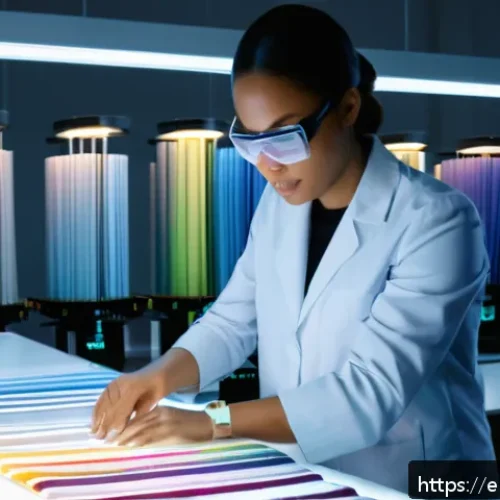
Unveiling the Future: Your Guide to a Thriving Textile Engineering Career

webmaster

섬유기사 취업 전망 - **Prompt 1: "The Future of Activewear: Seamless Biometric Monitoring"**
    "A fit individual, appro...

Hey there, future innovators and career explorers! Have you ever paused to think about what’s really happening behind the scenes in the world of fashion and technology?

It’s not just about what’s trending on the runways anymore; the textile industry is undergoing a phenomenal revolution, and honestly, it’s one of the most exciting transformations I’ve witnessed in my time.

When I first started looking into this field, I admit I had some outdated ideas, but what I’ve discovered has completely blown me away. We’re talking about groundbreaking materials, smart fabrics that do more than just clothe us, and sustainable practices that are literally reshaping our planet for the better.

This isn’t your grandma’s textile mill; this is a high-tech, innovative powerhouse that’s desperate for brilliant minds. From what I’ve personally observed in the market, companies are actively seeking professionals who can blend traditional textile knowledge with cutting-edge engineering principles.

Whether it’s developing wearable tech, designing eco-friendly alternatives, or optimizing supply chains with advanced analytics, the opportunities are truly limitless and evolving at warp speed.

I’ve seen firsthand how textile engineers are at the forefront of tackling global challenges, from healthcare to environmental protection, making a tangible impact far beyond just textiles.

If you’re considering a career path that offers both stability and boundless creativity, this might just be your golden ticket. Let’s find out exactly what’s going on in this dynamic field.

The Dawn of Smart Textiles: Where Fashion Meets Function

섬유기사 취업 전망 - **Prompt 1: "The Future of Activewear: Seamless Biometric Monitoring"**
    "A fit individual, appro...

Honestly, when I first started exploring the textile industry, my mind immediately went to traditional fabrics and garments. But oh, how things have changed!

What I’ve personally observed over the last few years is nothing short of a technological marvel, as textiles are no longer just about aesthetics or basic protection.

We’re talking about smart fabrics that can monitor your heart rate, regulate your body temperature, or even charge your devices. Imagine wearing a jacket that automatically warms you up on a chilly morning or gym wear that tracks your performance without needing a separate gadget.

These aren’t just concepts anymore; they’re becoming a tangible part of our everyday lives. Companies are pouring massive investments into research and development, seeking brilliant minds who can bridge the gap between material science and cutting-edge electronics.

I’ve seen some incredible prototypes that are practically indistinguishable from regular clothing, yet they’re packed with sensors and micro-electronics.

It’s a whole new world, and the possibilities for innovation feel truly boundless. The demand for professionals who can design, develop, and integrate these smart components into fabric is skyrocketing, making this a truly exciting space to be in.

Integrating Electronics into Fabric: A Seamless Future

This integration isn’t just about sticking a chip onto a shirt. It’s about weaving intelligence directly into the fibers, creating textiles that are inherently smart.

I’ve been fascinated by the sheer ingenuity involved in developing conductive threads, embedded sensors, and flexible power sources that can withstand washing, stretching, and daily wear.

It’s a complex challenge that requires a deep understanding of both textile properties and electronic engineering. From what I’ve gathered by speaking with industry insiders, the key is to make these features unobtrusive and comfortable, ensuring that the wearer barely notices the technology is there.

This approach is revolutionizing not only sportswear and fashion but also areas like professional protective gear and even home furnishings. The goal is a truly seamless blend where the fabric itself becomes an interface, providing data and functionality without compromising on comfort or style.

Beyond Wearables: Smart Textiles in Everyday Life

While wearables often grab the headlines, the impact of smart textiles extends far beyond what we put on our bodies. Think about smart interiors for vehicles that can detect driver fatigue, or intelligent bedding that monitors sleep patterns and adjusts firmness.

I’ve even seen discussions about smart bandages that can release medication or intelligent carpets that can detect falls in elderly care facilities. These applications highlight the immense potential for textiles to solve real-world problems and improve quality of life across countless domains.

The innovation isn’t just about new products; it’s about reimagining the role of textiles in our environment, turning static materials into dynamic, responsive elements.

This shift is creating a huge demand for professionals who can think creatively and apply textile engineering principles to a wide array of non-traditional contexts.

Sustainable Fibers: Weaving a Greener Future

One of the most profound shifts I’ve personally witnessed in the textile industry is the overwhelming pivot towards sustainability. It’s no longer a niche concern; it’s at the very core of business strategy for every forward-thinking company.

The environmental footprint of traditional textile production, from water consumption to chemical waste, has long been a major issue. But what excites me immensely is seeing how textile engineers are leading the charge in developing innovative, eco-friendly alternatives.

We’re talking about fabrics made from unexpected sources like pineapple leaves, mushroom mycelium, or even recycled plastic bottles. The push for circularity – designing products that can be reused, repaired, or recycled – is transforming every stage of the textile lifecycle.

I’ve seen brands that are not only committed to sourcing sustainable materials but are also investing heavily in processes that reduce water and energy usage, eliminate harmful chemicals, and minimize waste.

It’s a genuine commitment to creating a future where fashion doesn’t cost the Earth, and it’s driven by brilliant minds who are reimagining what’s possible with fibers.

The Rise of Bio-Based and Recycled Materials

The innovation in sustainable materials is truly breathtaking. I’ve been keeping a close eye on the development of bio-based fibers derived from agricultural waste or renewable plant sources, which offer incredible properties without the environmental burden of petroleum-based synthetics.

And let’s not forget the incredible progress in recycling technologies. It’s not just about shredding old clothes anymore; sophisticated processes are now capable of breaking down textile waste at a molecular level, allowing us to create high-quality new fibers from old garments.

This circular approach is critical for reducing landfill waste and conserving precious resources. What I’ve seen is a growing consumer awareness, too, which is pushing brands to be more transparent about their material choices and production methods.

This consumer demand, coupled with regulatory pressures, is creating an undeniable pull for talent specializing in sustainable material development and lifecycle assessment.

Minimizing Environmental Impact Through Process Innovation

Beyond the materials themselves, the manufacturing processes are also undergoing a dramatic transformation to reduce environmental impact. Dyeing, for instance, has historically been a very water-intensive and chemical-heavy process.

However, I’ve seen incredible advancements in waterless dyeing techniques, such as supercritical CO2 dyeing, which drastically reduce water usage and eliminate chemical effluent.

Similarly, innovations in digital printing are minimizing fabric waste and the need for traditional screen printing setups. Companies are also adopting cleaner energy sources and optimizing their supply chains to reduce carbon emissions.

My personal take is that this holistic approach to sustainability, encompassing everything from raw material to finished product, is where the real game-changers are emerging.

Professionals who can analyze, optimize, and implement these greener manufacturing processes are incredibly sought after.

Advertisement

Tech-Driven Design: Revolutionizing Textile Manufacturing

The textile industry, often perceived as traditional, is actually at the forefront of adopting advanced manufacturing technologies. This isn’t your grandfather’s textile mill; it’s a high-tech powerhouse where robotics, automation, and artificial intelligence are dramatically reshaping how fabrics are designed, produced, and even distributed.

I’ve personally seen how 3D printing is no longer just for plastics but is now being explored for direct textile fabrication, opening up possibilities for incredibly complex and customized designs that were once impossible.

Digital design software allows for rapid prototyping and visualization, drastically reducing the time and resources needed to bring new concepts to market.

The precision and efficiency brought about by these technologies are truly game-changing, allowing for mass customization and responsive production that can quickly adapt to changing fashion trends and consumer demands.

It’s a fascinating blend of artistry and engineering, where creativity meets cutting-edge technology.

The Power of Automation and Robotics in Production

Robotics and automation are taking over repetitive and labor-intensive tasks in textile manufacturing, leading to increased efficiency, reduced errors, and improved working conditions.

From automated cutting machines that minimize fabric waste to robotic arms that can sew intricate patterns with incredible precision, the factory floor is being reimagined.

What I’ve observed is that this isn’t about replacing human workers entirely but rather about augmenting their capabilities and allowing them to focus on higher-value tasks, like quality control, design innovation, and process optimization.

The integration of these systems requires a new breed of textile engineers who understand not only material properties but also industrial automation and control systems.

It’s a field that’s continually evolving, presenting exciting challenges for those who love to tinker with technology and optimize workflows.

Leveraging AI and Data Analytics for Smart Production

Artificial intelligence and data analytics are transforming decision-making across the entire textile value chain. From predicting fashion trends and optimizing inventory management to fine-tuning manufacturing parameters for better quality and reduced waste, AI is providing insights that were previously unimaginable.

I’ve seen examples where AI algorithms analyze vast amounts of consumer data to inform design choices, ensuring that products are aligned with current market preferences.

Furthermore, machine learning models are being used to monitor production lines in real-time, identifying potential issues before they become costly problems and enabling predictive maintenance.

This data-driven approach is enhancing efficiency, sustainability, and responsiveness. For those who enjoy working with data and possess strong analytical skills, the opportunity to shape the future of textile production through AI and machine learning is incredibly compelling.

Wearable Wellness: Textiles in Healthcare and Beyond

The intersection of textiles and healthcare is another area that has genuinely blown me away. We’re moving far beyond basic bandages and scrubs; I’ve seen how textile engineering is directly contributing to groundbreaking advancements in medical diagnostics, patient monitoring, and even rehabilitation.

Imagine garments embedded with sensors that can continuously track vital signs, detect early signs of illness, or even assist with physical therapy. These “smart garments” are designed to be comfortable, non-invasive, and capable of seamlessly integrating into a patient’s daily life, providing a constant stream of valuable health data to medical professionals.

From what I’ve observed, the potential to revolutionize remote patient care, improve preventative health, and enhance recovery processes is immense. It’s a field where innovation in materials science directly translates into improved human well-being, which I find incredibly inspiring.

Monitoring Health with Smart Garments

The development of textiles that can monitor physiological parameters is a game-changer for personalized healthcare. I’ve seen products ranging from socks that can detect early signs of diabetic foot ulcers to shirts that monitor heart activity and respiratory rate, sending alerts in case of anomalies.

These applications require a deep understanding of bio-compatibility, sensor integration, and data transmission, all while ensuring the textile remains comfortable and durable.

The beauty of these smart garments is their potential to empower individuals to take a more active role in managing their health, providing continuous insights without the need for cumbersome equipment.

This technology is particularly valuable for chronic disease management, athletic performance monitoring, and even elderly care, where continuous, discreet oversight can make a world of difference.

Textiles in Advanced Medical Applications

Beyond monitoring, textiles are playing a crucial role in advanced medical treatments and surgical applications. Think about biodegradable sutures that dissolve harmlessly in the body, or scaffolding materials used in tissue engineering to help grow new organs and tissues.

I’ve been fascinated by the development of specialized fabrics for wound care that can actively promote healing, or even materials for prosthetic liners that improve comfort and reduce skin irritation.

These applications demand extremely high standards of sterility, biocompatibility, and mechanical performance. The field is constantly evolving, driven by the need for safer, more effective medical solutions.

For those passionate about healthcare and material science, contributing to these life-changing innovations in textile engineering offers a truly rewarding career path.

Emerging Textile Sector Key Innovations Career Opportunities
Smart Textiles Conductive threads, embedded sensors, flexible electronics, biometric monitoring. Materials Scientist, Wearable Tech Engineer, Product Developer, Electronics Integration Specialist.
Sustainable Textiles Bio-based fibers, closed-loop recycling, waterless dyeing, biodegradable materials. Sustainability Consultant, Textile Chemist, R&D Specialist, Supply Chain Analyst.
Technical Textiles High-performance composites, protective gear, medical implants, filtration media. Technical Sales Engineer, Quality Assurance Specialist, Research Scientist, Applications Engineer.
Digital Manufacturing 3D printing of textiles, AI-driven design, robotic automation, predictive analytics. Automation Engineer, Data Scientist, CAD/CAM Specialist, Manufacturing Process Engineer.
Advertisement

Supply Chain Innovation: The Digital Thread of Textiles

섬유기사 취업 전망 - **Prompt 2: "Eco-Innovations: Crafting Textiles from Nature"**
    "A sunlit, modern textile design ...

The textile industry’s supply chain is undergoing a monumental transformation, moving away from fragmented, opaque processes towards highly integrated, transparent, and data-driven systems.

From what I’ve personally experienced and observed from industry leaders, the focus is now squarely on efficiency, ethical sourcing, and responsiveness to market demands.

This involves leveraging technologies like blockchain for traceability, IoT sensors for real-time inventory tracking, and advanced analytics for demand forecasting.

The goal is to create a seamless flow of information and materials from raw fiber to the end consumer, reducing waste, improving lead times, and ensuring ethical labor practices throughout the entire chain.

I’ve heard countless stories from companies that have drastically cut down on inefficiencies and even prevented costly disruptions by implementing smarter supply chain solutions.

It’s a complex puzzle, but the rewards in terms of cost savings, brand reputation, and sustainability are huge.

Blockchain for Transparency and Traceability

One of the most exciting innovations I’ve been tracking is the application of blockchain technology to textile supply chains. For years, ensuring the authenticity and ethical sourcing of materials has been a significant challenge.

However, blockchain offers an immutable, transparent ledger that can record every step of a product’s journey, from the farm where the fiber was harvested to the factory where it was sewn, and even to the retail shelf.

This provides unprecedented traceability, allowing brands to verify sustainability claims and consumers to make informed choices. What I’ve noticed is that this level of transparency is building immense trust and helping combat issues like counterfeiting and unethical labor practices.

Professionals skilled in supply chain management and blockchain implementation are becoming incredibly valuable assets in this evolving landscape.

Optimizing Logistics with IoT and AI

The integration of the Internet of Things (IoT) sensors and artificial intelligence is revolutionizing textile logistics. IoT devices can track the movement and condition of goods in real-time, providing crucial data on factors like temperature, humidity, and location.

This data, when analyzed by AI algorithms, can optimize shipping routes, predict potential delays, and even manage warehouse inventory more effectively.

I’ve personally seen how companies are using these tools to reduce their carbon footprint by optimizing transportation and minimize waste by ensuring that the right products are in the right place at the right time.

This level of granular control and predictive capability is transforming how textiles move around the globe, making the entire supply chain more agile, resilient, and environmentally friendly.

Your Toolkit for Tomorrow: Essential Skills for Textile Innovators

If you’re eyeing a career in this dynamic field, you might be wondering what it truly takes to thrive. Based on my direct observations and conversations with recruiters and industry veterans, it’s clear that a blend of traditional textile knowledge and cutting-edge technical skills is paramount.

The days of simply knowing about different weave patterns are long gone; now, you need to be comfortable with data, automation, and sustainable practices.

What I’ve really felt is that curiosity and a lifelong learning mindset are perhaps the most crucial assets. The industry is evolving at such a rapid pace that staying stagnant is simply not an option.

Companies aren’t just looking for experts in one narrow field; they want adaptable problem-solvers who can connect the dots across disciplines and aren’t afraid to tackle complex, interdisciplinary challenges.

Beyond Traditional Textile Knowledge: Embracing STEM

While a foundational understanding of fibers, fabrics, and textile manufacturing processes remains important, modern textile professionals need to be well-versed in STEM (Science, Technology, Engineering, and Mathematics) principles.

This includes areas like material science, chemical engineering, data analytics, and even computer science. I’ve seen a significant shift towards roles that require programming skills for automation, statistical analysis for quality control, and an understanding of electrical engineering for smart textile development.

It’s about applying scientific principles to solve complex problems within the textile context. My personal experience has shown me that those who can bridge the gap between traditional craftsmanship and scientific rigor are the ones who truly stand out.

Soft Skills: Communication, Creativity, and Collaboration

Technical skills are undeniably important, but what truly sets successful professionals apart are their soft skills. The ability to communicate complex ideas effectively, both verbally and in writing, is crucial, especially in interdisciplinary teams.

Creativity isn’t just for designers anymore; it’s essential for problem-solving and innovation across all aspects of textile engineering, from developing new materials to designing sustainable processes.

And, perhaps most importantly, collaboration is key. The textile industry is increasingly global and interconnected, requiring professionals to work effectively with diverse teams, suppliers, and partners from around the world.

I’ve always found that the most impactful projects are born from strong teamwork and a willingness to share knowledge and ideas openly.

Advertisement

Unlocking Opportunities: Diverse Career Paths in the New Textile Era

The beauty of the textile revolution is the sheer breadth of career opportunities it’s creating. When I first started looking into this sector, I admit I had a rather narrow view, thinking mostly of traditional manufacturing roles.

But what I’ve personally discovered is a vibrant ecosystem bursting with diverse paths, from hands-on R&D to strategic consulting, and everything in between.

Whether your passion lies in scientific discovery, sustainable innovation, digital design, or global supply chain management, there’s a place for you to make a real impact.

Companies are actively scouting for talent that can navigate this evolving landscape, offering roles that blend creativity with analytical rigor. It truly feels like a field where you can carve out a niche that perfectly aligns with your unique skills and interests, and the demand for skilled professionals is only growing.

Research and Development: Pioneering New Frontiers

For those with a knack for scientific inquiry and a passion for discovery, a career in textile R&D can be incredibly rewarding. This is where the magic happens – where new fibers are engineered, smart textiles are conceived, and sustainable processes are perfected.

I’ve seen textile engineers in R&D labs pushing the boundaries of what materials can do, whether it’s developing fabrics that can generate electricity or creating biodegradable alternatives to synthetic polymers.

These roles often involve working in cross-functional teams, collaborating with chemists, materials scientists, and product designers. It’s an environment that values intellectual curiosity, experimental rigor, and the ability to turn groundbreaking ideas into tangible innovations.

If you love to explore the unknown and contribute to scientific advancement, this could be your calling.

Product Development and Design: Bringing Ideas to Life

If you’re someone who thrives on seeing concepts transform into concrete products, then product development and design in the textile sector might be your ideal fit.

This path involves taking innovative materials and technologies from the R&D stage and translating them into commercially viable products. It requires a keen eye for detail, an understanding of consumer needs, and the ability to work closely with manufacturing teams.

I’ve found that these roles often blend technical expertise with a strong sense of aesthetics and functionality. You might be designing a new line of athletic wear with integrated sensors, creating sustainable home textiles, or developing high-performance fabrics for industrial applications.

It’s a role where creativity meets practicality, and you get to be at the forefront of bringing exciting new textile innovations to market.

글을마치며

Honestly, reflecting on everything we’ve covered today, it’s clear the textile industry is far from stagnant; it’s a vibrant, ever-evolving landscape where innovation truly knows no bounds. What I’ve personally experienced, watching these advancements unfold, is a profound shift from mere fabric to truly intelligent and sustainable materials that are set to redefine our daily lives. It’s exhilarating to think about the impact these textile revolutions will have, from enhancing our well-being to protecting our planet. This isn’t just about fashion or function anymore; it’s about a smarter, greener, and more connected future, woven right into the very threads of our existence. I truly believe that staying curious and open to these incredible changes is key, because the best is definitely yet to come!

Advertisement

알아두면 쓸모 있는 정보

1. Smart Textiles Aren’t Just Sci-Fi Anymore: We’re moving beyond basic wearables. Think about how your clothes could soon monitor your health, adjust to the weather, or even replace some of your gadgets, making life so much more seamless and intuitive. It’s genuinely a future where your wardrobe works for you.

2. Sustainability is the New Standard, Not a Niche: Every forward-thinking brand and consumer is now prioritizing eco-friendly materials and ethical production. From mushroom leather to fabrics made from ocean plastic, the industry’s commitment to a circular economy is revolutionizing what we wear and how it impacts the planet.

3. Technology is Weaving its Way In, Everywhere: AI, robotics, and advanced data analytics are not just for Silicon Valley; they’re transforming textile manufacturing from design to delivery. This means more efficient processes, incredible customization, and a faster response to what you, the consumer, actually want.

4. Careers are Blending Creativity with Tech: If you’re looking for a future-proof career, consider roles that combine traditional textile knowledge with STEM skills. The demand for professionals who can merge design aesthetics with engineering precision in areas like smart textiles or sustainable material development is exploding.

5. Your Choices Matter More Than Ever: As consumers, our purchasing decisions are a powerful force driving these innovations. By supporting brands committed to smart, sustainable, and ethically produced textiles, we’re actively shaping a better, more responsible future for everyone. So, next time you shop, think about the story woven into your clothes.

중요 사항 정리

In essence, the textile world is undergoing a remarkable metamorphosis, transitioning into a high-tech frontier where fabrics are becoming intelligent, sustainable, and incredibly versatile. We’ve seen how smart textiles are revolutionizing everything from healthcare to fashion, offering unprecedented functionality and comfort. The push towards sustainability is undeniable, with innovations in bio-based and recycled materials leading the charge, significantly reducing environmental impact. Moreover, advanced technologies like AI, robotics, and blockchain are streamlining design, manufacturing, and supply chains, making the industry more efficient and transparent. This dynamic evolution is creating a wealth of interdisciplinary career opportunities for those with a blend of textile expertise and cutting-edge technical and soft skills, truly making it an exciting time to be involved in shaping the future of textiles.

Frequently Asked Questions (FAQ) 📖

Q: So, what exactly does a “textile engineer” do in this evolving industry? It sounds really broad!

A: That’s a fantastic question, and you’re right, it’s broader than ever before! From what I’ve seen, a textile engineer today isn’t just working with looms and dyes.
They’re at the intersection of material science, chemistry, mechanical engineering, and even software development. Think of it this way: if you’re wearing a smart watch with a fabric strap that monitors your heart rate, a textile engineer likely played a crucial role in developing that conductive, skin-friendly material.
They could be designing fabrics that regulate temperature for athletes, creating sustainable alternatives to traditional cotton using mushroom roots, or even optimizing factory processes with AI to reduce waste.
It’s about innovating new materials, improving existing ones for specific functions like durability or breathability, and ensuring production is as efficient and eco-friendly as possible.
Honestly, when I first heard about bio-engineered silk, my jaw dropped – these folks are literally creating materials from scratch with properties we could only dream of a decade ago!
It’s a field where your problem-solving skills meet your creative drive head-on.

Q: You mentioned “groundbreaking materials” and “smart fabrics.” Can you give some real-world examples of these innovations?

A: Absolutely! This is where it gets really exciting. When I talk about “groundbreaking materials,” I’m thinking of things like fabrics made from recycled ocean plastics that are then spun into performance sportswear – I’ve personally used activewear made from this, and the quality is incredible!
Then there are bio-based textiles, like those derived from algae or orange peels, which offer sustainable alternatives to synthetic fibers, reducing our reliance on petrochemicals.
In the “smart fabrics” realm, we’re seeing incredible advancements. Imagine clothing that can literally charge your phone using kinetic energy, or smart bandages that change color to indicate infection, providing real-time health monitoring.
There are even textiles with embedded sensors that can detect environmental pollutants or fabrics that heat or cool you automatically based on your body temperature and ambient conditions.
I remember testing a prototype jacket once that could adjust its warmth with a touch of a button; it felt like something out of a sci-fi movie, but it’s becoming our reality thanks to these brilliant textile innovators!

Q: This sounds like a field with a lot of potential! What kind of skills or background do you think someone needs to get into textile engineering today, especially given the tech integration?

A: You’ve hit the nail on the head – it’s absolutely bursting with potential! From what I’ve gathered speaking with industry leaders and young professionals, the beauty of this field now is its interdisciplinary nature.
While a strong foundation in science (like chemistry, physics, or materials science) or engineering is super helpful, you don’t necessarily need a traditional “textile” degree to get your foot in the door anymore.
Companies are actively looking for a blend of skills. Think critical thinking, problem-solving, and a keen eye for detail, combined with an understanding of data analytics, coding (especially for smart textiles or supply chain optimization), and even design principles.
If you’re passionate about sustainability, that’s a huge plus! What I’ve seen make people truly stand out is a genuine curiosity and a willingness to continuously learn.
The industry is evolving so fast, so being adaptable and having a “can-do” attitude, even if you’re coming from an unconventional background, can open up so many doors.
It’s less about having one specific degree and more about what you can bring to the table and how eager you are to innovate.

Advertisement