
Hey there, aspiring tech mavens and future innovators! Ever feel like the vast world of fiber optics is a bit like a tangled mess of cables, especially when you’re gearing up for that crucial Fiber Engineer written exam?
Trust me, I completely get it. I’ve personally navigated those thick textbooks and endless online resources, trying to distill the truly essential information.
But here’s the exciting truth: mastering the core concepts for this exam is your golden ticket to a future where high-speed connectivity powers everything from our smart homes to the very backbone of 5G, AI, and the emerging metaverse.
It’s not just about passing; it’s about genuinely understanding the intricate dance of light and data that shapes our digital world, and frankly, boosting your career prospects significantly.
I’ve rolled up my sleeves, diving deep into the complexities, pinpointing the key areas that not only appear on exams but are fundamental to real-world application.
My goal is to save you countless hours of sifting and stressing, providing you with a concise, actionable summary of what truly matters. Forget the overwhelming jargon; let’s zero in on the exact knowledge you need to ace that test and confidently step into the next phase of your professional journey.
Ready to cut through the noise and arm yourself with the ultimate study guide? Let’s jump right into the essentials you absolutely need to know to shine!
Grasping the Essentials of Fiber Optic Fundamentals
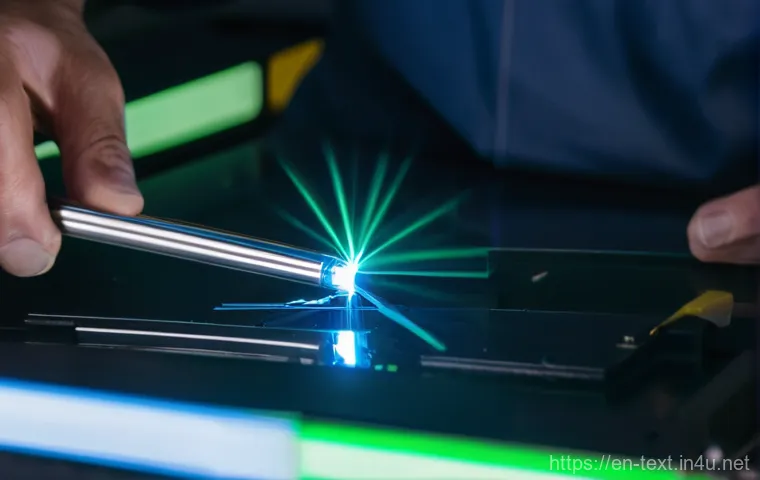
Diving into the world of fiber optics might feel a little intimidating at first, but trust me, once you get a handle on the basic principles, everything else starts to click into place. At its core, fiber optics is all about transmitting information using light pulses through incredibly thin strands of glass or plastic. It’s truly fascinating when you consider how these tiny fibers act as conduits for so much of our digital lives, from streaming movies to powering global communication networks. The magic really happens because of something called Total Internal Reflection (TIR), which is what keeps the light trapped inside the fiber, bouncing it along its path without significant loss. Imagine light entering the fiber at a specific angle; if it hits the boundary between the core (the inner glass strand) and the cladding (the outer layer) at an angle greater than the critical angle, it reflects back into the core. This continuous reflection is precisely how data travels across vast distances at the speed of light. Without TIR, our digital world as we know it simply wouldn’t exist, and understanding this fundamental concept is absolutely critical for any aspiring fiber engineer. It’s the bedrock upon which all other complex fiber optic systems are built, and honestly, it’s one of those things that, once you truly understand it, you feel like you’ve unlocked a secret of the universe.
The Phenomenon of Total Internal Reflection
Total Internal Reflection is the cornerstone of fiber optic communication. Picture this: light pulses, generated by a laser or LED, enter the incredibly pure glass core of a fiber optic cable. This core is surrounded by a material called cladding, which has a slightly lower refractive index. When the light strikes the boundary between this denser core and the less dense cladding at a steep enough angle—what we call the critical angle—instead of bending out, it reflects entirely back into the core. It’s like looking into a swimming pool from underwater; if you look straight up, you see the surface, but if you look at a shallow angle, you just see a reflection of the bottom of the pool. This continuous bouncing within the core is what allows light signals to travel for miles with minimal attenuation. I remember when I first visualized this in a lab; it was such a “lightbulb” moment that really made me appreciate the elegance of the technology. Mastering the nuances of TIR, including the critical angle and numerical aperture, is paramount for predicting how light will behave and, more importantly, for understanding potential signal degradation.
Decoding Attenuation and Dispersion
While TIR keeps the light contained, no system is perfect, and light signals do experience some loss and distortion as they travel. This is where attenuation and dispersion come into play. Attenuation refers to the loss of optical power or signal strength over distance. Think of it like a whisper getting fainter the further away you are; the signal weakens due to factors such as absorption (the fiber material absorbing some of the light), scattering (light bouncing off impurities), and macrobends or microbends (physical stress on the fiber). Then there’s dispersion, which is essentially the spreading out of a light pulse as it travels down the fiber, leading to signal distortion. There are different types, like modal dispersion (in multimode fibers, where light takes multiple paths) and chromatic dispersion (where different wavelengths of light travel at slightly different speeds). When I was starting out, I always thought of dispersion like a group of runners starting a race together but finishing at different times—the signal gets stretched. Both attenuation and dispersion are major considerations in fiber optic link design because they directly impact the maximum achievable distance and bandwidth. Understanding how to mitigate these factors is where a true fiber engineer shines, ensuring the integrity of the data.
Navigating Diverse Cable Types and Their Applications
Just like you wouldn’t use a screwdriver for every single job, not all fiber optic cables are created equal. The landscape of fiber cables is incredibly diverse, each type designed with specific applications and performance characteristics in mind. When you’re out in the field, whether you’re installing a new backbone for a data center or troubleshooting a residential internet connection, knowing your single-mode from your multimode isn’t just academic; it’s absolutely crucial for selecting the right tool for the job. I’ve seen firsthand how using the wrong cable type can lead to frustrating performance issues and costly reworks. These cables are categorized by their core diameter and how they transmit light, which in turn dictates their bandwidth capacity and the distances they can effectively cover. It’s a bit like choosing the right road for your journey: a narrow, straight highway for long-haul travel, or a wider, multi-lane road for shorter, more complex routes. Understanding these distinctions is not just about passing an exam; it’s about making informed, practical decisions that ensure network reliability and efficiency in the real world. This knowledge allows you to speak confidently about why one cable is superior to another for a given scenario, a skill that clients and colleagues deeply appreciate.
Single-Mode vs. Multimode Fiber
The primary distinction you’ll encounter is between single-mode and multimode fiber. Single-mode fiber, with its tiny core diameter (typically 9 microns), is designed to carry a single ray of light, or a single “mode.” Because the light travels along a single path, it experiences very little modal dispersion, making it ideal for high-speed data transmission over incredibly long distances, often hundreds of kilometers. This is your go-to for telecom backbones, metropolitan networks, and any application where you need to send vast amounts of data across significant stretches without signal degradation. On the flip side, multimode fiber has a larger core diameter (50 or 62.5 microns), allowing multiple light rays or modes to travel simultaneously. While this makes it easier to couple light into the fiber and is generally less expensive to work with, the different light paths lead to modal dispersion, limiting its effective transmission distance to shorter runs, typically within data centers, local area networks (LANs), or premises cabling. I always think of single-mode as a precise laser beam and multimode as a flashlight beam; both useful, but for very different scenarios. For certifications, knowing when and why to choose one over the other is fundamental.
Key Fiber Optic Cable Designations (OM, OS)
Beyond the basic single-mode and multimode distinction, these cables are further classified with specific designations that indicate their performance capabilities. For multimode fibers, you’ll encounter OM1, OM2, OM3, OM4, and OM5. Each successive OM standard offers improved bandwidth and distance capabilities, primarily achieved through tighter manufacturing tolerances and optimized designs to reduce modal dispersion. For instance, OM3 and OM4 are very popular in data centers for supporting 10 Gigabit Ethernet and higher speeds over hundreds of meters. OM5, also known as wide-band multimode fiber, is designed for even greater capacity using Wavelength Division Multiplexing (WDM) over short distances. For single-mode fibers, you’ll typically see OS1 and OS2. The main difference here isn’t so much the core size or modal properties, but rather the cable construction and performance over distance. OS1 usually refers to tight-buffered cables, often used indoors for moderate distances, while OS2 refers to loose-tube or blown cable constructions, better suited for outdoor plant applications and very long distances with ultra-low attenuation. Understanding these designations is key because they directly relate to the specific network requirements and future scalability you’ll need to consider when designing or maintaining fiber infrastructure.
Mastering the Art of Fiber Splicing
When you’re working with fiber optics, it’s inevitable that you’ll encounter situations where cables need to be joined together, whether it’s to extend a run, repair a break, or connect different cable segments. This is where fiber splicing becomes an absolutely critical skill. It’s not just about connecting two pieces; it’s about creating a seamless, low-loss optical pathway that maintains the integrity of the signal. I remember my first few attempts at splicing in the field; it truly felt like a delicate surgical procedure. The precision required is immense, but with practice, it becomes second nature. There are two main techniques you’ll need to know inside and out: fusion splicing and mechanical splicing. Each has its place, its advantages, and its trade-offs, and a skilled fiber engineer knows exactly when to deploy which method. This hands-on expertise is highly valued in the industry because a bad splice can lead to significant signal loss, which translates directly into network performance issues, something no one wants. Properly executed splicing is often what distinguishes a reliable fiber network from a problematic one, making it a cornerstone skill for any technician or engineer.
Fusion Splicing: The Gold Standard
Fusion splicing is widely considered the “gold standard” for joining fiber optic cables, and for good reason. This method involves using an electric arc to melt and permanently fuse the ends of two precisely cleaved fibers together. The goal is to create a connection that is virtually indistinguishable from a continuous strand of fiber, resulting in extremely low insertion loss (often as low as 0.02 dB) and minimal back reflection. The process itself is quite mesmerizing to watch: the fibers are stripped, cleaned with isopropyl alcohol, and then cleaved with a high-precision cleaver to ensure a perfectly flat, perpendicular end-face. Then, they’re carefully placed into a fusion splicer, which uses sophisticated optics to align the fiber cores before initiating the electric arc. I’ve spent countless hours with fusion splicers, perfecting my cleaving technique—because a poor cleave will always result in a bad splice, no matter how good the splicer is. Fusion splices are robust, reliable, and essential for long-haul networks and any high-performance application where signal integrity is paramount.
Mechanical Splicing: Quick Fixes and Flexibility
While fusion splicing offers superior performance, mechanical splicing provides a faster, more flexible alternative, particularly useful for temporary connections or in situations where fusion splicing equipment isn’t practical or available. Instead of fusing the fibers with heat, mechanical splicing involves precisely aligning the two cleaved fiber ends within a specialized mechanical splice unit. This unit typically uses an index-matching gel or fluid to minimize air gaps and reduce signal loss, effectively guiding the light from one fiber to the other. The insertion loss for a mechanical splice is generally higher than fusion splicing (around 0.2 dB to 0.5 dB) and they tend to have higher back reflection, but they don’t require power, making them incredibly useful for emergency repairs or field terminations where a fusion splicer might be too cumbersome. I’ve definitely relied on mechanical splices in a pinch when I needed a quick, reliable connection to get a system back up and running. It’s a valuable technique to have in your toolkit, especially for short-range or provisional links, or for multimode fiber connections where the slightly higher loss is less critical.
Demystifying Fiber Optic Testing Equipment
Once you’ve installed or repaired a fiber optic link, how do you know it’s actually working correctly and meeting performance specifications? This is where fiber optic testing equipment becomes your best friend. In the field, having the right tools and knowing how to use them effectively can save you countless hours of troubleshooting and prevent costly downtime. I can’t tell you how many times I’ve walked onto a job site where someone was tearing their hair out over a network issue, and a simple test with the right piece of equipment immediately pinpointed the problem. These tools range from basic visual aids to sophisticated diagnostic devices, each serving a unique purpose in verifying the integrity, continuity, and performance of fiber optic networks. The exam will definitely test your understanding of what each piece of equipment does and when to use it, but in the real world, it’s about practical application. You need to be confident in your ability to interpret the results and translate them into actionable steps. Investing in quality tools and, more importantly, in your expertise to wield them, is non-negotiable for any serious fiber engineer.
Optical Time Domain Reflectometer (OTDR)
The Optical Time Domain Reflectometer, or OTDR, is often considered the “radar” of fiber optics, and it’s an indispensable tool for characterizing and troubleshooting fiber links. An OTDR works by injecting a series of light pulses into one end of the fiber and measuring the reflections and backscattered light that return. By analyzing the time it takes for these light signals to return and their intensity, the OTDR can essentially create a graphical “signature” or “trace” of the entire fiber link. This trace allows you to precisely pinpoint the location of events like splices, connectors, bends, and even breaks, and it also quantifies the loss associated with each event. I remember the satisfaction of identifying a tiny, almost invisible microbend causing intermittent issues just by analyzing an OTDR trace; it felt like detective work! While OTDRs are fantastic for long cables and identifying faults, it’s important to remember they’re not ideal for measuring end-to-end insertion loss—that’s a job for a different tool. Understanding how to interpret an OTDR trace, identify different event signatures, and adjust settings like pulse width and range is a cornerstone skill for any fiber professional.
Power Meters, Light Sources, and VFLs
While the OTDR gives you a detailed map, other tools provide essential, more direct measurements. An Optical Power Meter (OPM) and a calibrated Light Source (OLS) are typically used together to measure the total end-to-end insertion loss of a fiber link. The light source transmits a stable, known optical power at a specific wavelength, and the power meter measures the received power at the other end. The difference tells you the loss. This is crucial for verifying that the link’s attenuation is within the acceptable power budget. It’s a fundamental test, often referred to as Tier 1 testing. Then there’s the Visual Fault Locator (VFL). This compact, pen-like device emits a bright red laser light into the fiber. If there’s a break, a sharp bend, or a faulty splice, the red light will leak out, making the fault visibly obvious to the naked eye. VFLs are incredibly handy for quickly checking continuity over short distances, identifying specific fibers in a bundle, or locating issues in patch panels or within the OTDR’s dead zone. I’ve used a VFL countless times to quickly spot a bad connector or a kinked patch cord that was causing headaches. These tools, though simpler than an OTDR, are absolutely essential for daily installation and troubleshooting tasks.
Cracking the Code of Optical Power Budgets

If you’re going to design or validate any fiber optic network, understanding and calculating the optical power budget isn’t just a good idea—it’s absolutely non-negotiable. Think of it like planning a road trip; you need to know how much fuel you have, how far you need to go, and how much fuel you’ll consume along the way. In fiber optics, the “fuel” is the optical power, and the “consumption” comes from various losses in the link. Without a proper power budget, you’re essentially flying blind, risking signal distortion, intermittent service, or even complete network failure. I’ve personally seen projects go sideways because the power budget wasn’t calculated accurately, leading to frustrating performance issues that could have been avoided with a little upfront analysis. This calculation ensures that there’s enough light energy transmitted from the source to reach the receiver with sufficient power to operate reliably, accounting for all the attenuating elements in between. It’s a fundamental aspect of network design that directly impacts the maximum distance a signal can travel and the overall reliability of the system.
The Core Power Budget Calculation
At its heart, the optical power budget is a simple equation: you need to ensure the power available from your transmitter is greater than all the losses in your fiber link, plus a little extra for a safety margin. The key figures you’ll need are the transmitter’s minimum output power and the receiver’s minimum receive sensitivity, both typically provided in dBm by the equipment manufacturer. The initial available power is essentially the difference between these two values. However, that’s just the starting point! From this available power, you must subtract all the anticipated losses in the link. These losses come from several sources: the fiber itself (attenuation per kilometer), connectors (each mated pair introduces loss), splices (both fusion and mechanical), and any other components like splitters. A crucial step is always to account for potential future repairs by adding a certain amount of “repair splice loss” to your budget. I like to add a “safety factor” or “excess margin” as well, usually 3 dB, just to give the system some breathing room and account for unforeseen factors like temperature extremes or minor degradation over time. This meticulous accounting ensures your network has the headroom it needs to perform flawlessly.
Accounting for System Losses
When calculating your total system losses, you need to be really granular. First, there’s the fiber attenuation, which is specified in decibels per kilometer (dB/km) and varies by fiber type and operating wavelength. Multiply this by the total length of your fiber run. Next, you have connector losses. Standard TIA specifications often assign a loss of about 0.75 dB per mated connector pair, but well-installed, high-quality connectors can be much lower. Splice losses are also a significant factor: fusion splices typically contribute 0.02 dB to 0.1 dB, while mechanical splices can be higher, around 0.2 dB to 0.5 dB. Don’t forget any passive components like splitters, which introduce their own specific losses; for example, a 1:2 splitter might add 4 dB, while a 1:32 splitter could add around 19 dB. It’s like adding up all the little tolls on a long journey. The sum of all these individual losses gives you your total link loss. You then compare this total loss to your available power to ensure you have a positive power budget, ideally with that crucial safety margin built in. This diligent approach prevents nasty surprises down the line and ensures your fiber infrastructure performs as expected, delivering consistent, high-speed data.
| Loss Component | Typical Loss Value (per instance) | Notes |
|---|---|---|
| Fiber Attenuation (Single-mode, 1550nm) | 0.2 dB/km | Varies by fiber type and wavelength. |
| Fiber Attenuation (Multimode, 850nm) | 3.0 dB/km | Higher loss due to multiple light paths. |
| Mated Connector Pair (e.g., SC/APC) | 0.2 – 0.75 dB | Depends on connector type, quality, and cleaning. |
| Fusion Splice | 0.02 – 0.1 dB | Industry gold standard, lowest loss. |
| Mechanical Splice | 0.2 – 0.5 dB | Useful for quick repairs, higher loss. |
| 1:2 Passive Splitter | ~4 dB | Loss increases with higher split ratios. |
| Safety/Repair Margin | 3.0 dB (minimum) | Essential for future-proofing and unforeseen issues. |
Exploring Passive Optical Networks (PON) Architectures
If you’re working in the “last mile” of broadband delivery, particularly for Fiber-to-the-Home (FTTH) or Fiber-to-the-Building (FTTB) services, you absolutely need to be familiar with Passive Optical Networks, or PONs. This architecture has truly revolutionized how service providers deliver high-speed internet, voice, and video to customers efficiently and cost-effectively. What makes PON “passive” is pretty clever: between the central office and the end-users, there are no electrically powered components. Instead, it relies on unpowered optical splitters to distribute signals, which drastically cuts down on operational costs, power consumption, and maintenance needs compared to older active network designs. I’ve been involved in deploying PON systems, and the simplicity of its design, combined with its robust performance, always impresses me. It’s a brilliant solution for extending fiber optic connectivity deep into residential and business areas, making ultra-fast broadband accessible to millions. Understanding the ins and outs of PON is not just about knowing a buzzword; it’s about grasping the backbone of modern broadband infrastructure and the roles different components play in making it all work seamlessly.
Key Components of a PON System
A PON system, despite its “passive” name, still has some very important active components at its ends. At the service provider’s central office, you have the Optical Line Terminal (OLT). This is the brain of the operation, converting electrical signals from the provider’s network into optical signals and sending them downstream over a single fiber. The OLT is also responsible for managing and multiplexing data for multiple users. As the optical signal travels out from the OLT, it encounters the passive component that gives PON its name: the optical splitter. These unpowered devices use mirrors and glass to physically divide the optical signal, replicating it and directing it to multiple end-user locations. Typically, a single OLT port can serve up to 32, or even more, Optical Network Units (ONUs) or Optical Network Terminals (ONTs). The ONU/ONT is located at the customer’s premises (e.g., inside a home or building) and filters out the specific signals meant for that customer, converting them back into electrical signals for their devices. It also handles transmitting signals upstream back to the OLT. Seeing these components work together is a testament to clever engineering, allowing a single fiber strand to efficiently serve many users.
Understanding PON Standards and Benefits
Over the years, various PON standards have emerged, each offering different speeds and capabilities. Early standards like Asynchronous Transfer Mode PON (APON) and Broadband PON (BPON) paved the way, but today, you’re most likely to hear about Gigabit PON (GPON) and Ethernet PON (EPON). Both GPON and EPON deliver high-speed data, typically reaching gigabit-per-second speeds, and they are the prevailing technologies for modern FTTH deployments. More recently, 10 Gigabit PON (10G-PON), including XG-PON and XGS-PON, is gaining traction to meet ever-increasing bandwidth demands. The benefits of PON architectures are substantial. For service providers, it means lower operational costs due to fewer active electronic components in the field, reduced power consumption, and less equipment to maintain. For end-users, it translates into highly reliable, high-speed broadband connections. PON also offers a relatively simple upgrade path to higher speeds, allowing providers to leverage existing fiber infrastructure. From my perspective, working with PON systems highlights how strategic infrastructure choices can lead to significant long-term savings and provide a superior experience for customers. It’s truly a win-win.
Key Considerations for Robust Fiber Network Design
Designing a fiber optic network isn’t just about laying cables; it’s about crafting a resilient, high-performing system that can stand the test of time and meet future demands. I’ve learned that a successful design goes far beyond merely connecting point A to point B; it requires a holistic approach that considers every single detail, from the environmental conditions to the specific applications the network will support. A poorly designed network can quickly become a bottleneck, leading to frustrated users and constant troubleshooting headaches. That’s why a robust design process is paramount. It’s about laying a solid foundation, much like constructing a skyscraper; you need strong blueprints, meticulous planning, and an eye for potential challenges. Every decision made during the design phase—from choosing cable types to mapping out routes and calculating loss budgets—has a ripple effect on the network’s performance, reliability, and scalability. This isn’t just theoretical knowledge; it’s practical wisdom gained from countless hours of planning, deploying, and optimizing fiber infrastructure.
Strategic Planning and Route Planning
The very first step in designing a fiber optic network is thorough strategic planning. This involves gathering detailed requirements: what’s the coverage area, what are the bandwidth needs, and what services will be offered? For instance, a network for a large campus will have different needs than one for a residential area. Once you understand the “what,” you move to the “how” through meticulous route planning. This means physically mapping out cable paths, conducting site surveys, and identifying potential obstacles or environmental factors that could impact the installation or the cable’s longevity. I’ve spent days walking potential routes, assessing everything from existing conduits to potential for future construction. It’s crucial to plan for redundancy where possible, ensuring that if one path fails, there’s an alternative to maintain service continuity. Considering factors like population density for FTTH deployments or critical infrastructure locations for enterprise networks is part of this strategic foresight. Good route planning also involves selecting the right network topology, whether it’s a point-to-point, star, or ring architecture, each with its own advantages for scalability and resilience. This proactive approach saves immense time and money in the long run.
Ensuring Scalability and Reliability
When you’re designing a fiber network, you’re not just building for today; you’re building for tomorrow, and the day after that! Scalability is key, meaning the network must be able to grow and adapt to increasing bandwidth demands and a larger number of users without a complete overhaul. This often involves choosing fiber types with higher capacity, leaving extra slack in cable runs, and deploying modular equipment that can be easily upgraded. I always try to think five to ten years ahead when making design choices. Equally important is reliability. Fiber networks are the backbone of critical services, so they simply cannot fail. This means careful consideration of components, ensuring they meet industry standards, and implementing best practices for installation, such as proper cable management, bend radius adherence, and protection from physical damage. Thorough documentation, including detailed records of cable paths, lengths, connections, and test results, is also vital for future maintenance and troubleshooting. And let’s not forget proactive monitoring and routine inspections; they are the unsung heroes of maintaining network health. By focusing on both scalability and reliability from the outset, you ensure that your fiber network isn’t just fast, but also future-proof and dependable, keeping everyone connected seamlessly.
글을 마치며
Well, folks, we’ve journeyed deep into the fascinating realm of fiber optics today, haven’t we? From the foundational physics that keeps light bouncing along a strand of glass to the practicalities of choosing the right cable and meticulously splicing connections, it’s a world brimming with intricate details. I genuinely hope this exploration has demystified some of the complexities and provided you with a clearer understanding of this pivotal technology that underpins so much of our modern digital life. Remember, mastering these fundamentals isn’t just about accumulating knowledge; it’s about building a robust skill set that empowers you to connect communities and shape the future of communication. Keep that curiosity alive, continue exploring, and you’ll find yourself not just observing, but actively participating in the next wave of innovation.
알아두면 쓸모 있는 정보
1. Master the Art of Fiber Cleaning: This might sound basic, but I cannot stress enough how crucial proper fiber optic connector cleaning is. Even a tiny, invisible speck of dust on a connector end-face can introduce significant signal loss, leading to frustrating performance issues or complete link failure. I’ve personally seen countless hours wasted troubleshooting what turned out to be a dirty connector. Always invest in high-quality, lint-free wipes and isopropyl alcohol, or better yet, one-click cleaners, and make cleaning every connector a non-negotiable part of your installation and maintenance routine. It’s a simple step that prevents massive headaches and ensures your network operates at peak efficiency.
2. Respect the Bend Radius: Fiber optic cables are incredibly robust for transmitting light, but they are surprisingly fragile when it comes to physical stress, especially bending. Exceeding the specified minimum bend radius for a particular cable type can cause microbends or even breaks in the delicate glass strands, leading to permanent attenuation or outright signal loss. It’s like trying to drink water through a kinked straw – the flow just stops. When pulling cables, routing them in trays, or dressing them in patch panels, always be mindful of gentle curves. This simple act of respecting the cable’s physical limits will drastically extend its lifespan and maintain optimal performance, saving you costly repairs down the line.
3. Stay Current with Emerging Technologies: The fiber optic landscape is constantly evolving, with new standards, equipment, and applications emerging at a rapid pace. Technologies like 10 Gigabit Passive Optical Networks (10G-PON), Coherent Optics, and advanced Wavelength Division Multiplexing (WDM) are becoming mainstream. It’s not enough to just know the basics; actively seek out training, certifications, and industry publications to keep your knowledge up-to-date. I’ve found that attending webinars and joining professional forums provides invaluable insights into future trends and best practices, ensuring your skills remain relevant and you can confidently tackle the challenges of tomorrow’s networks.
4. Prioritize Impeccable Documentation: In the fast-paced world of network deployment and maintenance, detailed documentation often feels like an afterthought, but trust me, it’s one of your most valuable assets. Thoroughly labeling every cable, recording precise splice loss values, documenting connector types, and maintaining accurate, up-to-date network maps and schematics will save you countless hours during troubleshooting, upgrades, or even routine maintenance. Imagine trying to fix an issue in a sprawling data center without knowing which fiber goes where – it’s a nightmare! Good documentation is like a reliable compass, guiding you through the complex maze of your fiber infrastructure and ensuring efficiency.
5. Network with Fellow Professionals: While textbooks and online resources are fantastic for foundational knowledge, there’s immense value in connecting with other fiber optic engineers and technicians. Sharing your experiences, discussing real-world challenges, and learning from the unique insights of your peers can broaden your perspective and accelerate your problem-solving skills in ways formal training cannot. I’ve gained some of my most valuable practical tips and career advice from conversations with colleagues at industry events or even in online communities. Building these professional relationships not only enriches your understanding but also opens doors to collaboration and new opportunities in this exciting field.
중요 사항 정리
Let’s boil it all down to what truly matters. First and foremost, comprehending the fundamental principles of light transmission, especially Total Internal Reflection, is the absolute bedrock of fiber optics; everything else builds upon this. Secondly, the astute selection of the correct fiber type—single-mode versus multimode, and their various classifications—is not a minor detail but a critical decision that dictates network performance and reach. Thirdly, the craft of precision splicing and flawless termination is where the rubber meets the road; poorly executed connections can negate all other good intentions. Fourthly, comprehensive and accurate testing, leveraging tools like OTDRs and power meters, isn’t optional but essential for validating the health and integrity of your fiber links, detecting issues before they escalate. Finally, and perhaps most importantly, a meticulously planned network design, underpinned by accurate optical power budget calculations, ensures long-term reliability, scalability, and performance. Embrace these core tenets, and you’re not just building a network; you’re crafting a resilient communication highway ready for whatever the future holds.
Frequently Asked Questions (FAQ) 📖
Q: What are the absolute must-know topics I should really nail down for the Fiber Engineer written exam to stand a strong chance of passing?
A: Oh, this is the million-dollar question, isn’t it? From my own experience, diving deep into the core concepts makes all the difference. You absolutely have to grasp the fundamentals of fiber optic theory—think about how light travels, concepts like total internal reflection, and why it’s so efficient.
Then, get intimately familiar with the different fiber types: single-mode versus multi-mode. Seriously, understand their distinct characteristics, applications (when to use which!), and those critical core sizes.
I’ve seen so many questions trip people up there! Beyond that, you’ll want to be a whiz on the various components that make up a fiber optic system, from the light sources and detectors (LEDs, lasers, photodiodes) to the array of connectors and cable designs.
Understanding how everything fits together is key. Installation techniques are also huge; they’ll test you on proper cable pulling, bend radius limitations, and, crucially, safety protocols.
Don’t skip over splicing and termination—know the difference between fusion and mechanical splicing and when each is appropriate. Finally, and this is where many stumble, master testing and troubleshooting.
Be comfortable with tools like the OTDR (Optical Time Domain Reflectometer), power meters, and Visual Fault Locators (VFLs). Understanding loss budgets, how to identify attenuation, and common issues like dirty connectors will really set you apart.
It sounds like a lot, but tackling these areas with a solid study plan will get you far.
Q: The practical side of fiber optics can feel a bit daunting. What kind of hands-on skills and specific testing knowledge are truly essential for the exam, and how did you personally get comfortable with them?
A: You’re right, the practical element can be where the rubber meets the road! While the written exam focuses on theory, it often includes scenarios or questions directly related to hands-on work and testing.
The most essential skills involve being comfortable with the critical tools of the trade. I remember feeling a bit overwhelmed by the fusion splicer at first, but honestly, once you get the hang of it, it’s incredibly satisfying.
So, know your way around fusion splicers, understand how they work, and what makes a good splice. Mechanical splicing is equally important, especially for quick fixes or specific applications.
You must understand how to use an OTDR, a power meter, and a VFL. It’s not just about knowing what they are, but what they tell you. How do you interpret an OTDR trace?
What do different loss readings on a power meter mean? How do you perform an insertion loss test? These are the bread and butter.
I found that actually watching professionals (or even detailed YouTube tutorials) perform these tasks, then mentally walking through the steps myself, helped solidify the concepts before I even got my hands on the equipment.
If you can get any kind of hands-on lab time, even simulated, grab it! Being able to connect the theory to what happens in the field is what transforms a good technician into a great engineer.
Q: Beyond just passing the exam, what are some real-world challenges or common pitfalls in fiber optics that the exam might touch upon, and how should I think about approaching them like a seasoned professional?
A: This is where the “engineer” part of “Fiber Engineer” really comes into play, even on a written exam! It’s not just about knowing the textbook answers; it’s about applying that knowledge to real-world dilemmas.
I’ve personally seen installations go sideways because of seemingly small overlooked details. The exam often includes questions that gauge your problem-solving abilities and your grasp of best practices in the face of adversity.
Think about common troubleshooting scenarios: “You have unexpected signal loss on a newly installed link – what’s your systematic approach?” They’re looking for you to demonstrate a logical, step-by-step method, starting with verifying physical connections, then using your diagnostic tools like an OTDR, and knowing when to clean connectors (a huge culprit for signal loss!).
Quality control is another massive area. How do you ensure an installation meets industry standards the first time? This includes everything from proper termination techniques to rigorous testing.
And please, don’t underestimate safety protocols! Handling fiber shards or working with powerful laser light isn’t a game. The exam will definitely touch on these.
My best advice for these types of questions is to always think like you’re on the job site. What’s the safest, most efficient, and most reliable solution?
How do you document your work, and when do you escalate an issue? Approaching these questions with a mindset of practical application and risk mitigation, rather than just rote memorization, will show you truly understand the field, not just the theory.