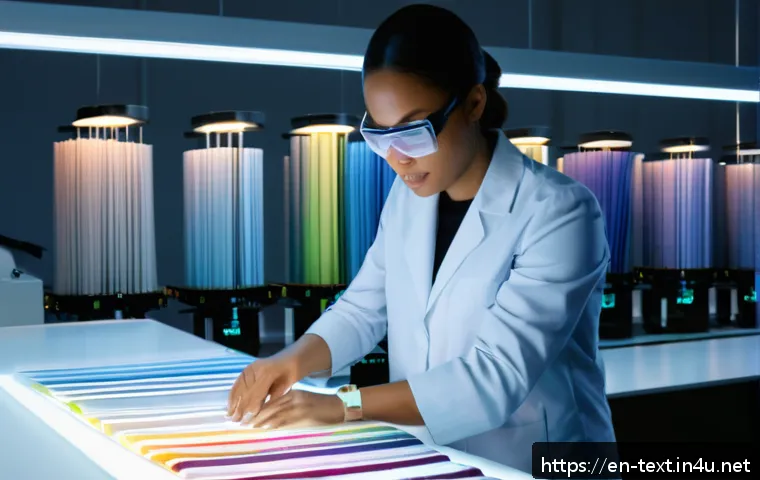
Hey there, fellow innovators and curious minds! Have you ever considered the intricate world behind the clothes we wear or the advanced materials shaping our future?
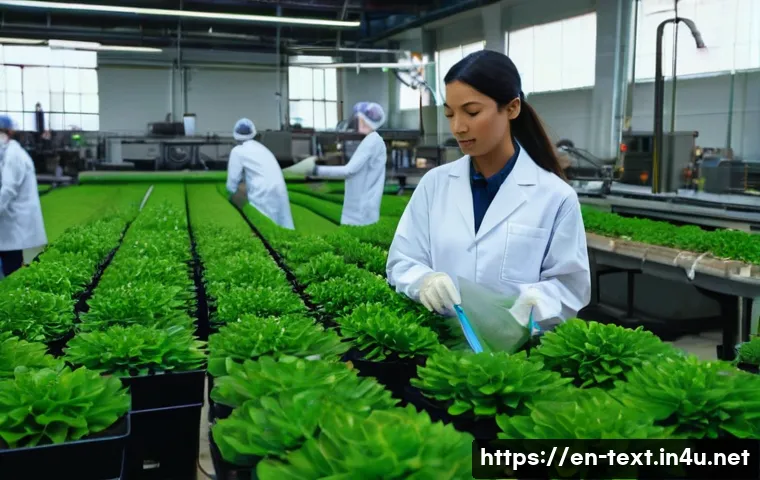
The textile industry is rapidly transforming, moving far beyond traditional fabrics into cutting-edge fields like smart textiles, sustainable solutions, and high-performance technical applications.
As someone who’s been following these dynamic trends closely, I’ve noticed a significant shift in the skills and qualifications employers are now seeking for textile engineers across various sectors.
Whether you’re a student eyeing a future in this innovative field or a professional looking to pivot, understanding these evolving requirements is absolutely crucial.
So, let’s dive right in and get you the exact information you need to thrive in this exciting and essential industry.
The Digital Weave: Embracing Tech-Savvy Skills
It might sound obvious, but the days of textile engineering being solely about looms and fibers are long gone, my friends. I remember thinking just a few years ago that my basic CAD skills were enough, but boy, was I wrong! The industry has digitized at an incredible pace, demanding that today’s textile engineers be just as comfortable with data analytics and simulation software as they are with fabric structures. We’re talking about everything from using advanced computational tools to design new materials with specific properties, to leveraging AI for quality control and predictive maintenance on production lines. It’s not just about understanding the physical properties of a textile anymore; it’s about understanding the digital footprint it leaves and how technology can optimize every step of its journey. If you’re not getting cozy with digital prototyping and sensor integration, you might find yourself a step behind. This shift truly excites me because it opens up so many new avenues for creativity and problem-solving that weren’t even conceivable a decade ago. It feels like we’re just scratching the surface of what’s possible when textiles meet tech, and staying ahead means continuously learning these digital proficiencies.
Data Analytics and Machine Learning for Textiles
Think about it: from predicting fabric defects to optimizing dyeing processes, big data is transforming how we work. I’ve personally seen how companies that invest in data analytics can significantly reduce waste and improve efficiency. Textile engineers now need to be adept at interpreting complex datasets, understanding statistical process control, and even dabbling in machine learning algorithms. This isn’t just a niche skill anymore; it’s becoming a foundational requirement. Being able to extract meaningful insights from vast amounts of production data means you can identify trends, troubleshoot issues proactively, and even forecast market demands with greater accuracy. It’s like having a superpower that lets you see into the future of your textile operations, making smarter decisions that impact the bottom line and sustainability efforts.
CAD/CAM and 3D Printing Expertise
The ability to digitally design and prototype textiles isn’t just a convenience; it’s an absolute necessity. Modern textile engineers are expected to be fluent in CAD/CAM software to design intricate patterns, simulate material behavior, and optimize manufacturing processes. And let’s not forget 3D printing! I mean, who would have thought we’d be “printing” textiles a few years back? This technology is revolutionizing everything from custom footwear to medical implants. My own experience exploring 3D printing for garment design has shown me the incredible potential for customization and rapid iteration. It significantly cuts down on development time and material waste, making it a critical tool for innovation.
Sustainability First: Engineering for a Greener Tomorrow
If there’s one trend that’s not going anywhere, it’s sustainability. When I first started following the textile industry, sustainability was a buzzword, a nice-to-have. Now, it’s a non-negotiable cornerstone of everything we do. Consumers are demanding it, regulations are enforcing it, and quite frankly, our planet desperately needs it. Textile engineers are at the forefront of this revolution, tasked with developing eco-friendly materials, designing closed-loop production systems, and finding innovative ways to minimize environmental impact at every stage of a textile’s lifecycle. It’s not just about using organic cotton anymore; it’s about pioneering biodegradable synthetics, chemical-free dyeing, and water-efficient manufacturing. This challenge really resonates with me because it combines technical ingenuity with a deeply ethical responsibility. I genuinely believe that the engineers who can crack the code on truly sustainable textile production will be the heroes of our generation. We’re not just making clothes or materials; we’re crafting a more responsible future, one fiber at a time.
Circular Economy Principles and Waste Reduction
Understanding and implementing circular economy principles is paramount. This means designing textiles that can be easily recycled, biodegraded, or upcycled, minimizing waste from cradle to grave. Textile engineers need to think beyond a single use, considering the entire lifecycle of a product. My recent deep dive into textile recycling technologies truly opened my eyes to the complexities and immense potential here. We’re moving towards a future where textile waste is a resource, not a problem, but it requires clever engineering at the design stage. It’s about creating systems where materials flow back into production, reducing the need for virgin resources and lessening landfill burdens.
Eco-Friendly Materials and Processes
The push for novel, sustainable materials is massive. We’re seeing incredible advancements in bio-based fibers, recycled content, and materials derived from unexpected sources like algae or mushroom mycelium. Engineers need expertise in material science to evaluate the environmental footprint of different fibers and processing chemicals. It’s not enough to just use a ‘natural’ fiber; we need to scrutinize its cultivation, processing, and end-of-life impact. I’ve been fascinated by the development of waterless dyeing techniques and low-impact finishing processes – these innovations are truly game-changers for reducing pollution and resource consumption.
Beyond the Fabric: High-Performance and Smart Textiles
It’s honestly mind-boggling how far textiles have come. We’re not just talking about what you wear for a run anymore; we’re talking about fabrics that can monitor your vital signs, change color with temperature, or even generate electricity. This area of high-performance and smart textiles is exploding, and it requires engineers with a completely different skill set than traditional apparel. From medical textiles that aid in wound healing to protective gear for extreme environments, and even textiles integrated into aerospace components, the applications are limitless. My own curiosity has led me down many rabbit holes researching conductive threads and phase-change materials, and every time, I’m just amazed by the ingenuity. This field demands a strong understanding of electronics, chemistry, and even biology, blurring the lines between disciplines. If you love solving complex, multidisciplinary challenges, this is where you’ll thrive. It’s like science fiction brought to life, and textile engineers are the magicians making it happen.
Integrating Electronics and Sensors into Textiles
For smart textiles, engineers must understand how to seamlessly integrate miniature electronic components, sensors, and power sources into fabric without compromising comfort or durability. This requires knowledge of conductive materials, flexible circuitry, and textile manufacturing processes that can accommodate these inclusions. I’ve seen some incredible examples of shirts that monitor heart rate and activity levels, or even fabrics that can heat or cool themselves. It’s a delicate balance of form and function, and it asks engineers to think like both a textile designer and an electrical engineer.
Developing Advanced Functional Materials
High-performance textiles often rely on advanced material science – think about fabrics that are ultra-strong, lightweight, flame-retardant, or possess specific thermal properties. Textile engineers in this area need to be experts in polymer chemistry, nanotechnology, and composite materials to design fabrics that meet stringent performance requirements for industries like aerospace, automotive, and defense. It’s about pushing the boundaries of what a textile can physically do, often through innovative fiber blends and specialized finishes.
The Global Thread: Supply Chain Savvy and Intercultural Competence
Let’s face it, the textile industry is inherently global. Raw materials come from one continent, are processed on another, manufactured into garments on a third, and then sold all over the world. Navigating this intricate web isn’t for the faint of heart, and it’s certainly not something I fully appreciated when I first started out. Modern textile engineers aren’t just confined to the lab or factory floor; many are deeply involved in understanding and optimizing complex global supply chains. This means not only knowing about logistics and trade regulations but also possessing a keen sense of intercultural communication and negotiation. My travels have shown me firsthand how crucial it is to understand local customs and business practices when working with international partners. You’re not just dealing with materials and machines; you’re dealing with people from diverse backgrounds, and building trust across cultures is paramount. This aspect of the job might not sound ‘technical,’ but believe me, it’s just as vital as understanding fiber properties for ensuring smooth operations and successful product launches.
Supply Chain Optimization and Logistics
A textile engineer with a solid grasp of supply chain management can be incredibly valuable. This involves understanding sourcing, manufacturing networks, inventory management, and distribution logistics. The goal is to create efficient, resilient, and ethical supply chains that can respond quickly to market changes and minimize disruptions. I’ve often seen how a bottleneck in one part of the world can ripple through the entire production process, so proactive planning and a deep understanding of global flows are critical. It’s about making sure the right materials are in the right place at the right time, all while maintaining cost-effectiveness and ethical standards.
Cross-Cultural Communication and Collaboration
In a globalized industry, being able to communicate effectively across cultures is non-negotiable. Textile engineers often work with teams, suppliers, and clients from various countries. This requires more than just speaking a common language; it demands an appreciation for different business etiquettes, communication styles, and cultural nuances. My personal experience has taught me that a little cultural sensitivity goes a long way in fostering productive relationships and avoiding misunderstandings that can derail projects. It’s about building bridges, not just products.
From Lab to Market: Innovation, Entrepreneurship, and Business Acumen
It’s one thing to invent a fantastic new fabric, but it’s an entirely different beast to bring it successfully to market. This is where innovation meets entrepreneurship, and honestly, it’s an area where textile engineers are increasingly expected to shine. The industry isn’t just looking for technical wizards; it’s looking for visionaries who understand market needs, can identify commercial opportunities, and possess the business savvy to turn groundbreaking ideas into profitable products. I’ve seen brilliant innovations gather dust because the creators didn’t understand the market landscape or how to effectively pitch their ideas. Whether you’re working for a large corporation or eyeing your own startup, a fundamental understanding of market research, intellectual property, and even basic financial modeling is becoming indispensable. It’s about connecting the dots between scientific discovery and consumer demand, and being able to articulate that value proposition clearly. This blend of technical prowess and business acumen is what truly sets apart the textile engineers who will lead the next wave of industry transformation.
Market Research and Product Development
Understanding what consumers want and what the market demands is crucial. Textile engineers need to participate in market research, identify gaps, and translate those insights into new product development. This involves a design thinking approach, iterative prototyping, and a strong user-centric focus. I once worked on a project where we developed an incredible textile, but without understanding the target audience’s price sensitivity, it almost failed commercially. It’s a constant loop of listening, creating, testing, and refining.
Intellectual Property and Commercialization Strategies
Protecting innovative textile designs and technologies through patents, trademarks, and copyrights is a critical skill. Beyond protection, engineers also need to understand how to commercialize their innovations, whether through licensing agreements, strategic partnerships, or direct market entry. Knowledge of the business landscape and competitive analysis helps in forming robust commercialization strategies. It’s not just about creating something new, but about strategically bringing it to the world and ensuring its longevity and profitability.
Mastering the Materials: Advanced Polymers and Nanotechnology

This might sound a bit like a science fiction movie, but the reality is that the very building blocks of textiles – the fibers themselves – are undergoing an incredible transformation. When I think back to my initial understanding of materials, it felt so straightforward: cotton, wool, polyester. Now, it’s a universe of advanced polymers, composites, and even materials engineered at the nanoscale. Textile engineers are no longer just selecting existing fibers; they are actively designing and modifying them to achieve unprecedented properties. We’re talking about fibers that are stronger than steel yet lighter than air, or textiles that can conduct electricity while remaining flexible. My personal exploration into nanofibers has been particularly eye-opening, revealing how altering materials at an atomic level can lead to revolutionary applications in medicine, filtration, and energy storage. This area demands a deep dive into chemistry, physics, and material science, pushing the boundaries of what textiles can fundamentally be and do. It’s a fascinating, complex world, and the engineers who master it are literally shaping the future of materials.
Polymer Science and Composite Materials
A solid foundation in polymer chemistry is essential for developing new synthetic fibers or modifying existing ones for enhanced performance. This includes understanding polymerization processes, material characterization, and the mechanical properties of different polymers. Furthermore, the ability to work with composite materials, combining fibers with resins or other substances, is becoming increasingly important for high-strength, lightweight applications in industries like aerospace and automotive. It’s about tailoring the molecular structure to achieve desired macroscopic properties.
Nanotechnology in Textile Applications
Nanotechnology is opening up entirely new possibilities for textiles, from self-cleaning fabrics and UV-protective clothing to advanced filtration systems and drug delivery patches. Textile engineers need to understand how to manipulate materials at the nanoscale to impart novel functionalities. This often involves applying nanoscale coatings or embedding nanoparticles directly into fibers. My research into anti-bacterial nano-coatings for medical textiles showed me the immense potential for preventing infections and improving healthcare outcomes, making it a truly impactful area of study.
Collaborative Creations: Interdisciplinary Teamwork in Action
Honestly, the idea of a lone genius toiling away in a lab is mostly a myth these days, especially in a field as complex and dynamic as textiles. What I’ve really come to appreciate, through years of observation and personal involvement, is that the most groundbreaking innovations rarely come from one individual working in isolation. Instead, they emerge from diverse teams, where textile engineers collaborate closely with industrial designers, software developers, material scientists, fashion creatives, and even medical professionals. This interdisciplinary approach is absolutely critical because the challenges we face – from developing sustainable closed-loop systems to integrating advanced electronics into clothing – are simply too multifaceted for a single area of expertise. It means you need to be not just a brilliant engineer, but also an excellent communicator, a thoughtful listener, and someone who can bridge the gap between different professional languages and perspectives. My own most rewarding projects have always involved a diverse team, bringing together unique insights that I alone would never have conceived. This shift towards deeply collaborative environments really highlights the importance of soft skills alongside technical brilliance, making teamwork an indispensable asset for any aspiring textile engineer today.
Effective Communication and Project Management
Working in multidisciplinary teams requires excellent communication skills to articulate complex technical concepts to non-experts and to understand the needs and constraints of other disciplines. Strong project management abilities are also vital to coordinate tasks, manage timelines, and ensure efficient progress within diverse groups. It’s about ensuring everyone is on the same page and working towards a common goal, no matter their background.
Design Thinking and User-Centric Approaches
Adopting a design thinking methodology helps textile engineers to understand user needs deeply and to develop innovative solutions collaboratively. This involves empathy, ideation, prototyping, and testing, often in tandem with designers and end-users. Focusing on the user experience ensures that technical advancements translate into products that are not only functional but also desirable and practical for the people who will actually use them. It’s about solving real-world problems with human-centered solutions.
| Specialty Area | Key Technical Skills | Key Soft Skills |
|---|---|---|
| Smart & E-Textiles | Flexible Electronics, Sensor Integration, Conductive Materials, Circuit Design | Interdisciplinary Collaboration, Problem-Solving, Innovative Thinking, Attention to Detail |
| Sustainable Textiles | Life Cycle Assessment, Eco-Friendly Material Science, Recycling Technologies, Bioprocessing | Ethical Reasoning, Systems Thinking, Environmental Awareness, Project Management |
| High-Performance & Technical Textiles | Advanced Polymer Science, Composite Materials, Nanotechnology, Material Characterization | Analytical Thinking, Research & Development, Precision, Quality Assurance |
| Textile Manufacturing & Supply Chain | Process Optimization, Automation, Data Analytics, Global Logistics, Quality Control | Supply Chain Management, Cross-Cultural Communication, Negotiation, Efficiency Focus |
글을 마치며
Phew, what a journey we’ve covered today, right? From the digital threads weaving through our design processes to the incredibly exciting possibilities of smart textiles and the crucial push for sustainability, it’s clear that the world of textile engineering is anything but static. I truly believe that the future belongs to those who embrace continuous learning and aren’t afraid to step outside their comfort zones, blending technical prowess with a global mindset. It’s an exhilarating time to be a part of this industry, and I’m genuinely excited to see the innovations we’ll collectively bring to life next, shaping not just our wardrobes but our entire future.
알아두면 쓸모 있는 정보
1. Never stop learning new software. The digital tools for textile design, simulation, and manufacturing are evolving incredibly fast, and staying current with platforms like CAD/CAM, data analytics tools, and even AI applications is absolutely key to staying competitive and relevant in this rapidly changing landscape.
2. Network, network, network! Attend industry conferences, join online forums, and proactively connect with peers and mentors. The insights you gain from others, the collaborative opportunities that arise, and the potential career paths revealed through these connections are truly invaluable for your professional growth.
3. Cultivate your soft skills. Technical brilliance is undoubtedly important, but being a great communicator, a truly collaborative team player, and adaptable to constant change will often be the qualities that genuinely set you apart and open doors to leadership roles and impactful projects.
4. Embrace sustainability as a core principle, not just a passing trend. Future-proof your career by deeply understanding circular economy principles, exploring eco-friendly material innovations, and advocating for responsible production methods. This isn’t just good for the planet; it’s increasingly essential for business success.
5. Think globally from day one. The textile supply chain is inherently international, so gaining an understanding of different cultures, international trade regulations, and global logistics will be a huge asset. This perspective will not only broaden your horizons but also make you an invaluable asset in any global operation.
중요 사항 정리
So, to wrap things up, remember that modern textile engineering is a dynamic and thrilling blend of high-tech skills, a deep and unwavering commitment to sustainability, and an entrepreneurial spirit that pushes boundaries. We’re no longer just working with inert fibers; we’re actively crafting the future of materials with cutting-edge data analysis, revolutionary smart textiles, and a truly global perspective. The ability to adapt quickly, collaborate seamlessly across diverse disciplines, and continuously expand your knowledge base in areas like advanced materials, supply chain optimization, and digital tools will undoubtedly be your greatest assets. It’s a profoundly exciting field, brimming with endless opportunities for those ready to innovate, solve complex problems, and make a real, lasting impact on the world around us.
Frequently Asked Questions (FAQ) 📖
Q: What are the hottest new trends reshaping the textile industry, and how are they changing the game for textile engineers?
A: Oh, this is such a fantastic question, and one I get asked all the time! From what I’ve seen firsthand and after chatting with so many folks at the forefront of this field, the textile industry is absolutely buzzing with innovation.
We’re talking about a real revolution, not just small tweaks. The two biggest game-changers right now are undoubtedly sustainable textiles and smart textiles.
When I say sustainable textiles, I’m not just talking about organic cotton anymore, though that’s still important. We’re seeing an incredible surge in eco-friendly materials like hemp, bamboo, and recycled fibers, plus some really fascinating bio-based polymers that mimic traditional fabrics but are fully compostable.
It’s all about circular fashion – designing products from the get-go to be durable, easily repaired, and recyclable, effectively closing the loop on waste.
Companies are even investing in take-back schemes, which is brilliant for reducing reliance on new resources. For textile engineers, this means diving deep into materials science, understanding lifecycle assessments, and innovating production processes to reduce water, energy, and chemical usage.
It’s about being a true environmental steward and finding ingenious ways to make our clothes and textiles kind to the planet. Then there are smart textiles, and honestly, these are just mind-blowing!
Imagine a T-shirt that tracks your heartbeat during a workout, or a jacket that automatically warms up when the temperature drops. These fabrics have integrated sensors, LEDs, and circuits that respond to our bodies or the environment.
I’ve personally experimented with some early prototypes, and the potential is immense! From healthcare monitoring and athletic performance to interactive fashion and personal protective equipment, smart textiles are blending fashion with technology in ways we could only dream of a decade ago.
This trend demands engineers who are comfortable at the intersection of traditional textile knowledge, electronics, data analytics, and even computer science.
It’s truly an interdisciplinary playground, and if you love pushing boundaries, this is where you want to be.
Q: With all these exciting changes, what specific skills should aspiring or current textile engineers be focusing on to truly thrive in this new landscape?
A: That’s the million-dollar question, isn’t it? It’s not enough to just understand the old ways anymore. The textile engineers who are absolutely crushing it right now – and the ones I predict will lead the charge in the future – possess a unique blend of traditional knowledge and cutting-edge capabilities.
First off, digital proficiency is non-negotiable. Forget just knowing basic CAD; we’re talking about mastering advanced CAD for design, simulation software for material behavior, and even dabbling in 3D printing for rapid prototyping.
Data analytics is also huge; being able to interpret production data to optimize processes or analyze market trends is becoming incredibly valuable. It’s about leveraging technology to be smarter and more efficient.
Then, there’s a real emphasis on sustainability expertise. You need to understand eco-friendly materials, circular economy principles, and innovative recycling technologies.
This isn’t just about buzzwords; it’s about practical knowledge of how to reduce waste, conserve resources, and ensure ethical sourcing throughout the supply chain.
I’ve found that companies are desperate for professionals who can actually implement green practices, not just talk about them. Beyond the technical stuff, I’ve noticed that interdisciplinary collaboration and strong communication skills are absolutely critical.
Modern textile projects often involve working with material scientists, software developers, fashion designers, and even medical professionals. Being able to translate complex technical ideas into understandable language for different teams is a superpower.
And don’t underestimate creative problem-solving; a lot of these new innovations come with unique challenges, and employers want engineers who can think outside the box.
My advice? Start building your network now, because working together is how we’ll move the industry forward!
Q: For someone like me, whether a student just starting out or a professional looking to make a switch, what’s the best way to get ahead and ensure I’m job-ready for these exciting new roles?
A: I totally get it – stepping into a rapidly evolving field can feel a bit overwhelming, but trust me, it’s also incredibly exhilarating! Based on my observations and what I’ve learned from industry leaders, here’s my roadmap for getting yourself absolutely job-ready:First, continuous learning is paramount.
The textile world is changing so fast that what you learn today might evolve tomorrow. Look into specialized online courses or certifications in areas like smart textiles, sustainable manufacturing, or advanced materials science.
Even short workshops on topics like digital textile printing or AI in design can give you a significant edge. Don’t just rely on your degree; actively seek out knowledge that keeps you at the bleeding edge.
Next, hands-on experience is gold. Internships, apprenticeships, or even personal projects where you experiment with new materials or technologies are invaluable.
I’ve seen so many students land their dream jobs because they had a portfolio showcasing actual work, not just academic theories. Try to get involved with companies that are truly innovating, like those focused on textile recycling or e-textiles.
This is where you’ll gain practical insights and build those crucial industry connections. Finally, and this might sound simple but it’s huge: network, network, network!
Attend industry conferences (even virtual ones!), join professional organizations, and connect with people on platforms like LinkedIn. Ask questions, offer insights, and build genuine relationships.
You’d be amazed how many opportunities open up through conversations and connections. Plus, understanding the market and staying abreast of consumer demands is critical for anticipating industry shifts.
Being proactive and showing a real passion for the future of textiles will always set you apart. Remember, this isn’t just a job; it’s about shaping the future of how we interact with materials every single day!